Train Trips for Older Seniors: Comfort, Planning, and Travel Tips
Introduction
Train travel can be a surprisingly graceful way for older seniors to keep exploring without the rush, noise, and long security lines that often come with flying. A well-planned rail journey offers roomy seating, easy views, and the simple pleasure of watching towns, rivers, and fields roll by. It also gives travelers more time to settle in, move around, and enjoy the trip itself. This guide explains how to plan train trips that feel safer, smoother, and more rewarding.
Outline
1. Why train travel suits older seniors and what makes it different from other forms of transport. 2. How to plan routes, book smartly, and choose the best time, seat, and service level. 3. What helps with comfort, health, safety, and energy management during the trip. 4. Which kinds of train journeys work best, from scenic day rides to sleeper services and city-to-city breaks. 5. How to manage costs, companions, technology, and confidence so the journey stays enjoyable from departure to arrival.
Why Train Travel Works So Well for Older Seniors
For many older seniors, the appeal of train travel begins with one simple advantage: the journey itself feels gentler. Airports often require early arrival, long walks, repeated document checks, security procedures, and long waits in crowded terminals. Long-distance car travel brings its own strain, especially for travelers who no longer enjoy driving for hours or who tire easily in heavy traffic. Trains sit in a useful middle ground. They are structured without feeling rigid, comfortable without demanding too much effort, and scenic in a way that turns travel time into part of the holiday.
One important benefit is mobility. On most intercity trains, passengers can usually stand up, walk a short distance, stretch their legs, and change posture far more easily than on an airplane. That matters for older adults who experience stiffness in the knees, hips, or back. The ability to rise slowly, take a careful walk to the café car, or simply look out from a different window can make a long journey less tiring. Many stations also place platforms near city centers, which can reduce the need for long transfers after arrival. Reaching a hotel may be as simple as taking a short taxi ride or even walking a few flat blocks.
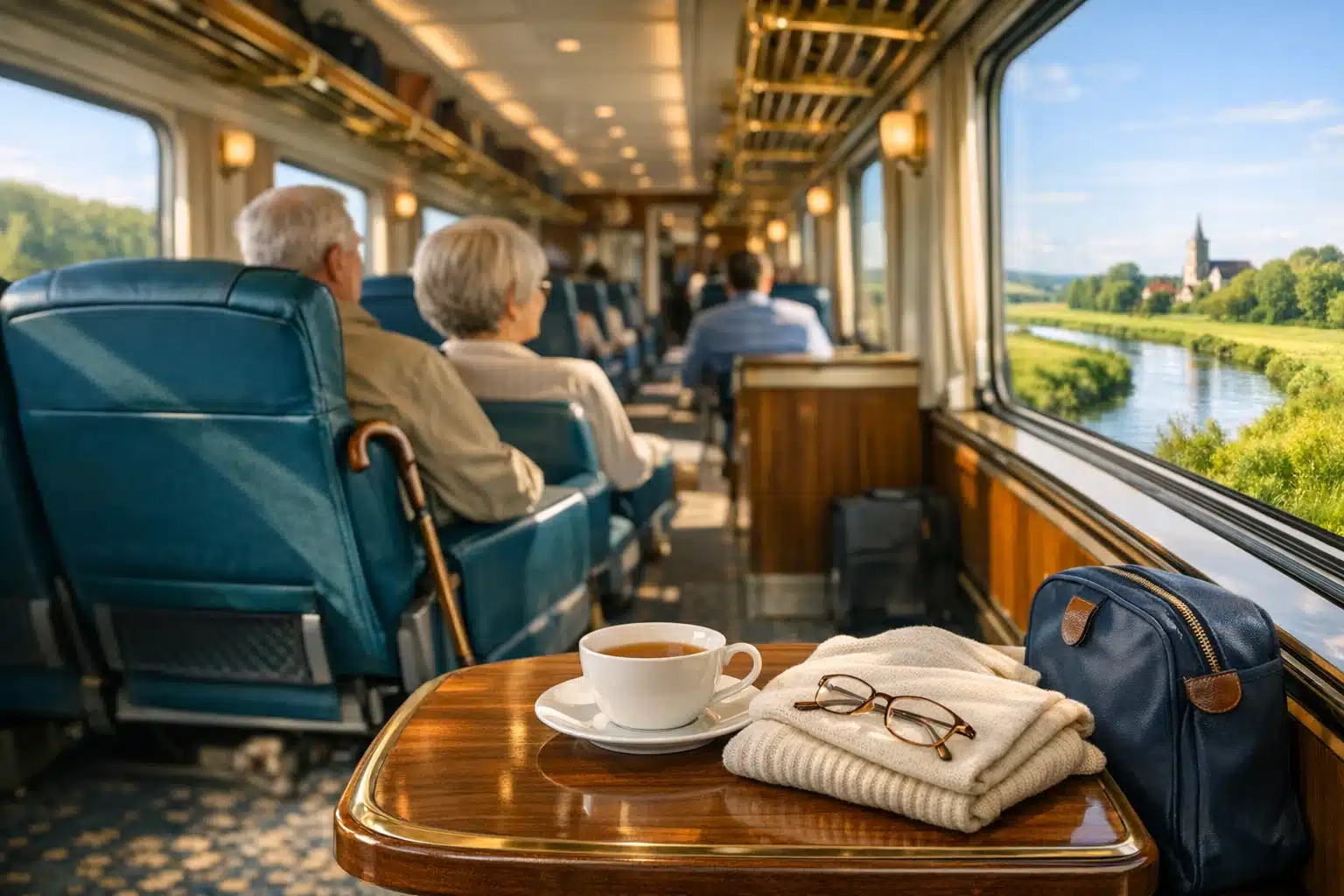
Comfort is another reason rail remains attractive. Seats on many long-distance trains feel more upright and spacious than cramped budget airline seating, and travelers usually have a better chance to keep personal items within reach. There is also a psychological comfort that should not be underestimated. A train moves with rhythm rather than urgency. There is time to sip tea, read a novel, chat with a companion, or watch distant church towers and green fields slide into view like scenes from a quiet film.
Train travel can also encourage independence. Older seniors who no longer want the strain of driving can still travel on their own terms. Many rail operators offer assistance for boarding, luggage, and accessible seating if arranged ahead of time. That support can be especially valuable for travelers using canes, walkers, or hearing aids. In practical terms, train trips often make sense because they combine comfort, manageable pace, and location convenience. In emotional terms, they offer something just as valuable: the feeling that travel is still open, still possible, and still enjoyable.
Planning the Route, Ticket, and Schedule Wisely
A successful train trip usually begins long before the station platform comes into view. For older seniors, planning is not about overcomplicating the experience; it is about removing friction. The right route, seat, travel time, and connection plan can make the difference between a pleasant outing and a tiring one. Start by deciding what kind of journey you want. Is the goal a short scenic ride, a visit to family, a multi-city holiday, or a classic rail adventure? Once that is clear, compare travel durations, number of transfers, station accessibility, and arrival times. In many cases, a slightly longer direct train is better than a faster option that requires hurried changes between platforms.
Time of day matters more than many people realize. Morning departures can work well if they avoid the pressure of pre-dawn starts. Midday trains often feel calmer than peak commuter services. Arriving before dark is another smart choice, especially in unfamiliar cities where finding a hotel or taxi rank is easier in daylight. If the trip is long, it may be worth breaking it into two parts with an overnight stay in a pleasant town. That approach reduces fatigue and turns a demanding route into a more relaxed travel experience.
Ticket choices also deserve attention. Many rail systems offer senior discounts, railcards, companion fares, or reduced rates for booking early. The cheapest ticket is not always the best ticket. Flexible fares may be worth the extra cost if health, weather, or family needs could change plans. When choosing seats, think practically. Aisle seats can make it easier to stand up. Lower-level seating may reduce stair use on double-deck trains. Seats near restrooms may be convenient for some travelers, while others may prefer distance from foot traffic and noise.
Useful planning points include:
• Choose direct services when possible.
• Reserve assistance for boarding or luggage in advance.
• Check how far the platform is from the station entrance.
• Confirm whether food is sold onboard or should be packed.
• Keep printed tickets or backup screenshots in case mobile service fails.
Good planning does not remove spontaneity; it protects it. Once the key details are handled, older travelers can enjoy the small pleasures of rail travel with less stress and more confidence.
Comfort, Health, and Safety During the Journey
Even a beautiful train ride can become draining if basic comfort and health needs are ignored. Older seniors often know this from experience: the smallest details, such as hydration, temperature, seat position, or easy access to medication, can shape the entire day. The good news is that train travel usually makes these needs easier to manage than many other forms of transport. With some thoughtful preparation, the journey can feel stable and pleasant rather than tiring.
Start with clothing and packing. Dressing in layers is one of the simplest and most effective habits for rail travel. Train temperatures can vary between stations, carriages, and seasons. A light cardigan, soft scarf, or easy jacket can solve a surprising number of comfort problems. Shoes should be secure, easy to walk in, and comfortable enough for standing on platforms. Keep essentials in a small day bag that stays close at hand rather than in overhead luggage. Items that often deserve easy access include medications, glasses, hearing aid batteries, snacks, tissues, hand sanitizer, a phone charger, and a list of emergency contacts.
Movement matters too. On a long journey, sitting still for hours can lead to stiffness and discomfort. If medically appropriate, standing up every so often, rotating ankles, and taking a slow walk down the aisle can help reduce strain. Drinking water is equally important, although many travelers intentionally drink less to avoid restroom visits. That can backfire, especially on warm days. A better strategy is to stay moderately hydrated and choose a seat location that makes restroom access manageable.
Safety is partly physical and partly organizational. Keep tickets, identification, and wallet or purse in a consistent place. Avoid lifting heavy bags alone if assistance is available. When boarding, take your time; rushing causes more trouble than waiting a few extra seconds. If the station is large, arrive early enough to move at a comfortable pace. It also helps to let a relative or friend know your itinerary, especially on solo trips.
Practical comfort reminders:
• Pack a small pillow or neck support for longer routes.
• Bring familiar snacks if dietary needs are specific.
• Use a medication schedule alarm on a phone or watch.
• Carry a paper copy of reservations and hotel details.
• Ask staff for help sooner rather than later.
There is a quiet confidence that comes from being prepared. Instead of worrying about what might go wrong, travelers can watch the landscape unfold and settle into the steady music of the rails.
Comparing the Best Types of Train Trips for Older Travelers
Not every rail journey suits every traveler, and that is exactly why comparison matters. Older seniors often benefit from matching the type of train trip to their pace, energy, and interests. Some travelers want a short outing with beautiful scenery and no hotel changes. Others enjoy the romance of a sleeper cabin, while many prefer straightforward city-to-city travel with museum visits, family time, or a few good restaurant meals. Choosing the right format can make the entire experience more comfortable and more memorable.
Scenic day trains are often the easiest place to start. These routes typically focus on views: coastlines, mountains, forests, vineyards, or historic rural towns. They are ideal for travelers who want the pleasure of rail travel without the complexity of a long itinerary. Day trips also offer a lower-stakes trial run for anyone returning to travel after a long break. The main advantage is simplicity. You board, settle in, enjoy the views, and arrive without the pressure of overnight arrangements on the train itself.
Overnight sleeper trains offer a different kind of appeal. They can be wonderfully efficient because they combine transportation and accommodation in one booking. For some travelers, waking up in a new city feels timeless and elegant, almost like opening a curtain on a fresh chapter. Still, sleeper trains are not for everyone. Cabins vary in size, nighttime movement can disturb light sleepers, and boarding with luggage may take more organization. Seniors who value privacy and rest may prefer a private berth over a shared compartment if the budget allows.
Classic city-to-city rail holidays are often the most practical option. They allow travelers to spend a few days in each place, unpack properly, and avoid constant motion. This style works well in regions where stations are central and taxi transfers are short. Guided rail tours can also suit older travelers who want support with hotels, luggage, and schedules. They cost more, but they reduce planning demands and may offer reassurance for those uneasy about independent travel.
A simple comparison looks like this:
• Scenic day train: easiest, least tiring, best for first-time rail leisure trips.
• Sleeper train: efficient and memorable, but only ideal for travelers comfortable sleeping onboard.
• City-to-city journey: balanced, flexible, and excellent for cultural travel.
• Guided rail tour: convenient and social, though less independent.
The best choice depends less on age alone and more on stamina, curiosity, and confidence. A good rail trip meets the traveler where they are and still leaves room for delight.
Budget, Companionship, and Confidence for a Better Experience
Train travel for older seniors is not only about comfort; it is also about making the experience financially sensible and emotionally satisfying. Cost matters, especially for retirees balancing travel dreams with fixed incomes. Fortunately, rail travel offers several ways to control spending without stripping away enjoyment. The first step is to look beyond the headline ticket price. A rail fare may appear higher than a discount flight, but trains often reduce hidden costs such as airport transfers, baggage fees, overnight parking, or expensive meals during delays. When stations are close to the center of town, savings on taxis can be significant as well.
Booking strategies can stretch a budget. Advance fares are often cheaper, and senior discounts or railcards can make a real difference over multiple journeys. Some travelers save more by traveling on less popular days or choosing standard class for daytime segments and reserving comfort upgrades only when the trip is especially long. Sleeper services can sometimes offset the cost of one hotel night, though it is wise to compare totals carefully. A good budget plan includes the full picture: ticket, transfers, accommodation, meals, tips, travel insurance, and a little extra for flexibility.
Companionship is another important part of the experience. Some older seniors love solo travel and value the freedom to move at their own pace. Others prefer a spouse, sibling, close friend, or adult child along for reassurance and shared enjoyment. Neither choice is better; the key is honesty about what feels comfortable. Solo travelers may benefit from simpler routes, daytime arrivals, and pre-booked hotels near the station. Travelers with companions should discuss pace, rest breaks, and interests in advance to avoid friction later. Even the friendliest travel partner can become difficult if one person wants museums while the other wants naps and pastry shops.
Helpful confidence boosters include:
• Start with a short trip before attempting a longer rail holiday.
• Save all booking details in both print and digital form.
• Use station maps ahead of time if they are available online.
• Arrange hotel pickup when arriving in a new city.
• Build rest time into the itinerary instead of filling every hour.
Above all, confidence grows through experience. The first trip may involve more checking, double-checking, and asking questions than the second. That is normal. Soon, the station board looks less intimidating, the boarding routine becomes familiar, and the whole idea of train travel begins to feel less like a challenge and more like an invitation.
Conclusion for Older Seniors
Train trips can offer older seniors something increasingly rare in modern travel: a sense of ease. With thoughtful planning, the right route, and attention to comfort, rail journeys can be practical, enjoyable, and surprisingly freeing. They allow travelers to keep discovering new places without the intensity that often comes with airports or long highway drives. Whether the goal is a scenic day ride, a visit to loved ones, or a carefully planned holiday, train travel remains a strong option for seniors who want comfort, confidence, and a little wonder along the way.