Women’s Personal Massagers for Relaxation: A Practical Guide
Choosing a personal massager for relaxation can feel unexpectedly complex because the market blends wellness promises, beauty packaging, and a long list of technical terms into one crowded aisle. For many women, these devices are not impulse gadgets but practical tools for easing daily tension, creating a calming ritual, and making private downtime feel more intentional. A clear guide turns confusing options into sensible choices shaped by comfort, safety, and real-life use.
Outline:
• Why these devices matter in a relaxation-focused routine
• The main product types and how their designs differ
• Materials, safety checks, cleaning, and smart buying habits
• Ways to use a massager comfortably as part of daily self-care
• Final guidance for first-time buyers, busy professionals, and anyone refining a wellness routine
Why Women’s Personal Massagers Have Become a Serious Relaxation Tool
Personal massagers are often discussed as novelty items, yet that framing misses why many women actually buy them. In practice, they are frequently chosen for stress relief, body awareness, and the simple luxury of uninterrupted comfort. Modern life places a steady load on the body: long hours at a desk, poor sleep, travel fatigue, exercise soreness, and the mental drag of constant notifications. A device designed to deliver controlled vibration or targeted massage can become part of the same relaxation ecosystem as stretching, warm showers, breathable bedding, and quiet evening routines. The appeal is not mystery. It is convenience paired with private control.
There is also a design reason behind their growing popularity. Many models marketed toward women emphasize ergonomics, softer finishes, lighter weight, quieter motors, and shapes that are easier to hold for longer sessions. Those details matter more than flashy branding. A tool that feels awkward in the hand, sounds like a kitchen appliance, or requires confusing button sequences can quickly end up forgotten in a drawer. By contrast, a thoughtfully made massager often earns repeat use because it asks very little from the user: charge it, turn it on, choose a setting, and let the day slow down for a while.
From a wellness perspective, gentle vibration is widely used in non-medical massage products because it can support a sense of physical ease. It does not replace medical care, physical therapy, or treatment for chronic pain, but it can complement a calming routine. Some women use these devices externally on areas such as the shoulders, lower back, calves, or thighs. Others choose models intended for more personal forms of relaxation. In both cases, the same purchasing logic applies: comfort, body-safe materials, manageable intensity, easy cleaning, and design that fits actual habits instead of fantasy scenarios.
A good comparison is the difference between a spa chair and a well-made handheld tool. The chair offers a broad, familiar experience, while the handheld option gives precision and flexibility. One is about passive immersion; the other is about customized relief. That blend of privacy, adaptability, and ease explains why personal massagers now sit comfortably within broader conversations about self-care. Used thoughtfully, they are less about hype and more about creating a small pocket of calm in a schedule that rarely slows down on its own.
Understanding the Main Types and What Each One Does Best
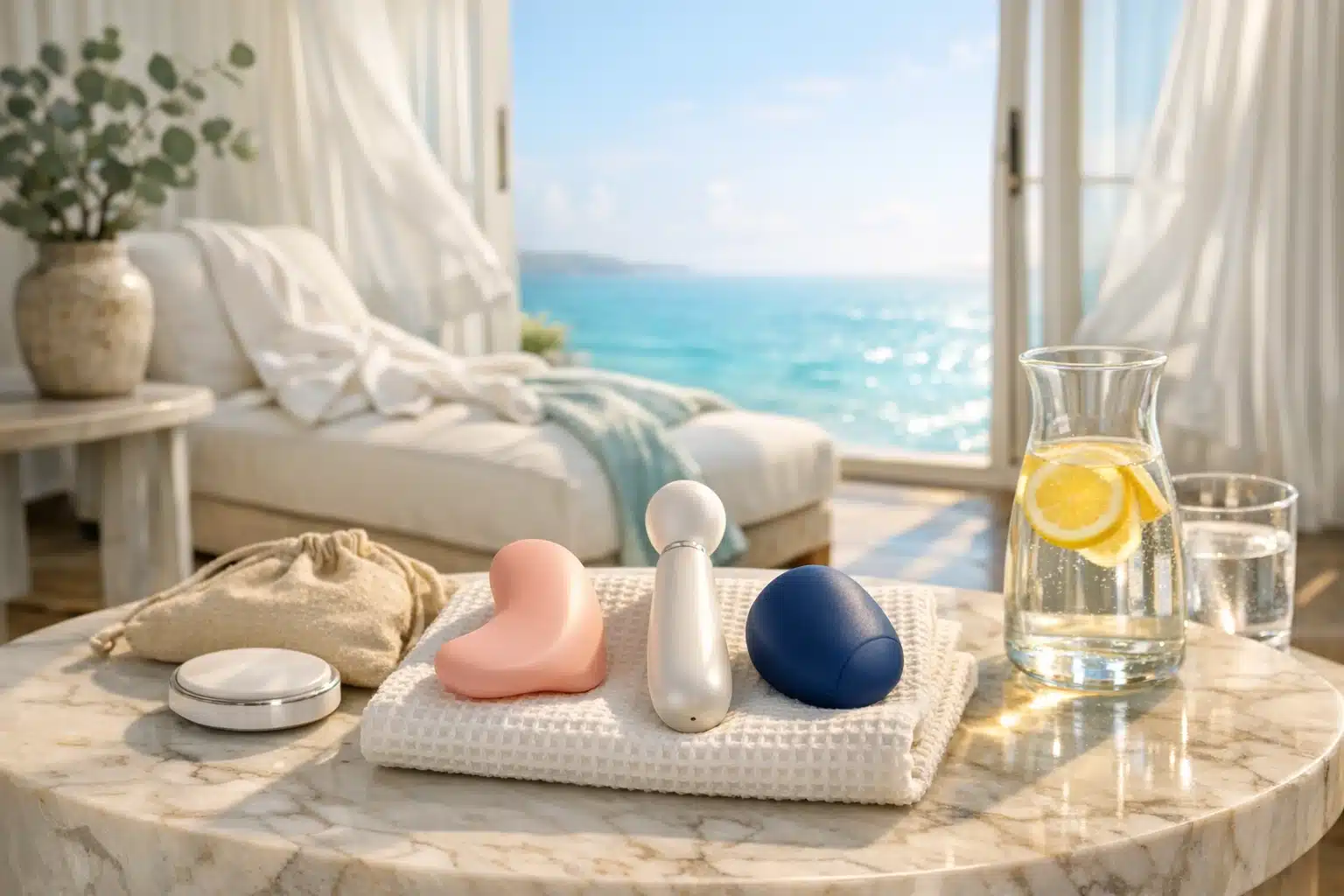
The category becomes much easier to navigate once you stop looking at brand language and start looking at form factor. Shape usually tells you more about a massager than the marketing copy does. Different designs distribute pressure, vibration, reach, and ease of handling in very different ways, which means the best option depends on lifestyle, sensitivity, and the kind of relaxation experience someone prefers. A larger, more powerful unit may sound appealing on paper, but a smaller device can be more practical if storage space is limited or travel matters.
Here are some of the most common styles:
• Wand-style massagers usually offer stronger motors, broader heads, and a deeper, fuller style of massage. They are often better for users who want versatile external use on larger muscle groups or prefer more power without holding a tiny device tightly.
• Compact palm-sized models prioritize portability, lower weight, and easier storage. They can suit beginners who want a simple option that feels discreet and approachable.
• Curved or ergonomic designs are shaped for easier angle control. These often appeal to users who want less wrist strain or more precise placement.
• Bullet-style units are small, direct, and travel-friendly. They are easy to pack, though they may feel too focused or too buzzy for someone who prefers broader contact.
• Dual-purpose wellness massagers sometimes blend external massage functionality with body-friendly shaping, giving buyers more flexibility across different relaxation needs.
Features matter almost as much as shape. Intensity range is important because “strong” is not automatically “better.” A device with several well-spaced settings is often more useful than one that jumps from barely noticeable to overwhelmingly intense. Pattern modes can be fun for experimentation, but steady vibration remains the preference for many people seeking simple relaxation. Noise level is another major point. A quieter motor creates a more peaceful atmosphere and can reduce self-consciousness in shared living spaces.
Battery and build quality influence long-term satisfaction too. Rechargeable models commonly offer around 60 to 180 minutes of use per charge, though that varies by motor size and intensity level. Waterproof or water-resistant construction can be useful, especially for easy cleaning or bath-adjacent routines, but buyers should check the actual rating instead of assuming “splashproof” means fully submersible. In the end, comparison shopping becomes clearer when you match design with habit. A frequent traveler may want a compact, lockable device. Someone with hand fatigue may prefer a larger handle. A user focused on all-purpose external massage may get more value from a wand than from a tiny model that disappears easily but demands a precise grip.
Materials, Safety, Cleaning, and the Difference Between Cheap and Well-Made
When shopping for a personal massager, materials deserve as much attention as motor strength. This is where the quality gap between a bargain-bin item and a reliable product usually becomes obvious. Body-safe silicone is widely preferred because it is non-porous, soft to the touch, and generally easier to clean thoroughly than cheaper porous materials. ABS plastic can also be a solid choice for outer casings and firmer contact surfaces. Products made from mystery “jelly” compounds or strongly scented soft plastics are often less reassuring, especially if the packaging avoids clear material disclosure. If a listing is vague about what the product is made from, that uncertainty is meaningful information on its own.
A careful buyer should also pay attention to finish quality. Seams should look neat, buttons should feel responsive, and the charging port should appear well sealed if the product is described as waterproof. Flimsy caps, exposed gaps, and rough molding lines can signal lower durability and weaker hygiene standards. Premium models do not always offer revolutionary performance, but they often deliver better consistency in the things that affect real satisfaction: quieter operation, stronger seals, more dependable charging, and fewer irritating surprises after a few weeks of use.
A smart safety checklist includes the following:
• Look for clearly stated materials such as silicone and ABS plastic.
• Read whether the product is waterproof, water-resistant, or neither.
• Check the size and weight so the device suits your grip and comfort level.
• Review cleaning instructions before purchase rather than after unboxing.
• Confirm whether the charger is proprietary, magnetic, or USB based.
• Buy from reputable retailers with clear product information and reasonable customer support.
• Avoid using a damaged device, especially if the casing, cord, or seal appears compromised.
Cleaning is not glamorous, but it is part of owning any wellness device responsibly. Most non-porous products can be washed with warm water and mild soap after use, then dried with a clean lint-free cloth before storage. Some people prefer a dedicated toy cleaner, though plain gentle soap is often enough when it is compatible with the manufacturer’s guidance. Storage matters too. Tossing a clean device into a dusty drawer with loose charging cables and cosmetics is not ideal. A pouch or case keeps the finish protected and helps maintain hygiene.
Price comparisons should be handled with realism. A lower-cost device can still be decent if it uses safe materials and straightforward design. At the same time, a premium price tag should buy something tangible: better construction, a more refined motor, quieter performance, stronger battery life, or more ergonomic handling. The best value is rarely the cheapest or the flashiest option. It is the one that keeps doing its job smoothly, safely, and without becoming another regrettable purchase hidden behind old receipts.
How to Use a Personal Massager as Part of a Relaxation Routine
The most satisfying use experience usually has less to do with intensity and more to do with context. A personal massager works best when it is part of a broader wind-down ritual instead of a rushed experiment squeezed between unfinished tasks. Think of it as one instrument in a small evening orchestra: dimmer lighting, a glass of water nearby, a comfortable blanket, slower breathing, and a few minutes in which nobody expects anything from you. That atmosphere changes the experience. Even a modest device can feel far more effective when the body is not still braced for the next email, the next chore, or the next alarm.
Comfort begins with pacing. Starting on the lowest setting is usually the easiest way to learn how a device feels in the hand and on the body. Many women discover that a broader, steadier setting creates a calmer experience than a sharper, more aggressive one. This is especially true for relaxation-focused use, where the goal is not intensity for its own sake but a gradual sense of release. A warm bath, a shower, or ten minutes with a heating pad can also help the body feel less guarded before using an external massage device on tense areas such as the shoulders, calves, or lower back.
For routine-building, a few small habits help:
• Keep the device charged so relaxation does not begin with frustration.
• Store it somewhere private but easy to reach, not buried under clutter.
• Use a water-based lubricant if the product instructions recommend one for comfort and material compatibility.
• Stop immediately if anything feels painful, irritating, or simply wrong.
• Clean the device after each session rather than leaving the task for tomorrow.
Practicality often determines whether a product becomes a favorite. A travel-friendly massager with a lock mode may suit someone who spends time in hotels. A quiet, compact unit may work better in shared apartments where privacy matters. Someone with limited hand strength may appreciate a wider grip, softer buttons, or a flexible handle. This is why reviews can be helpful, but only when read with caution. One person’s “perfect” device may be another person’s unusable one, because body preference, sensitivity, and routine are deeply individual.
There is also an emotional side to routine that gets overlooked. A good wellness tool can create a sense of permission, as if the body finally receives the memo that the workday is over. In that moment, the device is not just a gadget. It becomes part of a boundary between productivity and rest. That shift, subtle as it seems, is often where the deepest value lies.
Conclusion for First-Time Buyers and Women Refining Their Self-Care Routine
If you are new to personal massagers, the smartest approach is refreshingly simple: ignore hype, define your needs, and choose a product that fits your life rather than a fantasy version of it. A first-time buyer often benefits most from a quiet, well-made model with body-safe materials, intuitive controls, and moderate intensity options. There is no prize for buying the strongest device, the most expensive design, or the one with the longest list of pattern modes. Relaxation works best when the product feels approachable, not intimidating.
For women who already know what they like, refinement becomes the goal. You may want better ergonomics, easier cleaning, a more elegant finish, longer battery life, or a motor that feels smoother at lower settings. These upgrades matter because comfort is cumulative. A softer texture, a better button layout, or a charger that snaps into place without a struggle can make the difference between occasional use and a device that becomes part of weekly life. Small design decisions shape whether a purchase feels seamless or slightly annoying every time it comes out of storage.
A helpful final comparison looks like this:
• Busy professionals may prefer compact, low-maintenance models that charge quickly and store easily.
• Beginners often do well with straightforward controls, a gentle learning curve, and a recognizable wellness brand with clear instructions.
• Frequent travelers may value portability, discreet storage, and dependable battery performance.
• Women focused on broader body relaxation may lean toward versatile external massage designs with more reach and power.
• Detail-oriented shoppers should prioritize material transparency, warranty information, and realistic reviews over glossy packaging.
The right choice should feel like a dependable cup, not a glittering trophy. It should meet you where your schedule, comfort level, and budget actually are. That means a practical guide matters, because thoughtful selection saves money, reduces disappointment, and leads to a better experience from the start.
In the end, women’s personal massagers for relaxation belong in the same honest conversation as weighted blankets, bath salts, foam rollers, and sleep masks: they are tools, not miracles. Used with care, they can support calm, private relief and make a few minutes of rest feel more deliberate. For readers deciding what to buy next, the best choice is the one that offers safe materials, sensible design, and a quiet invitation to exhale at the end of a long day.