The 10 Most Beautiful Beaches in France
Introduction and Outline: Why France’s Beaches Deserve a Closer Look
France’s coastline stretches for thousands of kilometers, touching the Channel, the Atlantic Ocean, the Mediterranean Sea, and the island world of Corsica. That geographic range gives the country an unusual advantage: no single idea of a “French beach” is complete. One traveler may picture pine-backed dunes near the Atlantic, another the pale arc of a Riviera bay, and another the transparent water of Corsica where the shoreline looks almost unreal in morning light. This variety is exactly why the subject matters. Choosing the right beach in France is less about chasing a postcard and more about matching a place to the kind of holiday you want.
In practical terms, France remains one of Europe’s most accessible coastal destinations. Fast rail lines connect Paris to western and southern beach regions, road infrastructure is strong, and the country’s tourism services are well developed. Yet beauty is not measured by convenience alone. The finest beaches combine visual impact, water quality, natural setting, walkability, nearby villages or towns, and the feeling they leave with visitors after the day ends. Some are ideal for families because the water is calm and facilities are easy to find. Others reward travelers who do not mind a short walk, a rocky path, or a more remote setting in exchange for silence and spectacular views.
This article is organized as a detailed guide rather than a bare list. It begins with an outline of the beaches covered, then compares the different coastal identities of France. The ten beaches featured here are:
• Palombaggia, Corsica
• Santa Giulia, Corsica
• Saleccia, Corsica
• Pampelonne, Saint-Tropez
• Calanque d’En-Vau, near Cassis
• Notre-Dame Beach, Porquerolles
• Étretat Beach, Normandy
• La Côte des Basques, Biarritz
• Dune du Pilat and nearby beaches, Arcachon Bay
• Plage de l’Espiguette, Occitanie
The ranking mixes iconic destinations with beaches valued for atmosphere and landscape. Some are famous worldwide, while others win visitors over more quietly. Along the way, the comparisons will help answer useful questions: Which beaches are best for dramatic scenery? Which are easiest for families? Which offer the clearest water, the strongest sense of space, or the most memorable coastal walks? If France is a mosaic of landscapes, its beaches are among the brightest pieces, and they are worth exploring with more care than a simple “top ten” headline usually allows.
Atlantic and Channel Beauty: Étretat, Biarritz, Dune du Pilat, and L’Espiguette
The Atlantic and northern coasts of France reveal a wilder, more changeable kind of beauty than the Mediterranean. Here, beaches are shaped as much by wind, tide, and surf as by sunshine. That is part of the appeal. Instead of a single shade of blue and a predictable shoreline, you get drama, movement, and a stronger sense of weather. Four standout beaches illustrate this beautifully: Étretat Beach in Normandy, La Côte des Basques in Biarritz, the beaches around the Dune du Pilat near Arcachon, and Plage de l’Espiguette in Occitanie.
Étretat Beach is one of the most visually distinctive coastal sites in France. Strictly speaking, it is a pebble beach rather than a broad sandy one, but its setting beneath monumental white chalk cliffs makes it unforgettable. The sea arches and needle-like rock formations have inspired painters, photographers, and writers for generations. Visitors do not come here mainly to lie on the shore all day. They come for the composition of cliff, sky, and water; for the cliff-top walks; and for the shifting mood of the coast under changing light. In the early evening, when the bright chalk catches the last sunlight, the place has the quiet grandeur of a landscape painting suddenly made real.
Far to the southwest, La Côte des Basques gives a completely different experience. Biarritz is known internationally as a surf destination, and this beach plays a central role in that reputation. It is framed by cliffs, animated by rolling waves, and loved for its energy. At low tide, the beach opens up generously, while high tide can dramatically reduce the available sand. This tidal rhythm gives the place a living character. It is ideal for travelers who enjoy:
• surfing or surf culture
• scenic seaside walks
• lively cafés and urban convenience
• a beach day with real movement rather than total stillness
Dune du Pilat is less a single beach than a remarkable coastal environment. The dune, often cited as the tallest in Europe, rises above the Atlantic with astonishing scale. From the summit, visitors see forest on one side and sea on the other, which creates one of the most memorable coastal panoramas in France. The nearby beaches feel expansive and elemental. This is a landscape of space, not intimacy. By contrast, Plage de l’Espiguette near Le Grau-du-Roi is famous for its vast sandy stretch and dune systems, giving visitors a feeling of openness that is increasingly rare on busy European coasts. It lacks the celebrity of Saint-Tropez or Corsica, yet that is partly its strength. The scenery feels untamed, almost cinematic, with long horizons and fewer urban interruptions. Together, these four beaches show that French coastal beauty is not always polished or sheltered. Sometimes it arrives in cliffs, tides, surf, and dunes.
Mediterranean Elegance: Pampelonne, Calanque d’En-Vau, and Notre-Dame Beach
The Mediterranean coast of mainland France is often associated with glamour, clear water, and long summer days, but its beaches are far from uniform. Some are social and stylish, some are hidden between cliffs, and some feel almost suspended between island calm and Riviera brightness. Pampelonne Beach, Calanque d’En-Vau, and Notre-Dame Beach on Porquerolles represent three distinct versions of Mediterranean beauty, each appealing to a different kind of traveler.
Pampelonne Beach, near Saint-Tropez and Ramatuelle, is probably the most famous sandy beach on the French Riviera. Its reputation has been shaped by cinema, celebrity culture, beach clubs, and decades of high-profile tourism. Yet reducing it to glamour misses the point. Pampelonne is genuinely beautiful: long, bright, and open, with soft sand and clear water that often stays inviting through the warmer months. What makes it special is the combination of accessibility and atmosphere. You can find organized beach areas with services, restaurants, and loungers, but there are also stretches where the landscape itself takes over. It suits travelers who want beauty without isolation and who enjoy a beach day that can smoothly turn into lunch, people-watching, or a sunset aperitif.
Calanque d’En-Vau, near Cassis, offers the opposite mood. It is one of the most dramatic coastal sites in southern France, with steep limestone walls enclosing a narrow inlet of striking blue-green water. Reaching it usually requires a hike or boat access, and that effort is part of its identity. The beach is not broad or conventionally comfortable, but the scenery is extraordinary. This is the kind of place where the cliffs seem to guide the eye downward until the water appears like a sheet of polished glass. For active travelers, it can be the highlight of a Provence trip. It is especially rewarding for people who value:
• dramatic geology over easy access
• snorkeling and clear water
• hiking combined with swimming
• scenery that feels intimate and theatrical
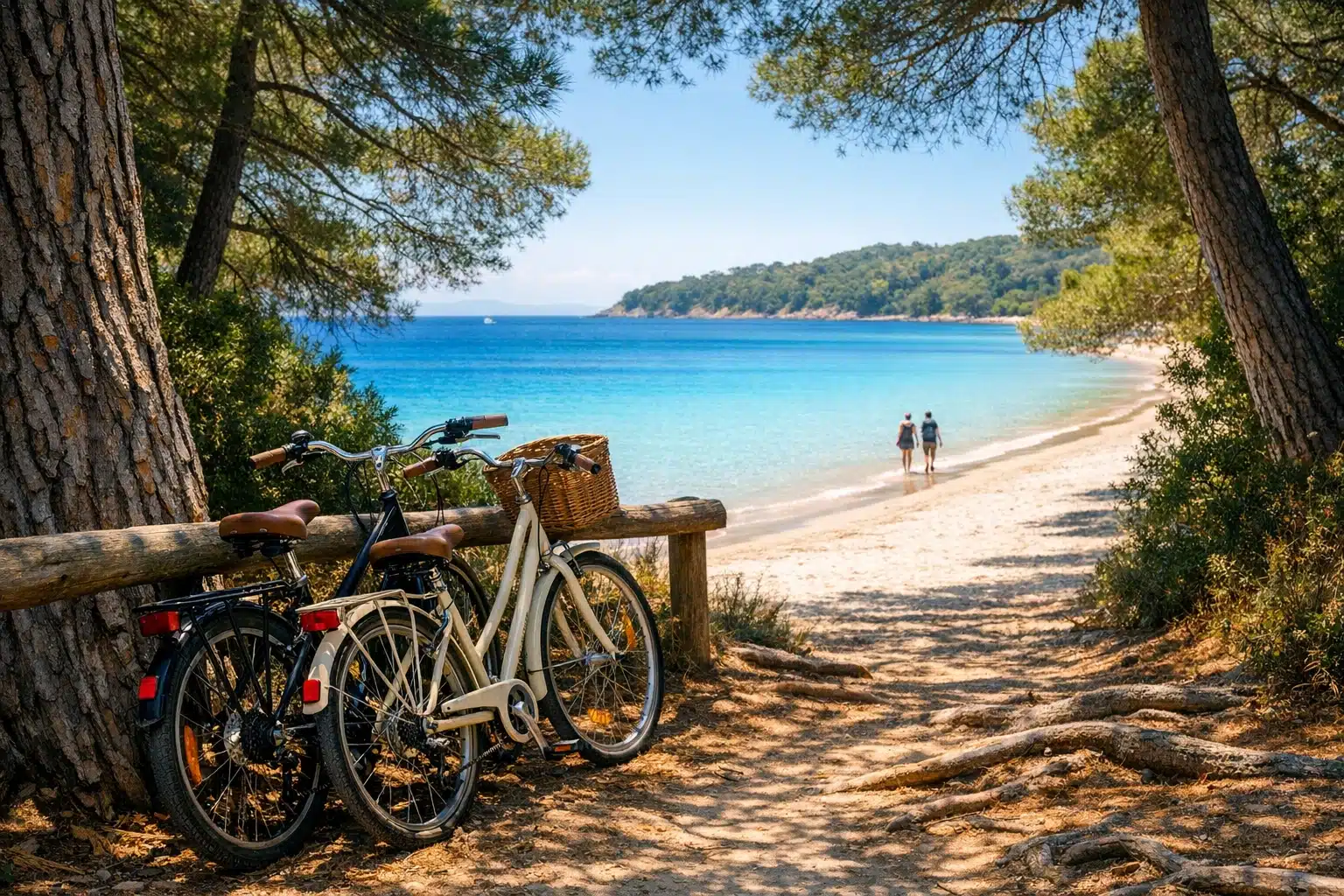
Notre-Dame Beach on Porquerolles adds another layer to the Mediterranean story. Located on an island off the Var coast, it regularly appears in discussions of Europe’s loveliest beaches because of its serene natural setting. Pine trees, pale sand, and transparent water create a softer, quieter experience than the Riviera’s better-known hotspots. The island itself limits the pace; many visitors arrive by ferry and continue by bike or on foot, which changes the rhythm of the day. There is less urgency, less noise, and more room for the senses to settle. Compared with Pampelonne, Notre-Dame feels more contemplative. Compared with En-Vau, it is gentler and easier to enjoy for longer stretches. Together, these beaches show how varied Mediterranean France can be: polished, rugged, and peacefully luminous all at once.
Corsica’s Dreamlike Shores: Palombaggia, Santa Giulia, and Saleccia
If any part of France consistently reshapes visitors’ expectations of beach scenery, it is Corsica. The island has long held a near-mythic place in European travel because its shores combine mountain presence, fragrant vegetation, bright sand, and exceptionally clear water. Among many superb options, Palombaggia, Santa Giulia, and Saleccia stand out as the trio most often mentioned when travelers search for the island’s finest beaches. They share certain qualities, especially transparency of water and striking color contrasts, but each has its own mood and practical advantages.
Palombaggia, near Porto-Vecchio, is often considered one of the most beautiful beaches in France, and it is easy to understand why. The beach curves around shallow turquoise water, while umbrella pines and reddish rocks create a distinctly Corsican visual signature. Photographs often make it look impossibly refined, but in person the scene feels warmer and more textured. The water is usually calm enough for relaxed swimming, and the pale sand makes it especially attractive for families, couples, and travelers simply looking to spend a classic beach day without complication. Because it is well known, summer crowds can be significant, yet arriving early reveals the place at its best, when the sea is smooth and the colors still feel fresh from dawn.
Santa Giulia, also near Porto-Vecchio, is perhaps even more accessible for visitors who prioritize calm, shallow water. Its lagoon-like character makes it especially popular with families and less confident swimmers. The beach is protected and visually soft, with a broad arc that invites long, slow bathing rather than energetic wave play. If Palombaggia has the more iconic scenic composition, Santa Giulia often wins in terms of ease and comfort. It is the sort of beach where a few hours can quietly become an entire day. Nearby services help, but the setting remains attractive enough to avoid feeling overbuilt.
Saleccia, in the Agriates Desert region, is different again. Reaching it generally requires more effort, often by boat or via rougher access routes, and that relative remoteness helps preserve its remarkable atmosphere. Saleccia feels broad, bright, and less domesticated. The white sand and clear water are magnificent, but so is the sensation of distance from ordinary routines. The landscape seems to exhale. In comparison with the southern Corsican beaches, Saleccia is less polished and more elemental. For many travelers, that is exactly the appeal. A simple way to distinguish the three is this:
• Palombaggia: iconic beauty and classic Corsican scenery
• Santa Giulia: calm water and family-friendly ease
• Saleccia: remote feeling and powerful natural purity
Taken together, they explain why Corsica occupies such a strong place in conversations about the best beaches not only in France, but in Europe as a whole.
How to Choose Among France’s 10 Most Beautiful Beaches and Final Thoughts for Travelers
Ranking beaches is always subjective, and that is especially true in a country as geographically diverse as France. The most beautiful beach for one traveler may be the least suitable for another. A surfer looking for wave energy will not judge beauty in the same way as a family with young children, a photographer chasing dramatic light, or a couple planning a quiet escape. The best use of a top ten list, then, is not blind imitation but informed selection. Once you understand the personality of each beach, the ranking becomes a practical tool.
For ease of choice, the ten beaches in this article can be grouped by travel style. If your priority is postcard-perfect swimming in calm, luminous water, Corsica leads the field with Palombaggia and Santa Giulia, while Notre-Dame Beach offers a similarly serene Mediterranean mood on Porquerolles. If you want scenery that feels more spectacular than restful, Calanque d’En-Vau and Étretat are difficult to beat, though both are appreciated best by visitors who also enjoy walking and observation. For scale and openness, Dune du Pilat and L’Espiguette stand apart. For social atmosphere and Riviera culture, Pampelonne remains a major reference point. For surf and urban energy, La Côte des Basques is the natural choice.
A few practical considerations can make the experience significantly better:
• Travel in shoulder season if possible, especially late spring or early autumn, for lighter crowds and milder temperatures.
• Check access conditions in advance, since some beaches require walking, ferries, or careful parking plans.
• Respect protected environments, especially dune systems, cliff paths, and island ecosystems.
• Match the beach to the day: a family beach, a scenic hike, and a surf stop are not interchangeable experiences.
There is also a deeper reason these beaches matter. They reveal the many identities of France through landscape alone. Normandy’s cliffs tell a story of geology and weather. The Basque coast carries motion, sport, and Atlantic character. The Riviera mixes elegance with easy seaside pleasure. Corsica delivers something almost dreamlike, where mountains, pines, and transparent shallows create scenes that seem composed rather than accidental. Even within one country, the sea wears many faces.
For readers planning a trip, the smartest approach is not to ask which beach is objectively number one, but which beach best fits your idea of a perfect coastal day. That answer may lead you to a glamorous stretch near Saint-Tropez, a cliff-bound cove in Provence, a surf beach in Biarritz, or a quiet Corsican bay where the water seems lit from below. France’s ten most beautiful beaches are not simply places to visit. They are invitations to experience the country through light, salt air, and the distinct rhythm of each shore.