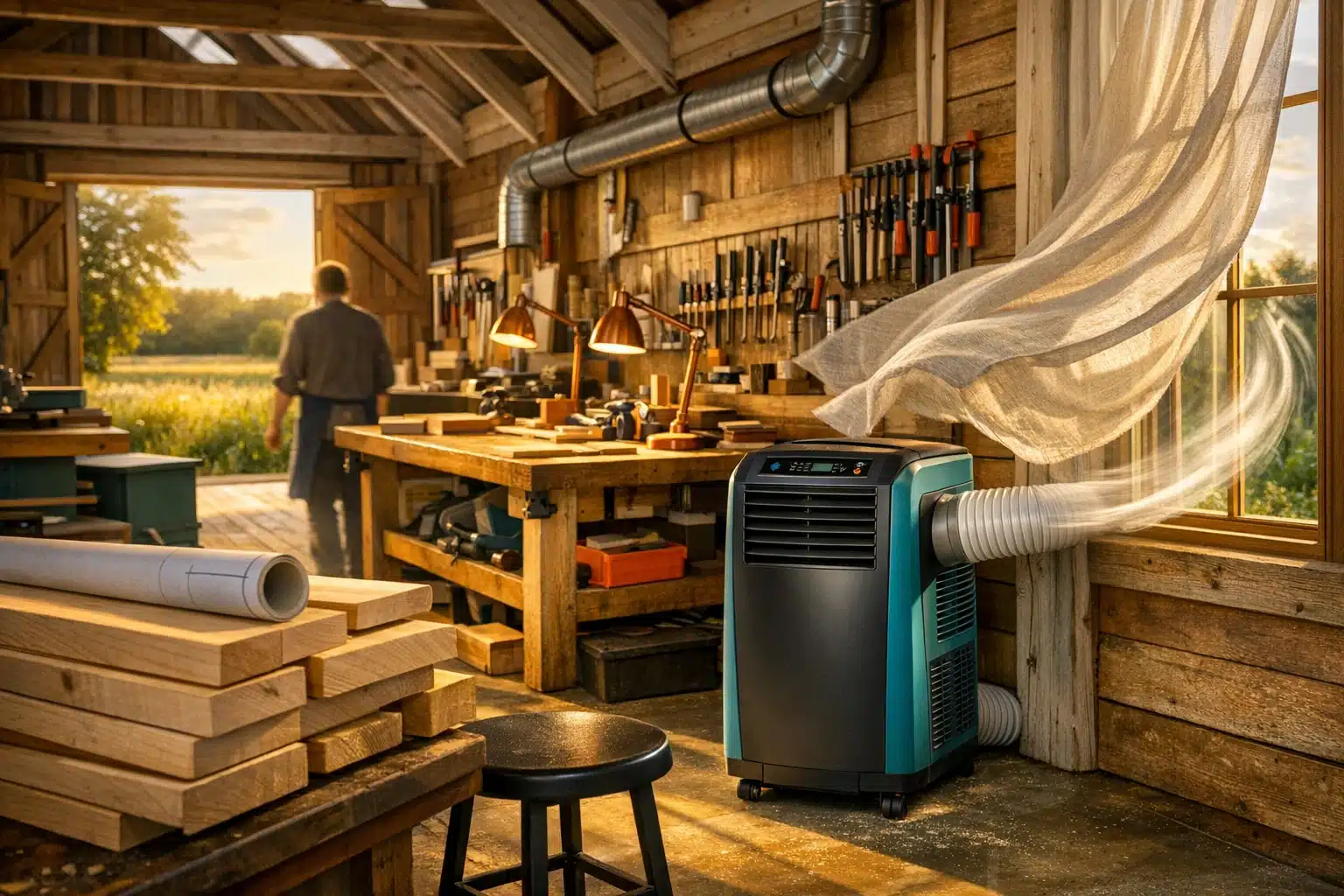
Portable HVAC Solutions for Garages, RVs, and Workshops
A portable HVAC unit can turn a sweltering garage, a damp workshop, or a stuffy RV into a place you actually want to spend time in. The payoff goes beyond comfort, because temperature and humidity influence tool life, stored materials, electronics, sleep, and concentration. These spaces rarely behave like a standard bedroom, so airflow, insulation, dust, and power limits matter far more than the box label suggests. Get the match right, and the equipment feels less like an appliance and more like a quiet problem-solver parked in the corner.
Outline
1. Understanding the main portable HVAC categories and how they differ. 2. Calculating capacity, airflow, and power requirements for real spaces. 3. Matching equipment to garages, RVs, and workshops without wasting money. 4. Installing, venting, powering, and maintaining a unit for dependable operation. 5. Comparing cost, efficiency, noise, and buying priorities for long-term value.
Understanding Portable HVAC Options and Where They Fit Best
Portable HVAC is not one single product category. It is a practical umbrella term that covers several types of mobile or semi-mobile climate-control equipment, each designed for a different mix of cooling, heating, humidity control, and airflow. For garages, RVs, and workshops, that distinction matters. A unit that works well beside a workbench may be clumsy in an RV aisle, while a compact machine that feels perfect in a camper may struggle in a hot garage with a metal door facing afternoon sun.
The most familiar option is the portable air conditioner. These units usually roll on casters and exhaust warm air through a hose routed to a window kit, wall vent, or temporary panel. Within this group, the key split is between single-hose and dual-hose models. A single-hose unit is simpler and often cheaper, but it can create negative pressure by pulling indoor air and sending part of it outside. In a leaky garage or workshop, that may draw hot outdoor air back in through gaps. A dual-hose unit uses one hose for intake and one for exhaust, which usually improves efficiency and helps maintain steadier performance in challenging spaces.
Evaporative coolers, sometimes called swamp coolers, are another portable option. They use water evaporation rather than refrigerant-based compression, so they consume less electricity than a portable AC in many cases. However, they work best in hot, dry climates. In humid regions, their cooling effect drops sharply, and they can add unwanted moisture. That makes them a risky choice for tool storage, woodworking materials, paper goods, or RV interiors where condensation is already a concern.
Portable heat pump units deserve attention too, especially for users who need year-round flexibility. These machines can cool in summer and provide electric heat during mild or moderately cold weather. They are appealing in garages used as home gyms, hobby rooms, or part-time offices, because one device can cover both shoulder seasons. In very cold conditions, though, heating output may decline, and supplemental heating can still be necessary.
For tougher environments, commercial spot coolers enter the picture. These are larger, heavier, and usually more expensive, but they can deliver targeted cooling to machinery, workstations, or enclosed shop areas. They are common in server rooms, event spaces, and industrial maintenance environments. In a serious workshop, a spot cooler can succeed where a residential portable AC feels outmatched.
A quick comparison helps:
– Portable AC: best general-purpose choice when venting is possible.
– Dual-hose portable AC: often stronger for garages and workshops with air leakage.
– Evaporative cooler: useful only in dry climates and open-air conditions.
– Portable heat pump: good for mixed-season comfort.
– Spot cooler: strongest option for demanding, high-heat applications.
Seen from a distance, all portable HVAC units seem to promise relief with a plug and a hose. Up close, their strengths are different. Choosing well begins with knowing what kind of relief you actually need.
Sizing the System: BTUs, Power Limits, Insulation, and Real Heat Load
Buying portable HVAC by square footage alone is one of the easiest ways to end up disappointed. A 300-square-foot bedroom, a 300-square-foot garage, and a 300-square-foot workshop do not place the same demand on a cooling system. Garages may have thin insulation, large metal doors, hot roofs, and frequent door openings. Workshops add motors, lighting, dust, and body heat from active work. RVs are smaller, but they often have large windows, compact interiors, and wall assemblies that gain heat quickly in direct sun. The label on the carton gives you a starting point, not a verdict.
For portable air conditioners, capacity is commonly advertised in BTUs, but shoppers should look carefully at how that number is presented. Some units show a larger traditional cooling figure, while others also list a lower SACC value, which reflects a more realistic estimate of delivered cooling under standardized test conditions. When comparing models, using the same rating method matters. A unit advertised at a high BTU number may not outperform a more honestly rated competitor once the hose heat, infiltration, and moisture load are considered.
Several factors push required capacity upward:
– Poor insulation in walls or ceilings
– Direct solar gain through doors, windows, or RV glass
– High outdoor humidity
– Frequent opening of garage doors or workshop entry points
– Heat from compressors, welders, power tools, or battery chargers
– More than one person working or sleeping in the space
Power availability is equally important. Many portable units for residential use run on standard 120-volt circuits, but real limits still apply. On a 15-amp circuit, continuous loads are commonly kept around 1,440 watts. On a 20-amp circuit, the continuous practical threshold is higher, around 1,920 watts. If the same circuit also feeds lights, chargers, a refrigerator in an RV, or shop tools, nuisance breaker trips become far more likely. That is why a slightly smaller unit on a dedicated circuit can outperform a larger unit that never gets stable power.
As a rough example, a well-shaded, modestly insulated RV sleeping area might be adequately served by a compact portable unit if venting is well designed and the usage is supplemental. A detached garage in full sun often needs more capacity than its floor area suggests, especially if it stores vehicles that bring in heat after a drive. A workshop with active machinery may need not just more BTUs, but more air movement and better dehumidification.
The smartest approach is to size for actual conditions, not marketing simplicity. Measure the room, note insulation quality, think about how often doors open, list internal heat sources, and match the unit to the hardest part of the day rather than the coolest hour. HVAC sizing is less like buying a lamp and more like packing for a trip: what looks fine on paper can fail quickly once the weather turns against you.
Best Portable HVAC Strategies for Garages, RVs, and Workshops
Each of these spaces asks portable HVAC to solve a different problem. A garage often needs brute resilience against radiant heat, stale air, and wide temperature swings. An RV needs compact equipment that respects floor space, electrical limits, and quiet nighttime use. A workshop needs comfort without creating new trouble for tools, dust management, or finishing materials. The best answer is rarely universal, even when the square footage looks similar.
In a garage, cooling demand is often highest in late afternoon, when sun-soaked surfaces release stored heat like a slow oven. If the garage door faces west or the roof deck is poorly insulated, a single-hose unit may spend much of its effort fighting incoming heat and replacement air. In this setting, a dual-hose portable AC or a higher-capacity spot cooler usually makes more sense. If the garage is used occasionally for exercise, hobbies, or vehicle detailing, you may not need to cool the entire volume perfectly. Targeted comfort near the work zone can be enough. That is where airflow direction, fan speed, and placement matter almost as much as raw capacity.
RVs are a different puzzle. Space is precious, movement matters, and every appliance competes for amperage. Portable HVAC in an RV often works best as a supplemental system rather than a total replacement for a rooftop unit. It can cool a sleeping nook, reduce load on the main system, or support comfort at campgrounds where afternoon heat overwhelms factory equipment. Still, a portable AC takes up floor space, needs careful condensate handling, and requires a well-sealed exhaust route. Noise is also more noticeable in a compact cabin. A model that sounds acceptable in a garage may feel intrusive three feet from the bed.
Workshops add another layer: the air is rarely clean. Fine sawdust, metal particles, overspray, and general debris can clog filters and coat coils. Portable HVAC can help keep temperatures manageable, but it should never be treated as a substitute for dust collection or ventilation planning. If painting, staining, or chemical use is part of the shop routine, airflow strategy becomes critical. Cooling the room is useful, but controlling fumes and protecting finishes from excess humidity can be even more valuable.
Practical recommendations look like this:
– Garage: favor dual-hose ACs, stronger airflow, and sealed venting.
– RV: prioritize compact size, low noise, manageable condensate, and circuit awareness.
– Workshop: choose easy-access filters, durable construction, and compatibility with dust control.
If there is a unifying lesson, it is this: match the machine to the rhythm of the space. A garage often asks for power, an RV asks for restraint, and a workshop asks for balance. Portable HVAC works best when it respects those differences instead of pretending every room lives by the same rules.
Installation, Venting, Power Supply, and Maintenance That Actually Matter
A portable HVAC unit can have solid specifications and still underperform if the installation is sloppy. This is especially true in garages, RVs, and workshops, where temporary setups are common and small mistakes multiply quickly. The exhaust path is the first place to pay attention. Portable air conditioners depend on removing heat from the conditioned space, so the vent route should be as short, straight, and well-sealed as possible. A long, sagging hose acts like a warm radiator in the room you are trying to cool. Every extra bend costs performance.
Window kits are convenient, but they are not the only option. In garages, many users build temporary vent panels for side windows, pass-through wall sleeves, or inserts for partially opened doors. The goal is always the same: keep hot outdoor air from sneaking in around the exhaust opening. In an RV, venting may require more creativity, because standard residential kits are rarely designed for curved windows, thin wall sections, or compact layouts. Whatever the method, sealing matters. If the exhaust connection leaks, the unit ends up cooling and reheating the same air in a frustrating loop.
Power setup deserves equal caution. Portable units should be plugged directly into a suitable outlet whenever possible. Long, undersized extension cords can cause voltage drop, overheating, or nuisance shutdowns. In workshops, a dedicated circuit is often worth the effort, because startup currents and simultaneous tool use can overload a shared line. In RVs, shore power limits and generator capacity should be checked before assuming a portable system can run comfortably alongside microwaves, chargers, water heaters, or rooftop AC equipment.
Maintenance is where steady performance is won or lost. Filters need regular cleaning, and dusty environments demand more frequent attention than living rooms. A workshop may require weekly inspection during heavy use. Condensate management also matters. Some units self-evaporate part of the moisture, but high humidity can still produce enough water to require draining. Ignoring that detail usually becomes memorable at the least convenient time.
Good upkeep includes:
– Cleaning or replacing filters on schedule
– Checking hoses and seals for leaks
– Keeping coils and intake grilles free of dust buildup
– Monitoring drain lines or internal tanks
– Storing the unit dry before seasonal shutdown
There is a quiet pleasure in a portable HVAC system that has been installed well. It starts, hums, and gets on with the job. There is a different experience entirely when the hose pops loose, the breaker trips, and the condensate alarm sounds while you are halfway through a project. Careful setup is not glamorous, but it is the difference between comfort and constant tinkering.
Cost, Efficiency, Noise, and How to Buy Without Regret
The cheapest portable HVAC unit is not always the least expensive choice, and the most powerful one is not automatically the smartest. Value comes from the relationship between purchase price, operating cost, durability, and how well the machine fits the space. A bargain unit that runs nonstop, struggles with humidity, and annoys everyone with noise can cost more in electricity and frustration than a better-matched model bought once.
Efficiency starts with realistic expectations. Portable air conditioners are generally less efficient than well-installed fixed systems, partly because their exhaust arrangements introduce thermal penalties. That does not make them poor tools; it simply means their convenience comes with tradeoffs. If mobility, seasonal storage, renter-friendly installation, or temporary use is important, those tradeoffs may be perfectly acceptable. For many garage owners and RV users, portability itself is the feature worth paying for.
Noise should be considered early, not as an afterthought. Many residential portable units operate somewhere around the range of a conversation or a strong box fan, while heavier-duty spot coolers can be significantly louder. In a garage, that may be tolerable. In an RV at night, the same sound can become the dominant feature of the evening. Noise character also matters. A steady fan sound is often easier to live with than compressor cycling or rattling hose fittings.
When comparing units, focus on a handful of decision points:
– Rating method and realistic cooling output
– Single-hose versus dual-hose design
– Heating capability, if shoulder-season use matters
– Moisture removal and drain options
– Weight, wheel quality, and storage footprint
– Filter accessibility in dusty environments
– Warranty terms and availability of replacement parts
Budget planning should also include accessories and small improvements that change results dramatically. A vent panel, reflective window covering, weatherstripping, insulated garage door panels, or a simple circulation fan can make a medium-size unit feel far more capable. In other words, the appliance is only part of the system. The space itself can be tuned to help it succeed.
If you use the area daily, spending more for quieter operation, stronger dehumidification, and easier maintenance usually makes sense. If you only need seasonal relief during weekend projects or summer trips, a mid-range unit with sensible setup may be the sweet spot. Buying without regret means stepping back from the advertising language and asking a simpler question: what problem am I solving, how often, and under what conditions? Once that answer is clear, the right category and feature set become much easier to spot.
Conclusion for Garage Owners, RV Travelers, and Workshop Users
Portable HVAC is most useful when it is chosen as a tool, not as a shortcut. Garage owners usually benefit from stronger cooling, better vent sealing, and equipment that can handle heat soak and air leakage. RV travelers need compact, quieter systems that respect limited power and precious floor space. Workshop users should look for easy maintenance, dependable filtration access, and climate control that works alongside dust and ventilation planning rather than against it.
The common thread is fit. A well-sized unit with a clean exhaust path, stable power, and sensible expectations can make these spaces dramatically more comfortable and more usable. That can mean longer project sessions, better sleep on the road, improved protection for tools and materials, and fewer moments when the room itself becomes the reason to stop. If you begin with the conditions of your space instead of the promises on the packaging, you are far more likely to end up with a portable HVAC setup that earns its place every season.


