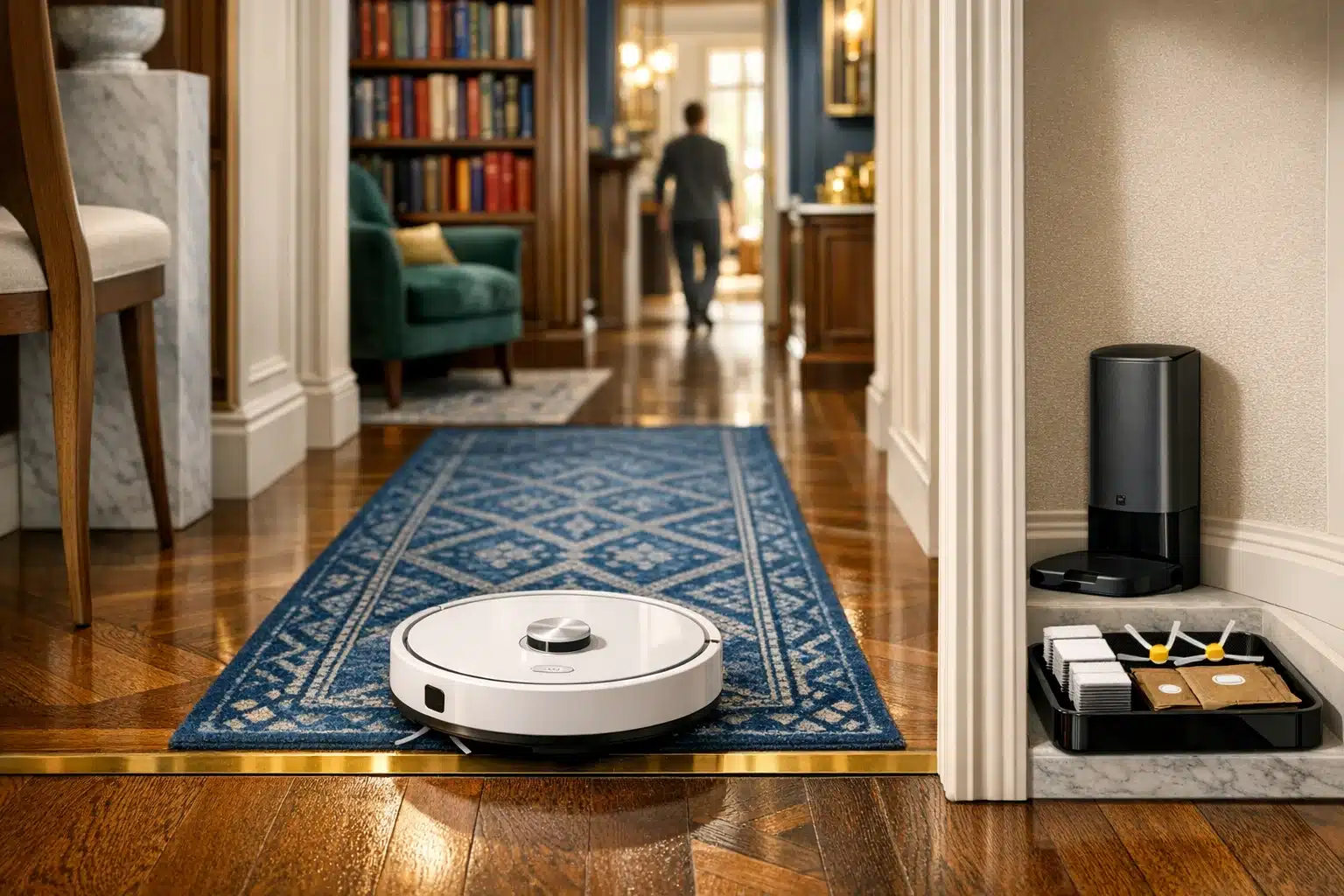
iRobot Roomba Clearance Deals Guide
Buying a robot vacuum on clearance can feel a bit like treasure hunting: the right box may hold years of easier cleaning, while the wrong one can become a dusty compromise. Roomba models often appear in clearance sales when a retailer resets inventory, a new generation arrives, or packaging changes. That creates real opportunities for households that care more about practical performance than the newest badge. The key is knowing how to compare features, support, and long-term costs before the discount disappears.
This editorial guide is organized in five parts so you can move from broad strategy to specific buying decisions.
- How Roomba clearance deals work and why prices change
- Which features matter most when comparing older and newer models
- Where to shop and how to judge a listing before you buy
- How to calculate real ownership cost beyond the sticker price
- How different types of buyers can choose a deal that actually fits their home
1. How iRobot Roomba Clearance Deals Work
Clearance pricing usually looks dramatic because it appears at the end of a product cycle, not because a machine suddenly became useless. In the Roomba world, discounts often happen when retailers need shelf space, when iRobot introduces a refreshed lineup, when a color or bundle is discontinued, or when stores want to move open-box and returned inventory quickly. A robot vacuum that cleaned well in one season does not lose all of its practical value in the next. What changes is the market around it: newer navigation systems appear, app features improve, and retailers must make room for the latest models.
That matters because shoppers often assume “clearance” always means “old and risky.” In reality, clearance can refer to several different situations, each with a different value profile. A brand-new previous-generation Roomba can be an excellent buy if it still supports the app, uses currently available filters and brushes, and suits the size of your home. On the other hand, a deep discount on a model with limited mapping, rare parts, or a weak return policy may not be much of a bargain at all.
It helps to think of clearance deals in categories:
- New old stock: unused products from an earlier release cycle
- Open-box units: items returned after minimal use or a packaging change
- Manufacturer or retailer refurbished models: repaired, tested, and resold
- Bundle clearance: the robot is standard, but the accessory package is being phased out
Timing also shapes the deals you see. Discounts often become more visible around major holiday sales, spring cleaning promotions, and periods following product launches. Retailers may also reduce prices after the return-heavy holiday season when they need to move inspected units. Like a train station just before a timetable shift, the market becomes busiest when inventory is about to change direction.
One more point is worth keeping in view: not all clearance offers come from the same level of trust. Buying from iRobot directly, an authorized electronics retailer, or a major home goods chain tends to reduce risk because warranty terms and return policies are clearer. Third-party marketplace sellers can still offer value, but they require more scrutiny. Before you focus on the percentage off, confirm the exact model number, condition, included dock, accessory count, software compatibility, and return window. A lower number on the price tag means less if the robot arrives missing a charging base or needs expensive replacement parts within a few months.
2. Which Roomba Features Still Matter on Clearance
A discounted Roomba is only a strong buy when its feature set still matches the job your floors ask it to do. That sounds obvious, yet many shoppers get distracted by a steep markdown and forget to compare the machine to their home, not to its original list price. The best clearance pick for a studio apartment is not necessarily the best one for a two-story house with pets, rugs, chair legs, and busy family traffic.
Start with navigation. Older Roombas often rely on simpler movement patterns, which can still work well in smaller spaces or homes with open floor plans. They usually clean by covering an area through repeated passes rather than through detailed room-by-room mapping. In a modest apartment, that may be enough. In a larger home, though, smarter navigation becomes more valuable because it reduces missed areas and wasted battery time. Roombas with structured mapping, room labels, and selective room cleaning can feel less like gadgets and more like useful household tools.
Next comes debris handling. Homes with pets usually benefit from Roombas that use dual rubber brushes, since these tend to resist hair tangles better than bristle-heavy systems. If you have a dog that sheds in spring or a long-haired cat that somehow leaves fur in places physics should forbid, brush design matters as much as suction. On mixed flooring, many midrange and premium Roombas perform better than entry-level models because they transition more smoothly between hard floors and low-pile rugs.
Self-emptying docks are another major dividing line. A clearance deal can look especially appealing when it includes a dock that automatically empties the bin for several weeks of routine use. That feature is not essential for everyone, but it is genuinely useful for busy households, allergy-conscious buyers, and people who do not want to interact with dust every day. Still, the dock only adds value if replacement bags are easy to find and reasonably priced.
When comparing Roombas on clearance, these features deserve the closest look:
- Navigation type and mapping ability
- Brush design, especially for pet hair
- Battery runtime and recharge-and-resume behavior
- Dock type, including self-empty support
- Obstacle avoidance and app control quality
- Mopping function on Combo models, if relevant
Combo units deserve a special note. If a clearance Roomba can vacuum and mop, that convenience may sound irresistible, but combined systems vary widely in effectiveness. Some are best for light maintenance on sealed hard floors rather than deep mopping. If your home mostly has tile, vinyl, or hardwood, a Combo model may make sense. If thick carpet covers much of your space, you may get better value from a vacuum-only Roomba with stronger navigation and brush performance.
In short, the smartest feature comparison is practical rather than flashy. Ask what kind of dirt you battle, how often you want to empty a bin, whether room mapping will save time, and how long you expect to keep the unit. A clearance sticker tells you the price moved downward; the feature list tells you whether the robot still moves in the right direction for your home.
3. Where to Find Roomba Clearance Deals and How to Judge a Listing
Finding a Roomba clearance offer is not usually the hard part. The harder part is deciding whether the listing is complete, honest, and competitive once all the small details are exposed to daylight. Good deals can appear on iRobot’s own storefront, large electronics chains, department stores, warehouse clubs, home retailers, and reputable refurbishing outlets. Marketplace platforms may also have attractive prices, but the quality of the seller matters at least as much as the quality of the product.
A useful way to shop is to compare by condition first and price second. Brand-new clearance stock typically offers the least risk because the battery, internal sensors, and accessories are unused, and the packaging should identify the exact model. Open-box units can also be worthwhile if the item was simply returned after a short trial or if the outer carton was damaged. Certified refurbishments occupy a middle ground: they may offer excellent value, but the strength of the warranty and the reputation of the refurbisher should influence your decision.
When reading a listing, slow down and look for the details that change the true value:
- Does the package include the charging dock or self-empty base?
- Are filters, side brushes, bags, or mopping pads included?
- Is the product new, open-box, refurbished, or used?
- Who handles warranty claims and for how long?
- Is the return period long enough to test navigation, charging, and app setup?
- Does the model number match the features shown in the photos?
These questions may sound cautious, yet they can save real money. A seemingly cheap robot without a self-empty dock may actually cost more than a slightly higher-priced bundle that includes one. A refurbished unit with a solid warranty can be a better buy than a used marketplace listing sold “as is.” Even accessory counts matter. A machine that arrives with spare filters, extra bags, or replacement brushes can reduce the cost of ownership for the first several months.
It is also smart to compare prices across two or three seller types rather than anchoring on the first discount you see. Retailers sometimes use different bundle names for nearly identical packages, which can make price comparison look confusing. Focus on the core hardware, included accessories, and support terms. If a clearance listing is dramatically cheaper than every credible alternative, pause. That gap may reflect missing parts, weak after-sales support, or a seller hoping shoppers will notice only the percentage off.
Finally, keep proof of purchase, serial information, and screenshots of the listing. If there is any issue with battery health, app pairing, or missing components, documentation makes the return or support process much easier. Clearance shopping rewards decisiveness, but it should never punish careful reading. The most satisfying deal is not the one that disappears first; it is the one that still looks sensible a month after the box is opened.
4. The Real Cost of Ownership: Why the Cheapest Roomba Is Not Always the Best Deal
Sticker price is only the opening number in the Roomba clearance story. The more important figure is the total cost of ownership over the next year or two, because robot vacuums are not buy-once-and-forget machines. Filters clog, side brushes wear down, rollers collect damage, docking bags need replacement on self-empty systems, and batteries gradually lose capacity. A clearance purchase that seems brilliantly cheap on day one can become expensive if it needs hard-to-find parts or frequent attention.
Consumables are the first expense to estimate. Most Roombas need periodic filter changes and brush replacements, with intervals depending on pets, dust levels, and cleaning frequency. If you run the vacuum daily in a home with heavy shedding, maintenance costs arrive faster than they would in a lightly used guest suite. This does not mean robot vacuums are poor value; it means the practical buyer should budget for upkeep instead of acting surprised when the first filter order comes due.
Battery condition is another major variable, especially on older stock and refurbished units. Lithium-ion batteries generally age over time even when a device is not used heavily. A discounted Roomba that was manufactured well before the sale date may still work properly, but you should account for the possibility that runtime will decline sooner than expected. In a large home, weaker battery life can make cleaning sessions less efficient, particularly if the robot lacks strong recharge-and-resume behavior.
Here is a simple way to think about value beyond the initial price:
- Purchase price: what you pay at checkout
- Accessory cost: filters, brushes, bags, pads, or rollers
- Battery outlook: likely replacement timing and price
- Support life: app compatibility and part availability
- Labor saved: how much manual vacuuming the robot genuinely replaces
Imagine two options. One is a very cheap older Roomba with basic navigation and no self-empty dock. The other costs more up front but includes better mapping, tangle-resistant brushes, and a dock that reduces daily maintenance. For a single person in a compact apartment, the cheaper model may be perfectly rational. For a family with pets and several rooms, the pricier option may actually cost less in time, frustration, and manual cleanup over its lifespan.
Noise, floor type, and obstacle handling also affect real-world value. If a clearance robot regularly gets stuck on cords, struggles with thresholds, or misses pet fur along edges, you may end up vacuuming behind it more than you expected. Savings vanish quickly when the product creates a second chore instead of removing the first. A genuinely good clearance deal is not the lowest number on the tag. It is the purchase that continues to make sense after you add maintenance, convenience, performance, and the number of weekends it helps you reclaim.
5. Conclusion: Choosing the Right Roomba Clearance Deal for Your Home
The best Roomba clearance deal depends less on the drama of the markdown and more on the quiet details of your daily routine. If your home is small, mostly hard flooring, and free of heavy pet hair, an older or simpler Roomba can still deliver useful automation at a very fair price. If your rooms are larger, your schedule is crowded, or your floors collect fur like a magnet collects paper clips, then features such as smart mapping, stronger brush design, and a self-empty dock deserve more weight.
For first-time robot vacuum buyers, the safest path is usually a new or manufacturer-backed clearance model with clear warranty terms. You get the benefit of a discount without stepping too far into uncertainty. For budget-focused shoppers who do not mind a little research, certified refurbished units can offer strong value if the seller explains the condition honestly and the return window is reasonable. For pet owners, model choice should revolve around brush design, bin management, and navigation quality rather than headline discount percentages.
A quick decision checklist can help narrow the field:
- Measure your home by cleaning complexity, not just square footage
- Decide whether mapping and room-specific cleaning matter to you
- Confirm whether a self-empty dock is included or sold separately
- Check the availability of filters, bags, brushes, and batteries
- Read warranty and return terms before checkout
- Compare at least two reputable sellers before you commit
Shoppers who love a bargain sometimes treat clearance as a race. In practice, it works better as a filter. A good discount removes overpriced options and leaves behind a smaller set of machines worth serious attention. Once you know which features fit your home, the clearance aisle stops looking like a pile of random boxes and starts reading like a shortlist.
That is the real advantage of shopping carefully in this category. You are not merely buying a robot vacuum at a lower price; you are selecting a cleaning tool that fits your rooms, your habits, and your tolerance for maintenance. Done well, a Roomba clearance purchase can feel less like settling for last season’s product and more like finding the sensible answer hidden behind the noisy signage. For the reader trying to balance savings with everyday usefulness, that is where the smartest deal begins.