Cruises from the UK to the Norwegian Fjords: What to Know Before You Book
Leaving the UK by sea for Norway has a special logic: your holiday begins when the ship slips away from the quay, not when you join another airport line. For many travellers, that makes a fjords cruise one of the easiest ways to see sheer cliffs, neat waterside towns, and waterfalls that seem to fall from the cloud base. The route matters because it combines simple logistics with some of Northern Europe’s most striking scenery. Book wisely, and the gap between an ordinary sailing and a memorable one becomes obvious before the first fjord even opens ahead.
Outline: this guide covers why these cruises are so popular, when to sail and where to depart from, how to compare ships and cabins, what the real budget looks like, and which practical shore and packing decisions make the biggest difference once you are on board.
Why Cruises from the UK to the Norwegian Fjords Are So Popular
A cruise from the UK to the Norwegian fjords appeals to travellers for one reason that is both simple and surprisingly powerful: convenience. You can usually reach the port by car, rail, or coach, board with far less airport friction, and wake up each day moving closer to a landscape that feels cinematic. For people who dislike flying, want to avoid baggage limits, or simply prefer a gentler start to a holiday, that no-fly factor is often the first big advantage. It is not just about ease, though. The route offers a rare mix of scenic sailing and manageable travel planning, which is why it attracts everyone from first-time cruisers to seasoned passengers looking for a calmer kind of itinerary.
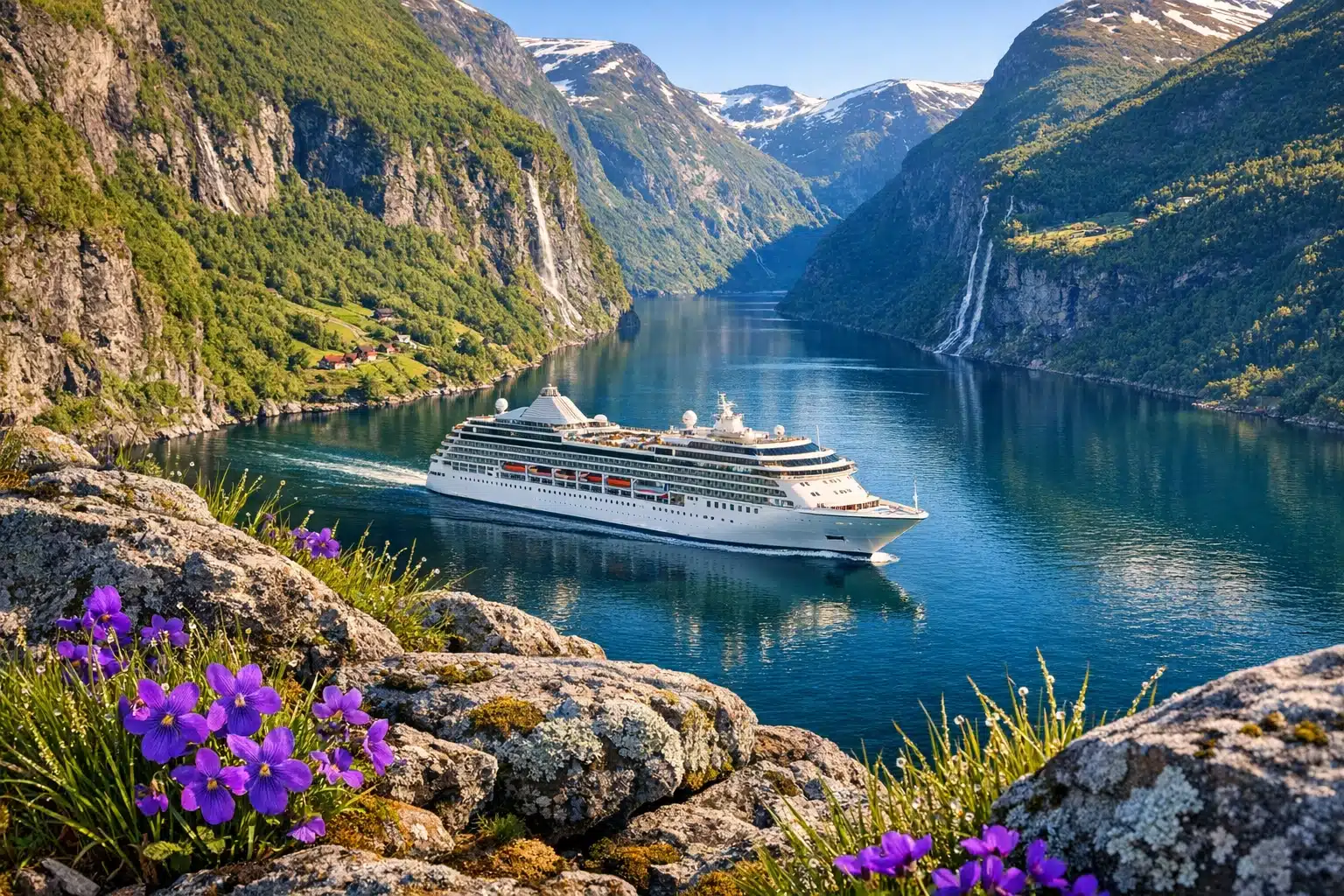
The Norwegian fjords themselves are the main draw. These deep, glacially carved inlets create a setting that is hard to match elsewhere in Europe: steep green walls, long ribbons of water, tiny farms clinging to hillsides, and waterfalls that appear without warning as the ship rounds another bend. Many itineraries include ports such as Bergen, Stavanger, Flåm, Olden, Geiranger, and Ålesund. Each stop has a different personality. Bergen feels urban and historic, with its waterfront and gateway role. Flåm is smaller and intensely scenic, often chosen for rail excursions into the mountains. Geiranger is famous for dramatic fjord views, while Olden often appeals to travellers who want access to glaciers and lake landscapes.
Compared with a Mediterranean cruise, a fjords itinerary is usually less about beaches and late-night city breaks and more about what you see from the ship itself. On some days, the sail-in is the highlight. Passengers gather on open decks, coffee in hand, while the scenery shifts from broad coast to narrow waterway. It can feel less like ticking off attractions and more like slowly entering a landscape. That difference matters if your ideal trip values atmosphere over speed.
Several practical factors also explain the route’s popularity:
• It is well suited to travellers who want a no-fly holiday.
• The scenery begins before you even disembark.
• A wide range of cruise lines serve the region, from mainstream to more premium styles.
• The destination works for couples, multigenerational families, and older travellers alike.
In short, these cruises are popular because they offer both ease and substance. You are not just booking transport to Norway; you are choosing a travel style in which the passage, the views, and the rhythm of the ship are central parts of the experience.
Best Time to Go, Common Departure Ports, and Typical Itinerary Lengths
Timing has a huge influence on a Norwegian fjords cruise, and it is one of the first decisions that shapes the trip you will actually get rather than the version shown in brochure photos. The main season generally runs from late spring to early autumn, with May through September being the core period for sailings from the UK. Within that window, each month has its own mood. May often brings snowy peaks above greener lower slopes, giving the scenery strong contrast and a crisp, fresh look. June and July usually offer the longest daylight hours, which is especially appealing when scenic cruising continues into the evening and the landscape stays visible far later than many visitors expect. August is popular with families during school holidays, while September can bring cooler air, fewer crowds on some departures, and the first hints of autumn colour.
Departure port matters more than many people assume. Southampton is one of the most common starting points because it supports a large number of itineraries and ships, and transport connections are strong. Liverpool can be more convenient for travellers in the North West, while Newcastle, Dover, Rosyth near Edinburgh, and occasionally Belfast or other regional ports may also feature on selected sailings. Choosing a nearer port can reduce hotel costs, parking complexity, and overall travel fatigue. That may sound like a small logistical detail, but it changes the tone of the holiday, especially for older passengers or families travelling with children.
Itinerary length is another major differentiator. Seven-night cruises tend to suit first-timers, people with limited annual leave, or travellers who want a scenic taste of Norway without committing to a longer voyage. These cruises often focus on a handful of high-profile ports. Ten- to fourteen-night sailings usually allow more variety, with extra fjord cruising, additional coastal cities, or a route that reaches further north. Longer voyages can feel less rushed, particularly when weather affects shore plans or when sea days are built in more thoughtfully.
When comparing dates and duration, it helps to think beyond price:
• Early season often means cooler air but striking mountain views with lingering snow.
• Peak summer can deliver the liveliest atmosphere on board and the longest days.
• Shoulder-season departures may offer better value and a quieter feel.
• Shorter itineraries are efficient; longer ones often provide deeper immersion.
There is no single “best” time for everyone. The ideal choice depends on whether you value budget, daylight, school-holiday timing, ease of departure, or time ashore. The strongest bookings usually come from matching those practical realities with the experience you actually want, rather than chasing the cheapest fare alone.
How to Compare Cruise Lines, Ship Size, and Cabin Choices
Choosing the right fjords cruise is not only about destination; it is also about how the ship shapes your experience of that destination. Two itineraries may list similar ports yet feel completely different once you factor in passenger numbers, cabin layout, dining style, deck space, and excursion logistics. That is why ship selection deserves as much attention as the route itself.
Mainstream cruise lines often attract the widest audience because they combine accessible fares with broad entertainment choices, multiple dining venues, and a relaxed, all-ages atmosphere. These ships can be a strong fit for families, first-time cruisers, or travellers who want plenty to do in the evenings after a day of scenic sailing. Premium and smaller-ship options typically offer a quieter onboard feel, more attentive service ratios, and in some cases a stronger destination focus. They may cost more, but they can appeal to passengers who care less about water slides and theatre production shows and more about space, comfort, and ease during embarkation or shore visits.
Ship size affects the fjords experience in subtle and obvious ways. Larger vessels may have more facilities, better cabin variety, and more stable pricing across categories. Smaller ships, however, can feel less crowded and sometimes provide a more intimate atmosphere when sailing through narrow channels or docking in smaller communities. Not every port experience is identical from ship to ship. On a busy day, the difference between walking straight off and waiting for a tender can affect how much time you really have ashore.
Cabin choice is where budget and experience meet head-on. An inside cabin is often the most economical option and can work well if you plan to spend most of your time on deck or in lounges during scenic cruising. An ocean-view cabin adds natural light, which many travellers appreciate on northern itineraries. A balcony cabin is often heavily marketed for fjords cruises, and there is a clear reason for that: private access to the scenery can be wonderful when the ship glides past waterfalls at dawn or enters a fjord before breakfast. Still, a balcony is not automatically the best-value choice for everyone. If the price difference is large and you are happy using public decks, the money may be better spent on excursions or a longer itinerary.
Useful questions to ask before booking include:
• Do you want a lively ship or a quieter atmosphere?
• Will children or teenagers need activities onboard?
• Is a balcony worth it for your habits, not just for the brochure image?
• How important are included extras such as drinks, Wi-Fi, or gratuities?
The right ship is the one that fits your style of travel. A fjords cruise works best when the onboard environment supports the way you want to experience the scenery, rather than distracting from it or making you pay for features you will barely use.
What the Fare Really Covers and How to Budget Before You Book
One of the easiest mistakes when booking a Norwegian fjords cruise is to focus on the headline fare and ignore everything that can sit around it. Cruise pricing often looks straightforward at first glance, but the real cost depends on what is included, what you are likely to add, and how you personally travel. A low base fare can still represent good value, yet only if you understand what remains outside the package.
The standard cruise fare usually covers your cabin, main dining, buffet meals, entertainment, and transport between ports. That already includes a lot compared with some land-based holidays. However, common extra costs can add up quickly. Shore excursions are often the biggest variable because Norway is a destination where many travellers understandably want to do more than stroll around the dock. Scenic rail trips, glacier outings, coach tours, and boat trips on the fjords can be memorable, but they can also raise the total trip cost significantly. Drinks packages, specialty restaurants, spa treatments, Wi-Fi, photos, and service charges on some lines are other items to check carefully before you book.
For budgeting, it helps to think in layers. First, calculate the cruise fare itself. Then add transport to the UK departure port, parking or a pre-cruise hotel if needed, travel insurance, and spending money for Norway. After that, decide which extras are genuinely important to you. Many travellers spend more than expected because they make those decisions once onboard, when the holiday mood has already taken over and the fjord outside the window is quietly winning the argument.
Booking strategy matters too. Early booking can provide the best choice of cabins, preferred dining times, and attractive launch offers. That is especially useful if you want a balcony or a specific sailing during school holidays. Later deals do exist, but they usually involve compromise on cabin location, dates, or ship choice. Shoulder-season sailings may bring stronger value than peak summer departures, especially for couples without school-age children.
Practical budgeting priorities often include:
• comparing the total trip cost, not only the cruise fare;
• checking whether gratuities are included;
• pricing excursions independently as well as through the cruise line;
• deciding in advance if drinks packages or Wi-Fi are worth the spend.
Good value is not always the cheapest option. Sometimes paying a bit more for a better itinerary, a more convenient departure port, or a cabin category that suits your habits will leave you feeling that the holiday worked smoothly from start to finish. The smartest booking is usually the one with the fewest expensive surprises later.
Shore Excursions, Packing Tips, and Who This Kind of Cruise Suits Best
Once the ship is booked, the focus shifts to what your days in Norway will actually feel like. This is where shore planning and practical preparation matter more than glossy advertising. The fjords are visually dramatic, but they are also a destination where weather, terrain, and port logistics shape the experience in real time. You may step off the ship into bright sunshine, then find yourself reaching for a waterproof layer before lunch. That unpredictability is not a flaw; it is part of the region’s character. It also means smart packing is worth more than overpacking.
Excursions range from easy panoramic drives to more active experiences such as hiking, kayaking, cycling, or trips that combine road, rail, and ferry travel. Flåm is often associated with one of Norway’s best-known scenic rail journeys. Olden can appeal to travellers looking for glacier viewpoints or lake scenery. Bergen rewards independent walkers with a manageable city centre and historic atmosphere, while Stavanger can mix urban time with access to striking natural landscapes. If mobility or energy levels are a concern, it is wise to check the physical demands of each excursion carefully rather than assuming every sightseeing tour is gentle.
Packing for this route is more about flexibility than volume. Layers work better than bulky clothing, and shoes with decent grip are more useful than purely stylish ones when streets are wet or terrain is uneven. A light waterproof jacket, warm mid-layer, day bag, and binoculars are often more valuable than formal extras you may barely use. If you enjoy photography, keep a camera or phone accessible during sail-ins, because some of the most memorable views happen when you are still onboard.
A helpful packing and planning checklist looks like this:
• waterproof outer layer and warm layers you can add or remove easily;
• comfortable footwear for hills, cobbles, and damp surfaces;
• a clear plan for which ports you will explore independently and which deserve a booked excursion;
• awareness of daylight hours, meeting times, and tender arrangements where relevant.
So who is this kind of cruise best for? It suits travellers who enjoy scenery, comfort, and a slower travel rhythm more than nightlife-heavy port hopping. It is especially good for people who want a no-fly holiday, couples seeking a visually rich trip, and older travellers who prefer straightforward logistics. Families can enjoy it too, particularly on larger ships, but they should look closely at onboard facilities and excursion suitability. For the target audience, the main takeaway is simple: choose the cruise that matches your pace. If you book with realistic expectations about weather, budget, and ship style, a voyage from the UK to the Norwegian fjords can feel less like a checklist holiday and more like entering a landscape that keeps revealing something new at every turn.