Best Places To Visit In Mexico
Mexico is one of those rare destinations where a single trip can hold Aztec history, cenote swims, volcanic skylines, street tacos, whale-filled seas, and quiet colonial plazas. That variety is exactly why choosing the right places matters. A beach break in Baja feels nothing like a week in Mexico City or a cultural route through Oaxaca and Mérida. This article maps out the country’s most rewarding stops so you can match the destination to the kind of journey you actually want.
Outline
1. Mexico City and the Central Highlands: the strongest all-around choice for museums, architecture, history, and easy day trips.
2. The Yucatán Peninsula: ideal for Maya archaeology, cenotes, colonial streets, and Caribbean beaches with very different personalities.
3. Oaxaca and Chiapas: a deeper cultural route shaped by cuisine, crafts, indigenous heritage, mountain towns, and dramatic ruins.
4. Baja California Sur and the Pacific Coast: best for marine life, desert-sea scenery, surfing, and slower outdoor-focused travel.
5. Conclusion and trip planning guide: how to choose the best Mexican destination for your travel style, season, and interests.
Mexico City and the Central Highlands: The Best First Stop for Culture, History, and Urban Energy
For many travelers, Mexico City is the smartest place to begin because it explains the country before you ever reach the beach. The capital sits at roughly 2,240 meters above sea level and anchors one of the largest metropolitan areas in the world, which means scale is part of the experience. Yet the city is not simply big for the sake of being big. It layers pre-Hispanic history, Spanish colonial architecture, modern art, political history, and one of the most exciting food scenes in the Americas into neighborhoods that each feel distinct. Walk through the Zócalo and you move through centuries in a few blocks: the Metropolitan Cathedral, the National Palace, and the Templo Mayor ruins all stand close enough to turn history into a living street map.
The city’s museum scene is another reason it belongs near the top of any list of places to visit in Mexico. The National Museum of Anthropology is often the headline stop, and for good reason. Its collections provide essential context for civilizations such as the Mexica, Maya, Olmec, and Zapotec. Chapultepec Park adds even more range with castles, museums, and green space large enough to make the city exhale. Meanwhile, neighborhoods like Roma, Condesa, and Coyoacán offer a completely different rhythm. They are good places to slow down, browse bookstores, sip coffee, and see how daily life feels beyond the postcard monuments.
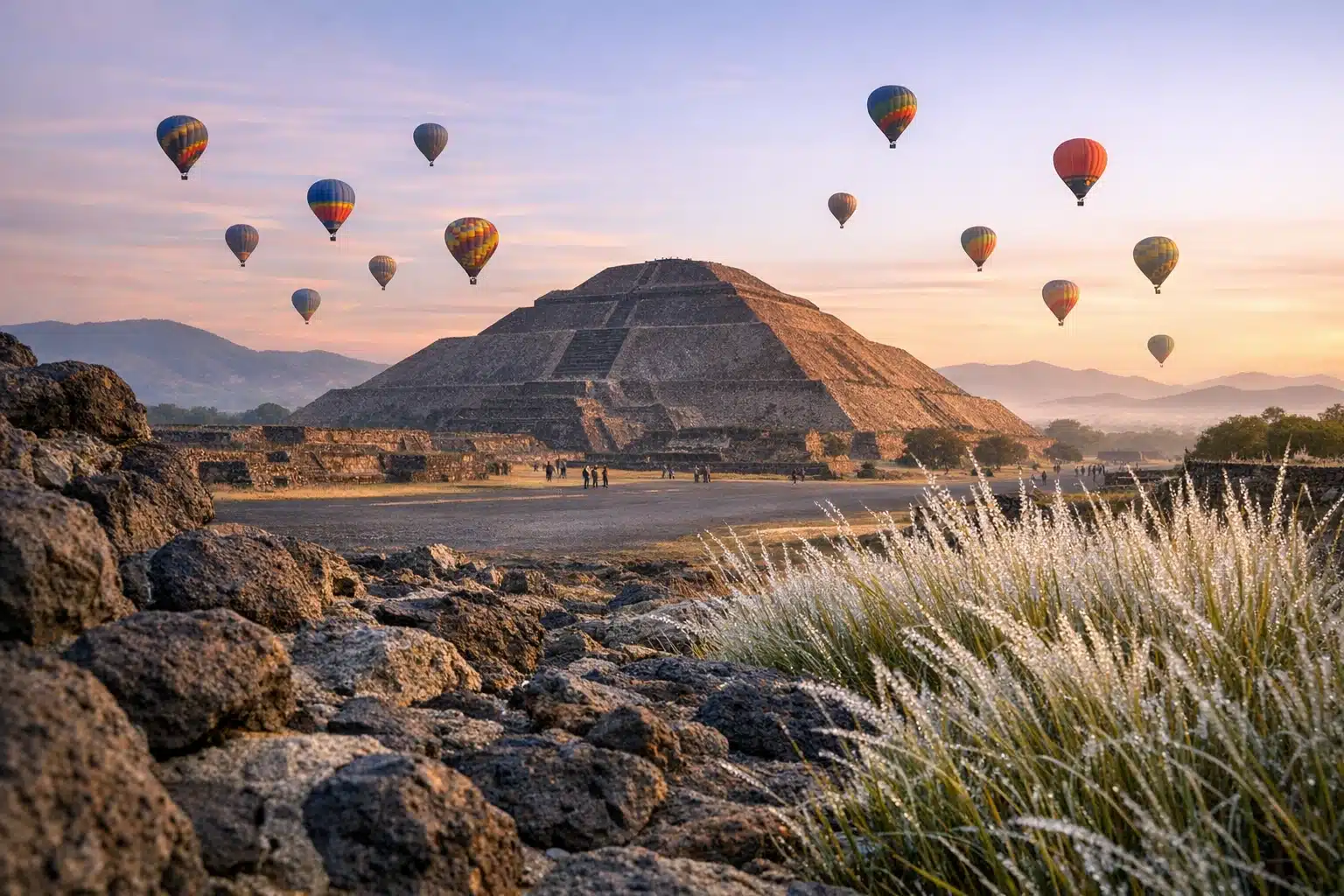
What makes the Central Highlands especially rewarding is how easily Mexico City connects to nearby destinations. Teotihuacán, around an hour away depending on traffic, gives visitors one of the most significant archaeological sites in the country, with the Pyramid of the Sun and the Pyramid of the Moon still commanding the valley like stone thunderheads. Puebla is another excellent side trip or overnight stay, known for tiled architecture, churches, and a culinary tradition tied to dishes such as mole poblano. If you want a smaller colonial city with a polished feel, Querétaro and San Miguel de Allende are also strong candidates, though they require more travel time.
Compared with resort areas, Mexico City asks for curiosity rather than passivity. It suits travelers who enjoy walking, museums, food markets, and layered stories. It may be less immediately relaxing than a Caribbean beach town, but it often becomes the part of Mexico people remember most vividly. A practical shortlist looks like this:
• Best for first-time visitors who want variety in one place.
• Best for museum lovers, architecture fans, and serious food travelers.
• Better than a resort stay if you prefer neighborhoods and local texture over all-inclusive convenience.
If Mexico were a novel, the capital would be the chapter that makes every later page richer.
The Yucatán Peninsula: Caribbean Water, Maya Ruins, and Some of Mexico’s Most Accessible Wonders
If Mexico City is the country’s intellectual heartbeat, the Yucatán Peninsula is its great outdoor gallery of limestone, jungle, and sea. This region is one of the easiest to travel for first-timers because roads are straightforward, tourism infrastructure is strong, and the range of experiences is unusually broad. You can spend the morning walking through a Maya site, the afternoon cooling off in a cenote, and the evening eating cochinita pibil under a fan on a colonial plaza. The peninsula includes the states of Yucatán, Quintana Roo, and Campeche, and while many visitors focus on Cancún or Tulum, the area deserves a wider lens.
Chichén Itzá is the most famous archaeological site here and a UNESCO World Heritage Site, which means it can be busy, but its scale and historical importance justify the attention. El Castillo, the central pyramid, is among the most recognizable monuments in the Americas. For travelers who want a quieter base than the coast, Mérida is one of the best cities in Mexico to use as a hub. It offers walkable streets, regional cuisine, museums, and easier access to smaller ruins and cenotes. Valladolid, though smaller, is another appealing stop with a more intimate feel and useful proximity to both Chichén Itzá and several beautiful swimming cenotes.
The coastal options vary sharply, and this is where comparison really matters. Cancún is convenient and resort-heavy, especially for travelers prioritizing large hotels, airport access, and packaged beach time. Playa del Carmen offers a more walkable center and works well for travelers who want restaurants, nightlife, and day trips. Tulum is visually striking, with a dramatic ruin site overlooking the sea, boutique hotels, and a style-conscious atmosphere, but it is often more expensive and less relaxed than its image suggests. Holbox, by contrast, feels slower and more low-key, with sandy streets and a gentler pace. Choosing among them depends on whether you want convenience, nightlife, aesthetics, or quiet.
The Yucatán is especially attractive for travelers who want high-impact sights without long logistical battles. A few practical notes make the trip better:
• The climate is generally hot and humid, especially from late spring into early autumn.
• Caribbean beaches can see seasonal sargassum seaweed, which affects shore conditions at certain times of year.
• Inland stays in Mérida or Valladolid often provide better value than beachfront hotels.
For many visitors, this region delivers the Mexico they imagined, then adds depth they did not expect. Beneath the turquoise water and polished resort ads lies a landscape shaped by ancient engineering, living traditions, and the kind of heat that makes every cenote feel like a discovered secret.
Oaxaca and Chiapas: For Food, Indigenous Heritage, Mountain Towns, and a Deeper Cultural Journey
Travelers looking for a more textured, culture-first version of Mexico often fall hard for Oaxaca and Chiapas. These southern states are less about glossy ease and more about immersion. Oaxaca City, in particular, has become one of the country’s essential destinations because it combines beauty with substance. The historic center is walkable, photogenic, and lively without feeling hollow. Markets pulse with ingredients, handicrafts, and conversation. Museums and churches anchor the streets, and the food is not an accessory to the trip but one of its main reasons for existing. Mole, tlayudas, memelas, regional chocolate drinks, and mezcal are not just menu items here; they are pieces of a larger cultural language.
Monte Albán, the Zapotec archaeological site just outside Oaxaca City, is one of the country’s great historical places. Set high above the valley, it offers both monumental architecture and a sense of geographic drama. Beyond the city, villages known for weaving, black pottery, woodcarving, and textiles create opportunities for travelers to see how regional craftsmanship remains alive. This can be one of the most rewarding parts of a trip if approached respectfully: buy directly from artisans when possible, ask questions, and avoid treating traditions like decorative props. Oaxaca’s coast then adds another layer. Puerto Escondido attracts surfers and beach travelers, while Mazunte and San Agustinillo feel slower and smaller. Compared with the Riviera Maya, these coastal spots are generally less polished and more relaxed.
Chiapas deepens the experience even further. San Cristóbal de las Casas, set in the highlands, is cooler in climate and known for its mountain-town atmosphere, markets, and strong indigenous presence in the surrounding communities. Palenque, one of Mexico’s most evocative Maya sites, rises out of jungle scenery that feels cinematic even before the first temple comes into view. Sumidero Canyon adds a dramatic natural contrast with towering cliffs and boat excursions through a narrow river passage. In mood, Chiapas is less straightforward than the Yucatán and less urban than Mexico City, but that is exactly its appeal for travelers who want something slower and more reflective.
This region is ideal for people who measure a trip by flavor, conversation, and memory rather than sheer convenience.
• Choose Oaxaca if food, art, mezcal, and layered city life are your priorities.
• Choose Chiapas if you want mountain air, indigenous culture, and jungle archaeology.
• Combine both if you have time and enjoy overland travel with changing scenery.
Some places impress immediately. Oaxaca and Chiapas do something subtler: they settle into your mind and stay there, like music heard through an open window long after the street has gone quiet.
Baja California Sur and the Pacific Coast: Wildlife, Wide Horizons, and Mexico at Its Most Open-Air
For travelers drawn to sea life, desert landscapes, and long coastal drives, Baja California Sur is one of the most distinctive places in Mexico. Unlike the lush Caribbean image many people carry into their planning, Baja offers a stark, beautiful meeting point of cactus-filled desert and deep blue water. The Sea of Cortez gives the region much of its character, supporting rich marine ecosystems and a strong identity built around outdoor experiences rather than ruins or dense urban culture. La Paz is often the best base for travelers who want a calmer, more authentic atmosphere than the resort concentration of Los Cabos. Its waterfront is pleasant, its pace is manageable, and nearby beaches such as Balandra are famous for strikingly shallow turquoise water.
Los Cabos, which includes Cabo San Lucas and San José del Cabo, is the better-known name internationally. It works well for visitors seeking polished hotels, golf, nightlife, and easy airport access. Yet even here, the real appeal often lies beyond the resort gates. Boat trips to the arch at Land’s End, winter whale-watching excursions, and snorkeling or diving outings bring the landscape into focus. Seasonal wildlife is a serious draw in Baja. Depending on timing and location, travelers may encounter whale sharks near La Paz, gray whales in migration season, sea lions, and a wide variety of birdlife. This gives the region an advantage over many mainland beaches if your idea of a great trip includes natural encounters rather than only sun loungers.
The broader Pacific Coast offers alternatives with different personalities. Puerto Vallarta blends beaches with a lively town center and is often easier for travelers who want a mix of sea, dining, and walkable evenings. Nearby Sayulita appeals to surfers and younger travelers, though it can be crowded in peak periods. Huatulco, farther south, is known for a more orderly resort zone and bays with calmer water. Compared with the Yucatán, many Pacific destinations feel less tied to archaeological day trips and more centered on ocean activity, sunsets, and slower routines. The waves can also be rougher, making beach selection more important for families.
If your ideal Mexico includes salt in the air and a horizon that seems to go on forever, this part of the country deserves serious attention.
• Choose La Paz for calm beauty, marine excursions, and a more laid-back base.
• Choose Los Cabos for upscale convenience and dramatic desert-meets-sea scenery.
• Choose Puerto Vallarta or Sayulita for a social Pacific Coast atmosphere with easier town-and-beach balance.
Baja does not shout for attention. It wins it quietly, with pelicans tracing the shoreline, sunlight on dry mountains, and the feeling that the edge of the continent still has room to breathe.
Conclusion: How to Choose the Best Place in Mexico for Your Travel Style
The best place to visit in Mexico depends less on what is most famous and more on what kind of traveler you are. If this is your first trip and you want the broadest possible introduction, Mexico City is the strongest all-around choice. It delivers museums, food, architecture, nightlife, and access to major historical sites in one trip. If your priority is a classic mix of beaches, ruins, and easy logistics, the Yucatán Peninsula remains the safest recommendation. It is especially good for couples, families, and travelers who want scenic payoff without complicated planning. If you care most about cuisine, regional identity, and places that reward deeper attention, Oaxaca and Chiapas will likely leave the strongest emotional mark.
For beach lovers, the decision becomes more specific. Travelers who want turquoise water, cenotes, and Maya history should lean toward the Caribbean side. Those who prefer wildlife, surfing, desert scenery, and marine excursions should look to Baja California Sur or selected Pacific towns. Budget also matters. Resort-heavy zones such as Los Cabos and parts of Tulum can be expensive, while cities like Oaxaca, Mérida, and even parts of Mexico City can offer better value for travelers willing to trade beachfront views for culture and flexibility. Climate matters as well. Mexico is not one weather system but many, and altitude, hurricane season, heat, and regional rain patterns should all shape your plan.
A simple way to narrow your shortlist is to match destination to intention:
• First-time trip with maximum variety: Mexico City and the Central Highlands.
• Beach plus archaeology: Yucatán Peninsula.
• Food, crafts, and cultural depth: Oaxaca and Chiapas.
• Marine life and outdoor adventure: Baja California Sur.
• Family-friendly pacing with good infrastructure: Mérida, Playa del Carmen, Puerto Vallarta, or La Paz depending on your priorities.
Mexico rewards repeat visits because no single itinerary can represent the whole country. That is not a planning problem; it is the reason people return. Choose the region that fits your interests now, travel with curiosity, and leave room for the unexpected. In Mexico, the memorable moment is often not only the landmark itself, but the street musician in the square, the market lunch that turns into a conversation, or the road that bends and suddenly shows you a landscape you did not know you were looking for.