Top 5 Colleges in Ohio
Choosing a college in Ohio is not only about prestige; it is about matching academic goals, budget, campus setting, and career plans with a place that can support all four. The state offers everything from giant research universities to intimate liberal arts communities. That range makes Ohio unusually useful for students who want options without leaving the Midwest. This guide examines five standout colleges and explains where each one shines.
Outline
This article begins with a practical idea: a “top” college is not automatically the right college for every student. The five schools below were selected because they consistently stand out in areas that matter most during a college search, including academic reputation, breadth of programs, student experience, professional outcomes, and institutional identity. The discussion then moves college by college, comparing their strengths, trade-offs, and ideal student fit. A closing summary is included for students and families who want a clearer sense of which Ohio campus deserves a closer look.
1. Ohio State University: Big-University Energy with Broad Academic Reach
Ohio State University is often the first school people think of when they talk about higher education in Ohio, and that recognition is not accidental. Located in Columbus, one of the Midwest’s fastest-growing major cities, Ohio State combines the scale of a flagship public university with the resources of a major research institution. The Columbus campus enrolls well over 50,000 students, which means the university can offer an enormous range of majors, minors, research labs, student organizations, and internship connections. For students who want choice, flexibility, and access to a powerful alumni network, Ohio State is difficult to ignore.
Academically, Ohio State is especially attractive because it does not force students into a narrow experience. Strong programs can be found in engineering, business, computer science, nursing, agriculture, public affairs, journalism, education, and the sciences, while arts and humanities students also benefit from the depth of a large university. The Fisher College of Business, the College of Engineering, and the Wexner Medical Center contribute to the school’s national visibility, but the wider advantage is institutional scale. A student who begins in one major and later pivots to another is far more likely to find an alternate path without needing to transfer. That flexibility matters more than many high school seniors realize.
Campus life is equally defining. Ohio State feels less like a single campus and more like a small city built around learning, sports, research, and student activity. Some students thrive in that setting. Others find it overwhelming. That distinction is important. If you like the idea of bustling sidewalks, Big Ten athletics, hundreds of clubs, and endless events, Ohio State can feel electric. If you want tiny seminars from day one and a quieter rhythm, another school on this list may fit better. Still, even at a large university, honors programs, living-learning communities, and smaller academic departments can create a more personal experience.
What makes Ohio State a top contender is the combination of scale and opportunity:
• a massive catalog of academic programs
• strong internship access in Columbus
• extensive alumni connections across Ohio and beyond
• the resources of a major public research university
Compared with smaller colleges, Ohio State offers more breadth and more institutional horsepower. Compared with other large universities, it benefits from its location in a state capital with strong business, healthcare, logistics, and technology activity. For students who want a university where almost every door exists somewhere on campus, Ohio State remains one of Ohio’s strongest choices.
2. Case Western Reserve University: Research Intensity and Professional Focus in Cleveland
Case Western Reserve University occupies a very different corner of Ohio higher education. Where Ohio State impresses with size and variety, Case Western stands out through focus, selectivity, and a strong reputation in research-driven fields. Located in Cleveland’s University Circle, it sits near major cultural institutions and leading healthcare partners, including hospitals and research centers that help shape the student experience. The university is much smaller than Ohio State, with a student body that allows for a more intimate academic environment while still preserving the advantages of a research institution. For students interested in engineering, pre-med pathways, nursing, biomedical science, data-heavy disciplines, and applied problem-solving, Case Western is often one of the first Ohio schools worth serious attention.
One of Case Western’s defining strengths is the way research is woven into undergraduate life. At many universities, hands-on research is possible but competitive. At Case Western, research is part of the culture. Students often work with faculty on projects in labs, hospitals, clinics, and design settings earlier than they might at a much larger institution. That matters because practical engagement can strengthen graduate school applications, job readiness, and clarity of purpose. A student considering medicine, public health, engineering, or scientific research benefits from living in an environment where those ambitions feel normal rather than exceptional. Cleveland itself adds value here. It is a city with real medical and industrial history, and the university’s location gives academic work a practical edge.
Case Western also appeals to students who want academic seriousness without sacrificing interdisciplinary options. A student interested in engineering and music, business and analytics, or neuroscience and ethics can often find ways to combine those interests. The curriculum encourages rigor, and the peer culture tends to attract motivated students who are comfortable with challenge. That is a strength, but it is also part of the trade-off. This is not usually the best fit for someone seeking a laid-back academic atmosphere. The pace can be demanding, and the cost as a private university is often higher than the sticker price at public institutions, though financial aid can change the equation significantly.
Reasons students regularly put Case Western high on their list include:
• strong research access for undergraduates
• respected programs in engineering, nursing, and science
• close ties to Cleveland’s medical and cultural institutions
• a smaller environment than most major research universities
Compared with Ohio State, Case Western offers less breadth in student scale but more intimacy in academic contact. Compared with liberal arts colleges, it offers more built-in professional infrastructure. For students who want a serious academic setting with strong career relevance, Case Western Reserve is one of Ohio’s most compelling options.
3. Miami University: A Classic College Town with Strong Undergraduate Teaching
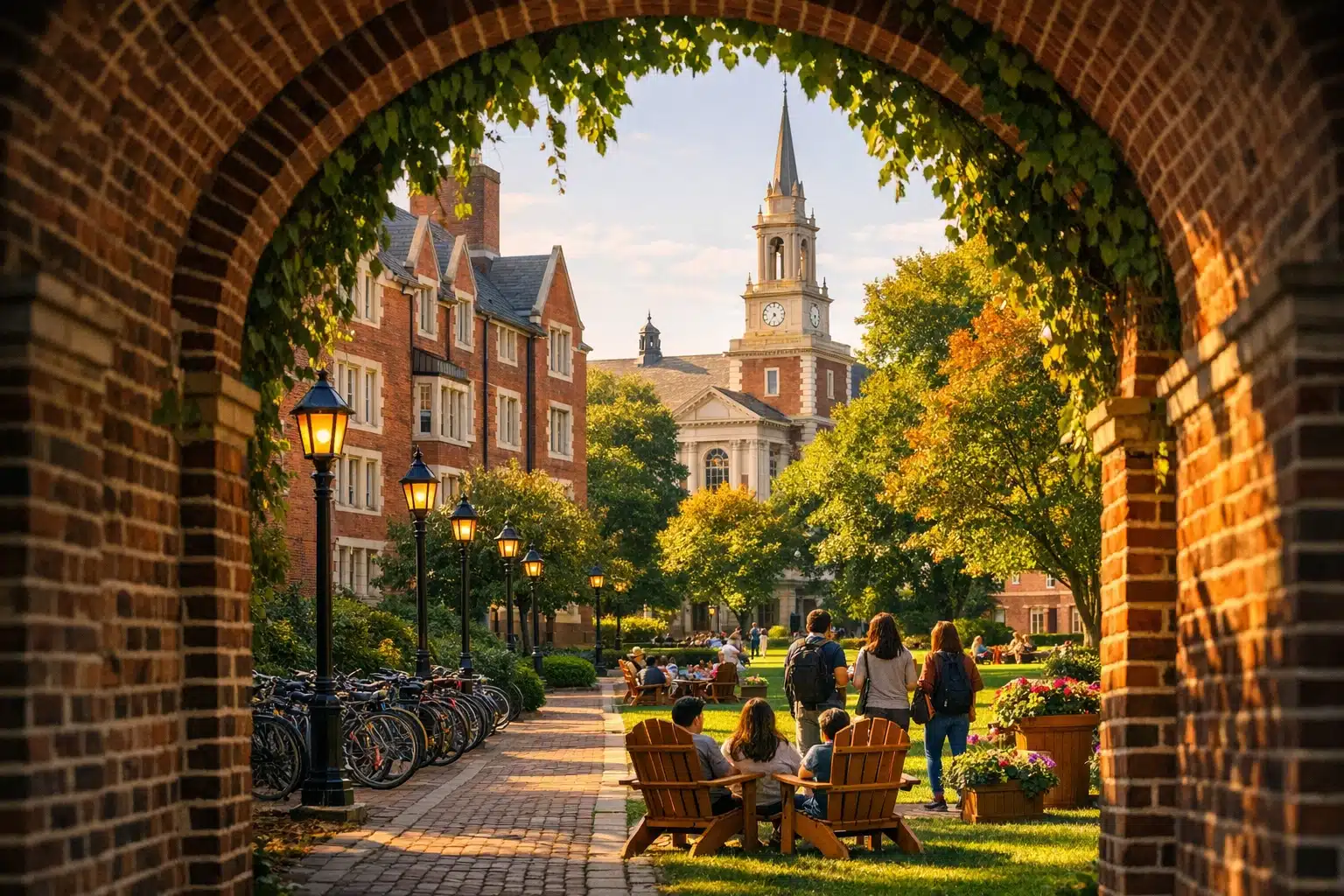
Miami University in Oxford is one of those campuses that seems to step out of a postcard and then quietly remind you that beauty alone is not why people keep coming. Known for its red-brick architecture, walkable grounds, and classic college-town atmosphere, Miami has built a reputation that goes well beyond appearances. It is especially respected for undergraduate teaching, business, education, and the kind of campus experience many students imagine when they first start thinking about college. If Ohio State feels like a city and Case Western feels like a research corridor, Miami often feels like the traditional residential college experience at full strength.
Academically, Miami’s identity is shaped by its emphasis on undergraduates. That matters because schools built around graduate and research activity do not always place the same daily focus on undergraduate instruction. At Miami, teaching is central to the institution’s appeal. Students often point to accessible faculty, discussion-based classes, and an environment where undergraduate learning does not feel secondary. The Farmer School of Business has earned particular attention, and programs in education, political science, communication, and the liberal arts are also well regarded. For students who want professors who know their names and a campus designed around daily student life, Miami offers a strong alternative to both giant public universities and highly specialized private schools.
The setting in Oxford contributes powerfully to the experience. This is not an urban campus. It is a true college town, and that creates a distinct rhythm. Students spend a great deal of time on campus or in the surrounding downtown area, which can build a strong sense of community. That closeness is a major draw for many applicants, especially those leaving home for the first time and hoping for a place that feels socially connected. The trade-off is that students seeking a major metropolitan environment, daily city internships, or a more anonymous experience may prefer a school like Cincinnati or Ohio State. Miami’s appeal lies in cohesion rather than intensity of scale.
Miami stands out for several practical reasons:
• strong undergraduate teaching culture
• a highly regarded business school
• a residential campus with a classic college-town feel
• broad appeal for students who value community and tradition
Compared with Ohio State, Miami generally offers a more contained and personal undergraduate environment. Compared with Oberlin, it is larger and often more conventionally structured. Compared with Cincinnati, it is less urban and more centered on the residential student experience. For the student who wants a polished, academically solid, and socially vibrant college atmosphere, Miami University remains one of Ohio’s most attractive choices.
4. University of Cincinnati: Career Preparation, Co-op Strength, and Urban Momentum
The University of Cincinnati earns its place on this list because it connects classroom learning to professional experience with unusual consistency. Located in one of Ohio’s major cities, Cincinnati blends the feel of a large public research university with the energy of an urban campus that gives students access to real employers, real projects, and real networks while they are still in school. The university is especially well known for cooperative education, or co-op, a model that allows students in many programs to alternate academic study with paid work experience. That structure is not just a brochure line. It shapes how students think about college from the beginning: not as a waiting room before adulthood, but as an early phase of it.
Programs in engineering, business, nursing, architecture, design, and health fields are especially notable, and the College of Design, Architecture, Art, and Planning has long been one of the university’s signature strengths. Cincinnati’s co-op tradition, which dates back more than a century, remains a major differentiator because it gives students a clear route to hands-on learning and résumé development. In practical terms, that can translate into stronger job clarity and more confidence during graduation season. Students do not simply imagine what work in their field might look like; many of them test it. For families who want evidence that tuition is tied to employability, Cincinnati presents a persuasive argument.
The campus itself has changed significantly over time and now feels more cohesive, modern, and student-centered than many people expect. Yet its urban setting still matters. Students have access to hospitals, companies, arts institutions, startups, and civic organizations across the city. That makes Cincinnati especially attractive for students who are energized by movement and opportunity. If Miami offers a self-contained college town and Oberlin offers a close-knit intellectual community, Cincinnati offers motion. The city is part of the curriculum, even when a syllabus does not say so. That can be exciting, though students who want a quieter or more insulated campus may find the pace less comfortable.
Cincinnati’s advantages are easy to identify:
• strong co-op and internship pathways
• notable programs in design, engineering, business, and healthcare
• an urban campus with access to employers and institutions
• practical career preparation built into many degrees
Compared with Ohio State, Cincinnati is somewhat narrower in scale but often more visibly tied to structured work experience in specific programs. Compared with Case Western, it is generally more public, more urban in feel, and often broader in access. For students who want college to lead clearly and directly into professional momentum, the University of Cincinnati is one of the most sensible choices in Ohio.
5. Oberlin College: Liberal Arts Depth, Creative Energy, and a Distinct Intellectual Culture
Oberlin College is the outlier on this list in the best possible way. It is much smaller than Ohio State and Cincinnati, less professionally specialized than Case Western, and less traditionally mainstream in campus culture than Miami. Yet that is exactly why it belongs here. Oberlin offers something many universities cannot easily replicate: a deeply immersive liberal arts education in a community where intellectual curiosity, artistic ambition, and social engagement are not side notes but central habits of campus life. Located in the town of Oberlin, west of Cleveland, the college is known both for its undergraduate liberal arts program and for the renowned Oberlin Conservatory of Music, a rare pairing that gives the campus an especially creative identity.
The academic model at Oberlin is built around close contact, discussion, reading, writing, and independent thought. Students are typically taught in smaller classes than they would encounter at large public universities, and the student-faculty interaction can be one of the school’s greatest strengths. For students in the humanities, social sciences, natural sciences, languages, arts, and music, this environment can be transformative. It asks students not merely to absorb information, but to test ideas, revise their assumptions, and develop an intellectual voice. That style is not for everyone. A student who wants a huge sports culture, dozens of pre-professional tracks, or the buzz of a major city campus may not feel at home. But for the right student, Oberlin can feel less like a school and more like an invitation to think at a higher level every day.
Oberlin is also notable for students whose interests cross boundaries. A musician can pursue serious conservatory training while remaining connected to a broader intellectual community. A science student who also loves writing or politics does not have to treat those interests as hobbies. The liberal arts structure encourages combination rather than narrowing too early. That flexibility can be powerful in a changing job market, where communication, analysis, creativity, and adaptability often matter alongside technical skill. Although Oberlin’s sticker price as a private college can look high, the relevant question for families is net cost after aid, not the published number alone.
Why Oberlin continues to attract dedicated applicants:
• small classes and strong faculty interaction
• a distinctive blend of liberal arts and conservatory culture
• a campus identity centered on inquiry, creativity, and engagement
• room for interdisciplinary study without losing academic depth
Compared with every other college on this list, Oberlin is the most intentionally intimate and the least oriented toward a mass-market college experience. That will narrow its audience, but it also sharpens its value. For students who want college to be personal, rigorous, expressive, and intellectually alive, Oberlin College remains one of Ohio’s most memorable and meaningful options.
Conclusion: Final Thoughts for Students and Families
If you are building a college list in Ohio, the most useful takeaway is simple: these five schools are excellent for different reasons, and the right choice depends on the kind of learner you are. Ohio State offers unmatched breadth and major-university opportunity. Case Western Reserve provides a smaller, research-intensive environment with strong professional pathways. Miami University delivers a polished undergraduate experience in a classic college town. The University of Cincinnati stands out for career preparation and urban access. Oberlin College offers an intimate liberal arts education with unusual creative and intellectual depth.
For students, the next step is not memorizing rankings. It is comparing campus size, teaching style, program strength, location, likely cost, and the kind of daily life you actually want. For parents and families, it helps to ask practical questions early: Will this student thrive in a large environment or need closer faculty contact? Is the strongest value in a co-op model, a business program, a research lab, or a discussion-based classroom? Visit if you can, run the net price calculator, and look beyond the headline name. In Ohio, there is no single perfect college for everyone, but there is a very good chance one of these five could feel like the right place to begin.