3 Night Cruises from Tilbury: A Practical Guide
Short cruises from Tilbury fill an appealing gap between a weekend break and a full holiday, giving travelers a quick change of scene without the planning load of a longer voyage. They suit first-time cruisers, busy workers, and anyone curious about life at sea before booking a bigger trip. Because routes, prices, and onboard styles can vary more than many people expect, choosing well matters. This guide breaks down how these sailings work, what you are likely to see, and how to judge whether a three-night trip is worth it for you.
Outline and Why Tilbury Works for a Short Cruise
Before diving into ships, cabins, and port calls, it helps to sketch the map of the topic. A useful outline for understanding three-night cruises from Tilbury looks like this:
- Why Tilbury is a practical departure point for many travelers in southern and eastern England
- What a three-night itinerary usually includes, and what it does not
- How ship style, cabin choice, and onboard atmosphere affect the trip
- What the real budget looks like once extras are added
- Which travelers will get the most value from a mini cruise
Tilbury’s appeal begins with geography. The London Cruise Terminal sits on the Thames in Essex, roughly east of central London, which makes it especially convenient for travelers who would rather not start a short holiday with a long drive to Southampton. For people based in London, Essex, Kent, Hertfordshire, or parts of East Anglia, the port can turn a cruise into something that feels genuinely compact. You are not burning half a day just getting to the ship; in the best case, the holiday starts while the journey still feels manageable.
That convenience matters more on a three-night cruise than on a twelve-night voyage. On a longer trip, the transfer to the port is just one part of a bigger adventure. On a mini cruise, the transfer can make or break the experience. If the port is easier to reach, the whole break feels smoother, less rushed, and more proportionate to the time available. That is one reason Tilbury holds a steady appeal even though it generally offers fewer departures than larger cruise hubs.
There is also a certain mood to leaving from the Thames. The journey out can feel theatrical in a quiet, understated way: industrial riverbanks, broad water, shifting skies, and then the sense that the ordinary week has been folded up and set aside. A short cruise thrives on atmosphere. It does not have time to build slowly, so the departure itself needs a little spark. Tilbury often provides that spark through practicality first and character second.
In other words, the importance of Tilbury is not just that ships depart from there. It is that the port supports the very purpose of a three-night cruise: a short, low-friction escape with enough novelty to feel memorable. Once that foundation is clear, the next question becomes more interesting: what does a three-night sailing from Tilbury actually look like in real life?
Typical Itineraries and What Three Nights Really Feels Like
A three-night cruise from Tilbury is usually best understood as a mini break at sea rather than a deep destination-focused holiday. That distinction matters. Many first-time bookers imagine a compressed version of a long cruise, packed with multiple ports and long sightseeing days. In reality, most three-night sailings are much simpler. A common pattern is departure from Tilbury in the afternoon or evening, a night onboard, one day in or near a continental port, another night at sea, and return the following morning. In practical terms, you are often paying for the experience of travel itself as much as for time ashore.
The most typical destinations for short North Sea cruises have historically included ports linked to the Netherlands or Belgium, such as IJmuiden for Amsterdam access, Rotterdam, or Zeebrugge depending on operator and season. Each option creates a slightly different balance. An Amsterdam-linked sailing often appeals to travelers who want canals, museums, cafés, and a recognizable city-break feel. Yet there is an important nuance: some itineraries marketed around Amsterdam do not berth in the city center, so transfer time can shape how much of the day you actually spend exploring. Rotterdam, by contrast, can appeal to travelers who like striking modern architecture, wide streets, and easier movement through a major port city. Zeebrugge-style calls can open the door to Bruges or the Belgian coast, which creates a softer, more old-world atmosphere.
Because the cruise is short, expectations need to be calibrated carefully. You are unlikely to see everything. A three-night sailing usually gives you a taste, not a full plate. That can still be satisfying if you treat the trip as a sampler. Think of it as a trailer that lets you test three things at once: life onboard, the rhythm of sea travel, and whether the visited destination deserves a longer return trip later.
There is also a strong contrast between how different travelers use the same itinerary. One person boards for the ship itself: dinner, drinks, deck views, a show, a late-night lounge, and the novelty of sleeping at sea. Another sees the ship mainly as transport to a continental city for a quick wander and a change of language, food, and scenery. Neither approach is wrong, but they produce very different levels of satisfaction. Travelers who expect a city break with a ship attached may feel short on shore time. Travelers who view the vessel as part of the holiday are more likely to come home pleased.
The honest way to describe the experience is this: a three-night cruise from Tilbury feels part getaway, part experiment, and part moving hotel with better views. If that combination sounds appealing, the next step is not just choosing a route. It is matching the ship and cabin style to the kind of break you actually want.
Comparing Ships, Cabins, and Onboard Style
Not every three-night cruise from Tilbury aims for the same atmosphere, and this is where many booking decisions become more personal than people expect. On paper, two short cruises can look nearly identical: same departure port, same number of nights, same broad destination region. In practice, they can feel completely different once you consider ship design, passenger mix, dining options, entertainment, and cabin comfort. That is why comparing the onboard style is just as important as comparing the route.
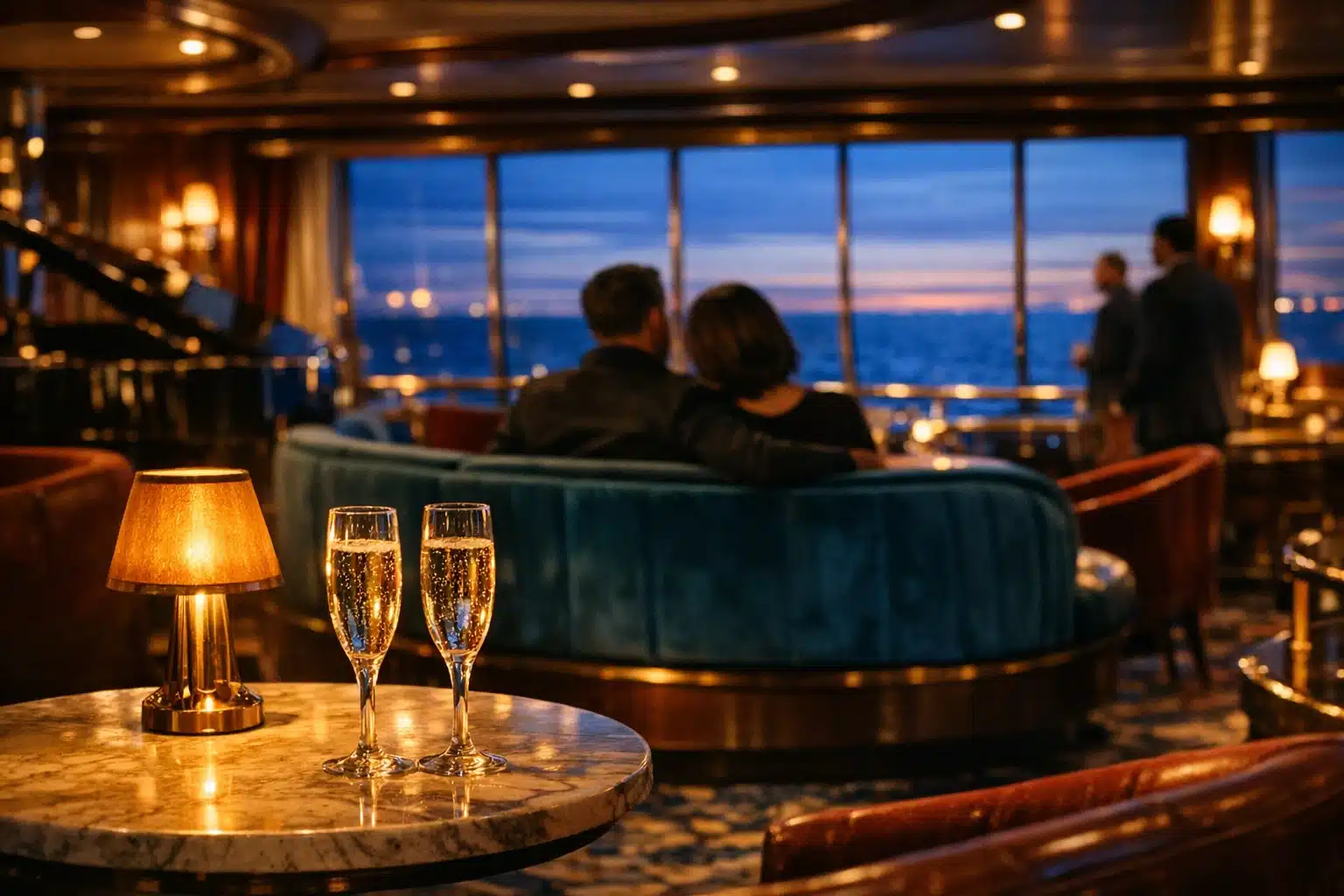
Some short sailings have a lively, social mood. They are built around the idea that a mini cruise should feel festive and easy: bars that stay busy, live music in the evening, simple entertainment, and enough food choice to keep things pleasant without turning every meal into a formal event. Others feel calmer and more traditional, with quieter lounges, more emphasis on relaxed dining, and an experience better suited to couples or travelers who want a gentle break rather than a party atmosphere. If you want late-night energy, check what the ship actually offers after dinner. If your ideal evening involves a drink and a seat by the window while the sea goes dark, a quieter vessel may suit you better.
Cabin choice matters too, especially on a short cruise where every hour counts. An inside cabin can be excellent value, particularly if you plan to spend most of your time in public spaces. For budget-minded travelers, it often makes sense. An ocean-view cabin gives you natural light, which can improve the feel of the trip more than many first-time cruisers expect. A balcony, while attractive, is not always essential on a three-night North Sea sailing, especially in cooler months when time outdoors may be brief. The best-value cabin is often the one that improves comfort without paying for features you may barely use.
When comparing options, ask practical questions rather than romantic ones:
- Is food included in a way that matches how you like to eat?
- Does the ship offer entertainment you would actually attend?
- Will you be happy with a compact cabin for two or three nights?
- Are there quiet spaces if you do not enjoy crowds?
- Does the schedule allow enough time to enjoy the ship before and after the port call?
Also consider who is traveling with you. A couple looking for a low-effort escape may value an easy check-in, decent dining, and a comfortable cabin over nonstop activities. Friends traveling together may prefer a more sociable ship with music and informal bars. Older travelers may prioritize accessible layouts, lifts, short walking distances, and predictable meal service. Families, where allowed and available, may care more about cabin configuration and whether there is enough to occupy children during sea time.
In short, ship choice shapes the memory. On a short sailing, there is less room for the onboard experience to recover from a poor match. If you pick the right atmosphere and the right cabin, a mini cruise can feel surprisingly polished. If you choose badly, three nights can suddenly feel longer than expected.
Costs, Inclusions, and Practical Planning Before You Book
The advertised fare for a three-night cruise from Tilbury can look temptingly simple, but short cruises reward careful arithmetic. Mini breaks are often marketed with attractive lead prices because the initial ticket is only part of the final spend. That does not mean they are poor value. It simply means the best comparison is not cruise fare versus cruise fare, but total trip cost versus total trip cost. Once you include travel to the port, drinks, optional dining, parking, and spending ashore, the cheapest headline offer may no longer be the strongest option.
As a general rule, promotional fares for short sailings can begin in the low hundreds of pounds per person, especially for inside cabins on off-peak dates, while weekends, school holiday periods, and upgraded cabin categories raise the total quickly. The key is to ask what is genuinely included. On some cruises, your fare covers the cabin, basic dining, and onboard entertainment. On others, drinks packages, specialty restaurants, gratuities, shuttle transfers, or Wi-Fi sit outside the base price. For a three-night trip, one overpriced add-on can distort the budget more than it would on a longer holiday.
Common extra costs include:
- Parking at or near the port
- Rail tickets, taxis, or overnight hotel stays before embarkation
- Travel insurance
- Drinks, coffees, and alcoholic beverages
- Specialty dining or upgraded meal venues
- Excursions or transfer buses from the port to the city center
- Internet access and onboard purchases
Planning the port transfer deserves particular attention. Tilbury is convenient for many travelers, but convenience is not identical for everyone. Drivers should compare parking arrangements in advance and allow extra time for traffic around embarkation windows. Rail travelers should check the final local transfer carefully rather than assuming the station is directly beside the ship. Because this is a short break, even a minor transport hiccup can feel disproportionately annoying.
Practical preparation also helps the holiday start smoothly. Keep travel documents easy to reach, confirm boarding times, and pack for changeable North Sea weather. A light waterproof layer can be more useful than a heavy formal outfit. If you are sensitive to motion, bring whatever seasickness remedy you trust rather than hoping calm weather will solve the issue. The crossing may be smooth, but short sailings do not guarantee flat seas.
One of the smartest ways to judge value is to compare the cruise with an equivalent land trip. Add up two hotel nights, meals out, transport, entertainment, and a city break abroad, and a mini cruise may look more competitive than the brochure initially suggests. The trick is not to chase the lowest fare. It is to book the version whose total cost still feels sensible once the extras stop hiding.
Conclusion: Who Should Book a 3-Night Cruise From Tilbury?
A three-night cruise from Tilbury is at its best for travelers who value ease, novelty, and a clearly defined break from routine. It suits first-time cruisers especially well because the commitment is low. You get enough time to test the essentials: how you feel onboard, whether you enjoy sleeping at sea, how much you value organized travel, and whether the rhythm of embarkation, dining, entertainment, and port calls appeals to you. For many people, that makes a short cruise less of a gamble than a full week away.
It also works well for people with limited annual leave. If your calendar is crowded, a departure close to London can make the holiday feel efficient in a good way rather than rushed in a bad one. Couples often find these sailings appealing as a low-planning escape, while friends may enjoy them as a social weekend with better scenery than a typical city stay. Travelers who live within easy reach of Tilbury gain the biggest advantage, because the short duration makes local access especially valuable.
That said, this kind of cruise is not for everyone. If your priority is immersive time in one destination, a mini cruise may feel too brief. If you dislike tight schedules, crowded boarding periods, or the idea that much of the holiday is spent in transit, a longer cruise or a simple city break might be the better fit. The same applies to travelers who are very sensitive to motion or who expect tropical-style deck weather from a North Sea route. This is a practical escape, not a fantasy postcard every hour of the day.
Booking strategy matters as well. Flexible travelers sometimes find good value on short-notice departures, while people who need specific dates or cabin types may prefer to book earlier. Shoulder-season sailings can offer a useful balance of pricing and crowd levels, though weather will always remain part of the equation. A bright autumn departure can feel cinematic; a grey crossing can feel more introspective. Neither is necessarily worse, but the mood is different.
For the right traveler, the verdict is simple. A three-night cruise from Tilbury is not about collecting a long list of destinations. It is about getting away with minimal fuss, enjoying the sensation of travel, and sampling a style of holiday that may lead to bigger voyages later. If you want a compact break with movement, atmosphere, and a touch of maritime charm, it is a realistic and often rewarding option worth serious consideration.