Top 10 Vibration Relaxation Gadgets for Couples
Introduction and Outline: What Makes a Couple-Friendly Relaxation Gadget?
Shopping for a relaxation gadget as a couple is not just a matter of picking the flashiest device with the most buttons. The better choice usually comes down to how easily it fits into shared evenings, post-work recovery, weekend rest, and even travel. Some tools are ideal for quick shoulder relief, while others are better for feet, back, or whole-body unwinding. This guide sorts through ten useful vibration-based options so you can compare comfort, practicality, noise, and value with far less guesswork.
The topic matters because many couples are trying to build simple home routines that reduce tension without turning the living room into a clinic or a gym. A good gadget can make recovery after commuting, desk work, house chores, or exercise feel more accessible. It can also solve a common problem: one partner wants deep pressure while the other wants a gentler, quieter experience. That is why the best option is rarely the strongest device on the market. It is the one both people will realistically use, clean, store, charge, and reach for again next week.
To keep the ranking useful, this article compares each gadget type across the same practical points rather than hype. The list favors devices that are versatile, easy to share, and suited to common relaxation needs at home.
- Comfort range: Can it work for different sensitivity levels?
- Ease of sharing: Is switching between users simple and quick?
- Noise and size: Will it fit into an evening routine without becoming annoying?
- Coverage: Does it treat one small spot or a broader area?
- Value: Does the function justify the cost and storage space?
Here is the outline of the ranking. In the next section, we look at smaller gadgets that are highly portable but more specialized: the vibrating massage ball, eye massager, vibrating foam roller, and massage gun. After that come the everyday comfort picks: the massage pillow, full-body massage mat, and foot massager. Finally, we move to the three most practical choices for shared use: the handheld body massager, the heated neck and shoulder massager, and the massage cushion or seat topper. Think of it as a guided tour through a crowded shelf, with fewer gimmicks and a little more common sense.
Ranks 10 to 7: Small Devices That Shine in Specific Situations
#10 goes to the vibrating massage ball. This compact tool is excellent for couples who want targeted relief in the calves, feet, hips, or upper back. Because it is small and usually lightweight, it travels well and stores easily in a drawer or gym bag. It also works nicely when one partner prefers controlled pressure and the other likes to lean body weight into the device. The downside is obvious: a massage ball treats a very specific area at one time. It is effective, but not especially generous. If your idea of evening relaxation involves sinking into the sofa and unwinding together, this gadget can feel more like a spot-treatment tool than a shared comfort device.
#9 is the eye massager, a category that often combines vibration with warmth, compression, and music or white noise. For couples dealing with screen fatigue, tension around the temples, or frequent travel, eye massagers can be surprisingly soothing. Many consumer models are foldable and designed for 10 to 15 minute sessions, which fits busy schedules. However, the use case is narrow. If one partner dislikes pressure around the eyes or prefers silence, the device may spend more time on a shelf than on a face. It is calming, but very personal.
#8 is the vibrating foam roller. This is a smarter choice for active couples, especially runners, cyclists, or anyone who does strength training. Standard foam rolling already helps many people work through tight muscles, and vibration can make the experience feel less blunt and more tolerable. The trade-off is that it requires effort and floor space. It is not the gadget you grab when you want passive relaxation after dinner. It is more of a recovery companion than a cozy wind-down tool.
#7 is the massage gun, one of the most recognizable devices in the category. Its popularity comes from speed and intensity. A massage gun can work on quads, glutes, shoulders, and upper back in short bursts, and many models offer speed ranges that commonly fall between roughly 1,800 and 3,200 percussions per minute. Battery life often ranges from about 2 to 6 hours depending on power level. For couples, the strength and efficiency are appealing, but there are trade-offs: noise, learning curve, and the fact that one person often needs to operate it on the other for awkward-to-reach spots.
- Best portability: vibrating massage ball
- Best for screen fatigue: eye massager
- Best for athletic recovery: vibrating foam roller
- Best for deep, fast treatment: massage gun
These four gadgets are useful, but each is more specialized than the higher-ranked options. They are good tools, just not always the easiest starting point for two people with different habits.
Ranks 6 to 4: Everyday Comfort Picks for Home Use
#6 is the massage pillow, often shaped to sit behind the neck, lower back, or calves. Many models combine rotating nodes with optional vibration and heat, making them more versatile than their modest size suggests. For couples, the main advantage is flexibility. One person can use it at the neck while reading in bed, and the other can move it to the lumbar area after a long day at a desk. It usually costs less than larger equipment, and it does not demand much storage space. The limitation is coverage. A massage pillow is excellent in short sessions, but it treats one zone at a time and needs repositioning often. It feels a bit like having a good supporting actor rather than the lead role.
#5 is the full-body massage mat. This gadget usually lies flat on a bed, sofa, or floor and offers several vibration zones from shoulders to legs. Some include heat in the back area, timer settings, and intensity controls. For couples who want passive relaxation, the mat is appealing because it asks almost nothing from the user. You lie down, choose a mode, and let the session run. That simplicity matters. After a tiring day, ease of use wins arguments that fancy features lose. Still, many massage mats deliver broad, lighter stimulation rather than the deeper pressure that some users expect. They are better at creating an all-over calming effect than at digging into a stubborn knot under the shoulder blade.
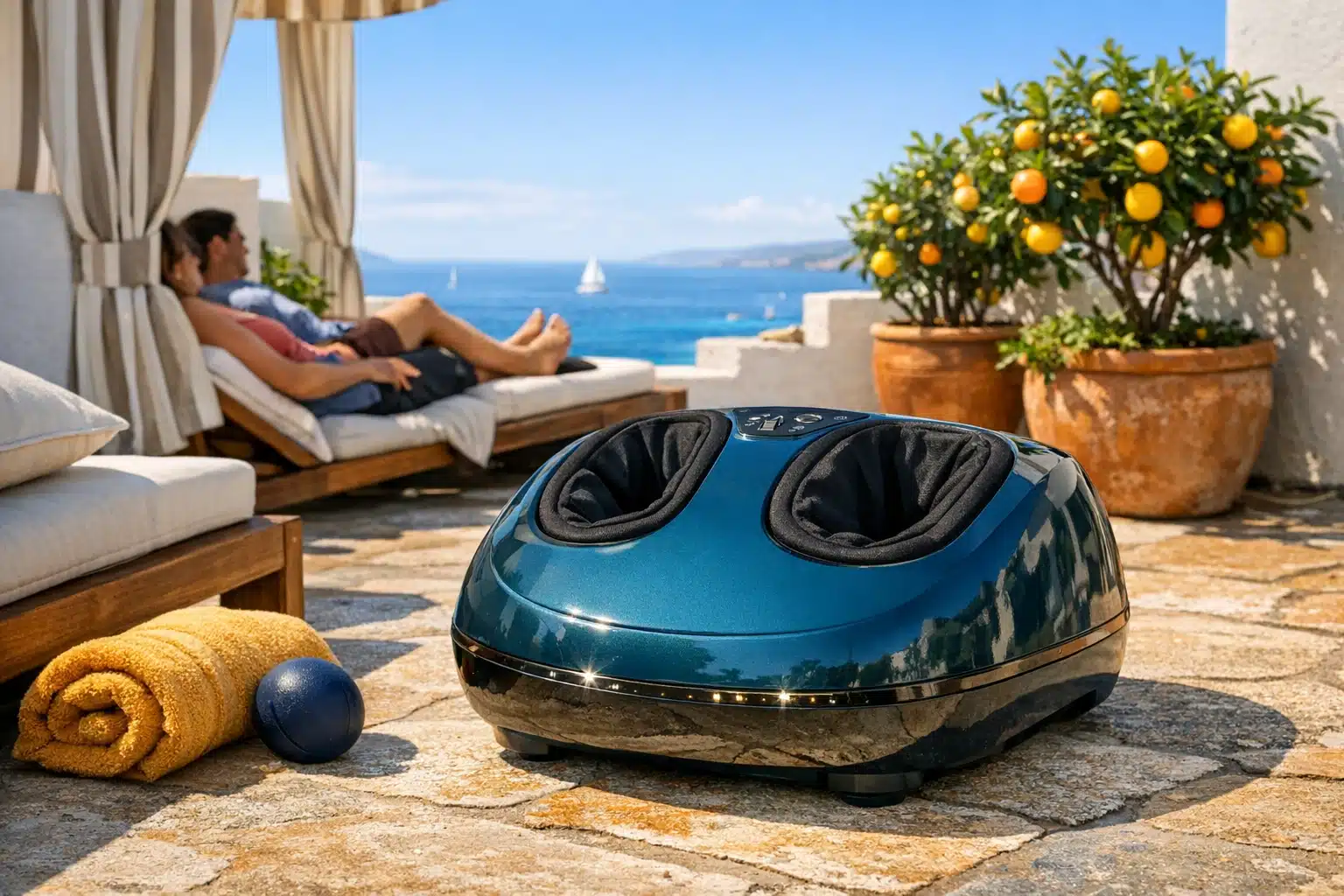
#4 is the foot massager, and this category consistently punches above its size. Whether a model uses vibration alone or combines vibration with kneading, compression, and heat, the result can be deeply satisfying after standing, walking, or traveling. Couples often underestimate how shareable a foot massager is. It sits in one place, needs little instruction, and can be used while talking, watching a film, or reading. In households where one partner is hesitant about massage devices in general, the foot massager can become the gateway gadget that everyone quietly ends up loving.
Compared with the previous section’s tools, these three devices are easier to integrate into ordinary evenings. They also suit a broader range of users.
- Massage pillow: best budget-friendly flexibility
- Full-body mat: best passive, all-over relaxation
- Foot massager: best for comfort, routine, and easy sharing
The reason the foot massager lands higher than the mat and pillow is simple: it combines comfort, convenience, and repeat use exceptionally well. A device that becomes part of real life beats one that looks impressive in a product photo.
Ranks 3 to 1: The Most Practical Choices for Shared Relaxation
#3 is the handheld body massager. This category covers simple wand-style or ergonomic handheld devices designed for shoulders, back, arms, and legs. What earns it a high spot is direct control. One partner can guide the angle, pressure, and placement with very little setup, then hand it over in seconds. It is one of the easiest gadgets to share because it does not require a chair, a mat, or a specific body position. The best models usually balance moderate power with manageable weight, because a device that tires out the user after five minutes quickly becomes a chore. For couples, the handheld format feels conversational and practical. It can turn into a quick “your turn, my turn” routine rather than a production.
#2 is the heated neck and shoulder massager, often shaped like a wrap with loops or straps that help the user control pressure. This design has become popular for good reason. Neck and shoulder tension is one of the most common complaints among people who work at desks, drive frequently, or carry stress in the upper body. Heat adds a sense of comfort, while vibration or kneading features give the device more than one mode of action. The big advantage for couples is consistency. It works on a universally stressed area, and it usually feels intuitive right away. Even people who dislike aggressive massage often enjoy the warmth and supportive shape. The only reason it is not number one is that its best use is fairly specific to upper-body tension.
#1 is the massage cushion or seat topper. If there is a most practical “shared household” choice, this is it. A good seat-based massager can move between dining chair, office chair, sofa, or even a car seat when designed for travel use. Many include a combination of vibration zones, rolling or kneading mechanisms, heat, and multiple intensity settings. That matters because couples rarely want the exact same experience. One person may want a short, lighter session for lower back fatigue, while the other prefers stronger work across the shoulders. A seat topper gives both users options without demanding much floor space or much patience.
The ranking at the top comes down to lifestyle fit. The handheld massager is flexible, the neck and shoulder wrap is deeply satisfying for a very common problem, and the seat topper wins because it blends coverage, adjustability, and convenience better than the rest.
- #3 Handheld body massager: best balance of control and simplicity
- #2 Heated neck and shoulder massager: best for common upper-body tension
- #1 Massage cushion or seat topper: best all-around choice for most couples
Some gadgets impress in a demonstration. The best ones, however, become part of the furniture in the nicest possible way: familiar, reliable, and ready when the day feels too long.
Conclusion for Couples: How to Choose the Right Gadget and Use It Well
If you are buying one relaxation gadget to share, start by thinking about routine instead of novelty. Ask where it will live, who will use it first, how often it needs charging, and whether both of you are likely to enjoy the same level of intensity. In many homes, the smartest purchase is not the most powerful device but the one with the lowest barrier to use. That is why seat toppers, neck-and-shoulder wraps, handheld massagers, and foot massagers tend to perform so well for couples. They are easy to understand, quick to share, and useful across many ordinary situations.
Practical details matter more than packaging suggests. Noise level is a real quality-of-life factor, especially in small apartments or late-night routines. Weight matters too; a heavy handheld device may look sturdy but can become tiring quickly. Corded models often deliver steady power, while cordless ones are easier to move from room to room. Battery-driven devices commonly vary widely in runtime depending on mode, so it is worth checking realistic use patterns rather than headline numbers alone.
- Choose a seat topper if you want the best all-around shared option.
- Choose a neck and shoulder massager if upper-body tension is the main complaint.
- Choose a foot massager if comfort and easy routine matter more than versatility.
- Choose a massage gun or vibrating roller if athletic recovery is a priority.
- Choose smaller specialty tools if travel and compact storage matter most.
It is also wise to keep expectations grounded. These gadgets can support comfort and relaxation, but they are not a substitute for medical care when pain is persistent, severe, or linked to injury. People who are pregnant, have circulation concerns, nerve sensitivity, or a recent musculoskeletal issue should check product guidance and, when appropriate, speak with a qualified clinician before use. Cleaning and maintenance should be part of the decision as well, especially for shared devices that touch skin regularly.
For most couples, the ideal gadget is the one that quietly fits into real life after work, after errands, after travel, or after exercise. If you want one safe bet, start with a massage cushion or seat topper. If you want a more personal and cozy option, a heated neck and shoulder massager is a strong runner-up. Either way, the goal is simple: make relaxation easier to begin, easier to share, and easy enough to repeat that it becomes a habit rather than a plan.