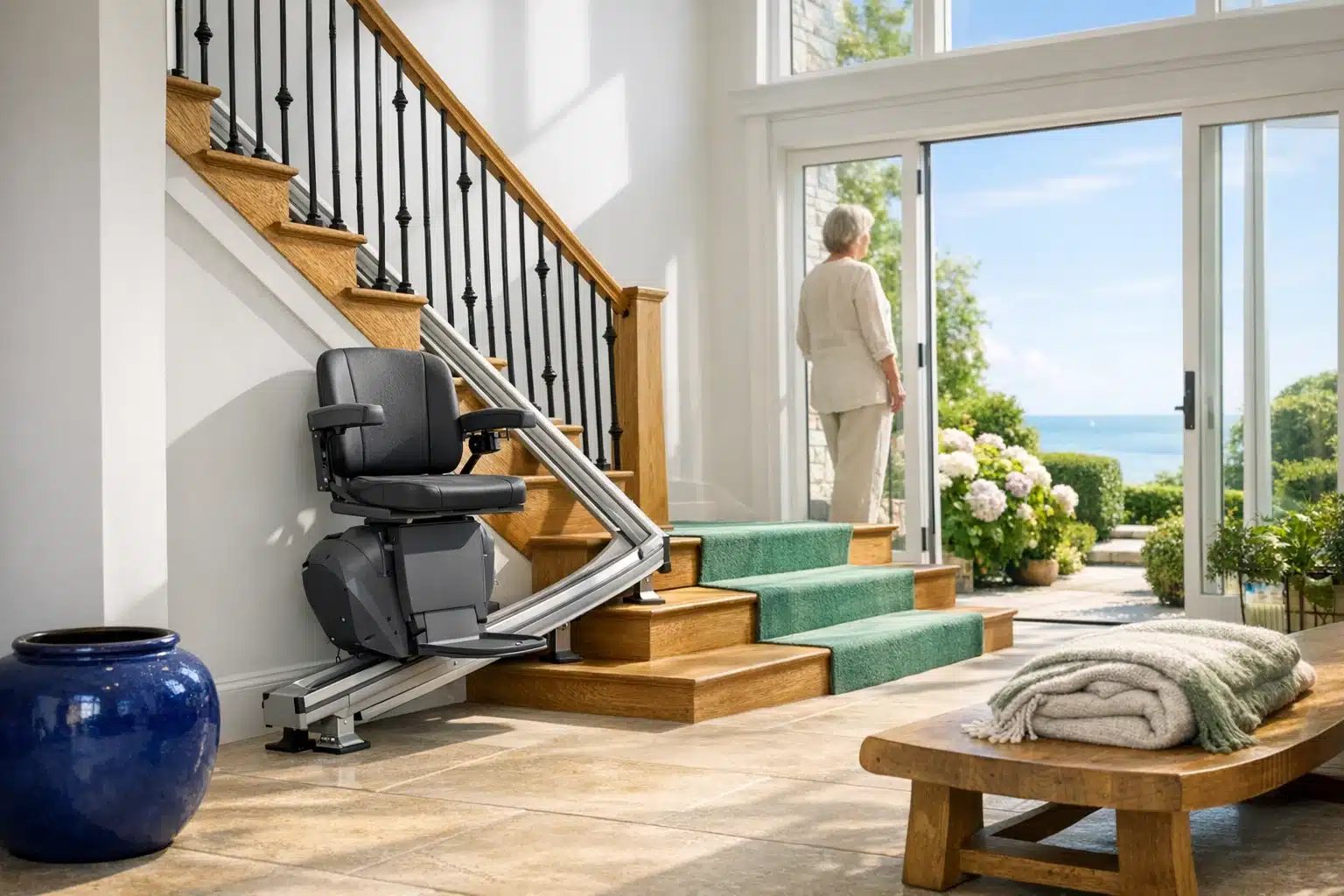
What Pensioners Need to Know About Council Funding for Stairlifts
For many pensioners, the stairs are where independence starts to feel fragile. A stairlift can turn a tiring climb into a safe, familiar journey, yet the price often arrives as an unwelcome shock. Council funding may help reduce or cover the cost, but the rules, assessments, and waiting times can seem wrapped in red tape. This guide explains how support usually works in the UK, who may qualify, and how to plan your next step with confidence.
Outline:
- How council funding for stairlifts fits into wider home adaptation support.
- Who may qualify, and why age alone is not usually enough for approval.
- What costs are involved, what grants may cover, and where gaps can appear.
- How the application process works, including assessments, permissions, and waiting times.
- How pensioners can compare options, avoid pressure selling, and make a practical final decision.
Understanding How Council Funding for Stairlifts Usually Works
For older people living in a house they know by heart, a staircase can become both a daily obstacle and a quiet source of anxiety. That is why stairlifts are often discussed as part of wider home adaptation support rather than as a simple retail purchase. In the UK, councils do not normally hand out stairlifts as automatic age-related benefits. Instead, they usually consider them through disability or mobility support schemes designed to help someone remain safe at home.
The best-known route in England is the Disabled Facilities Grant, often called the DFG. This grant can help pay for adaptations that are considered necessary and appropriate for a disabled person and reasonable for the property. A stairlift may fall into that category if climbing the stairs has become difficult, unsafe, or impossible. Similar help exists in Wales, Scotland, and Northern Ireland, although the names, rules, and delivery systems can differ. That matters because a pensioner in Leeds may face a different process from a pensioner in Cardiff or Glasgow, even if their mobility needs look very similar on paper.
It is also important to understand that council support is usually based on assessed need, not simply on retirement status. Being over pension age does not, by itself, unlock a grant. What matters more is whether a health condition, disability, or mobility problem makes the home unsuitable without adaptation. Councils may ask whether the stairlift will help the person access a bedroom, bathroom, or other essential facilities in a safe and dignified way.
Funding can arrive in different forms. In some cases, a council helps through a formal grant. In others, particularly in social housing, the landlord may arrange and fund the work directly if it meets their adaptation policy. Some local authorities also coordinate assessments and approved contractors rather than giving the applicant complete freedom to shop around. That can be helpful for people who feel daunted by quotes and technical details, although it may limit choice.
A useful way to think about council funding is this: it is less like claiming a coupon and more like entering a structured decision process. The council is asking three broad questions:
- Is the adaptation genuinely needed?
- Is it suitable for the person’s condition and daily life?
- Is it practical and reasonable in the home itself?
Once pensioners grasp that framework, the whole subject becomes less mysterious. The paperwork may still feel tedious, but the logic behind it becomes much easier to follow.
Who May Qualify and What Assessments Pensioners Should Expect
Eligibility is the part that worries many applicants most, largely because it sounds like a closed door before anyone has even knocked. In reality, qualifying for council help with a stairlift usually depends on a blend of personal need, financial circumstances, and housing practicality. Pensioners should be prepared for all three to be considered.
The starting point is often a needs assessment. A council may arrange for an occupational therapist or another trained assessor to look at how the applicant manages essential tasks at home. They may ask practical questions rather than abstract ones: Can you safely reach the bathroom? Do you avoid going upstairs during the day because the climb leaves you exhausted? Have you had falls, near misses, or increasing pain? These details matter because grants are generally linked to daily living needs, not comfort alone.
For many adult applicants, a financial assessment may also follow. In England, a Disabled Facilities Grant for adults is usually means-tested, which means the council looks at income and savings to decide whether the applicant must contribute toward the cost. This is one of the reasons two pensioners with similar health problems may receive different levels of support. One person may qualify for substantial funding, while another may be expected to pay part of the bill. It is not always intuitive, and it can feel unfair, but it is a core part of how the scheme operates.
Housing status also shapes eligibility. Homeowners, private tenants, and social tenants can all potentially receive help, yet the route differs:
- Homeowners usually apply directly through their local authority.
- Private tenants may need written permission from the landlord before work can go ahead.
- Housing association or council tenants may find that the landlord handles the adaptation rather than using the standard grant process.
The property itself must also be suitable. A stairlift may be approved where the staircase can safely take a rail and the layout still allows reasonable access for other occupants. If the stairs are unusually narrow or the installation creates a safety issue, the council might explore another solution. That could include a through-floor lift, a bedroom move downstairs, or different adaptations.
Pensioners can strengthen an application by gathering useful evidence early. Helpful documents often include:
- Medical letters or discharge notes that describe mobility problems
- A list of falls, pain episodes, or difficulties on the stairs
- Details of medications or conditions affecting balance and strength
- Landlord contact information, if the home is rented
The key point is simple: councils are usually assessing function, safety, and feasibility. A well-prepared applicant makes it easier for the decision maker to see the reality of life behind the front door.
Costs, Grants, Contributions, and the Real Price of a Stairlift
When people first look into stairlifts, the price can feel like a cold splash of water. Costs vary widely, and that is one reason funding questions become so important. A straight stairlift for a standard staircase is usually cheaper than a curved model, because a curved rail is custom made to follow bends, landings, or turns. In the UK market, a basic straight lift may cost a few thousand pounds, while a curved lift can rise significantly higher. Extras such as powered swivel seats, hinged rails, outdoor use, heavier weight capacity, or extended warranties can push the total upward again.
Council funding may cover some or all of this, but pensioners should not assume the grant simply matches the supplier’s quote pound for pound. In England, the Disabled Facilities Grant has a maximum mandatory limit of £30,000, though many stairlift jobs cost less than that. Even so, the applicant may still have to contribute if the means test shows they can afford part of the work. In practice, this means one pensioner may receive full help while another receives partial help for a similar installation.
It is also worth separating purchase price from lifetime cost. A stairlift is not just a rail and a chair. There may also be:
- Survey and installation costs
- Servicing and maintenance charges
- Battery replacement over time
- Repair costs outside warranty
- Removal charges if the equipment is no longer needed
This is where comparisons become useful. A brand-new stairlift may offer longer warranty protection and newer features, but a reconditioned model can reduce upfront expense. A rental arrangement may suit someone with a temporary need, perhaps after surgery, although long-term rental can become more expensive than buying outright. Councils and landlords may prefer one route over another depending on the case and local policy.
Pensioners should also ask about VAT relief. Certain mobility aids and installation services for a chronically sick or disabled person can be zero-rated for VAT, which may reduce the final bill. That does not replace grant funding, but it can make a noticeable difference. Some people also combine sources of help, such as council support, charitable grants, savings, or family contributions.
A sensible approach is to think in layers. First, identify the right adaptation. Second, find out whether council funding is available. Third, calculate the likely personal contribution and the ongoing costs after installation. That layered view helps avoid a common mistake: focusing only on the headline quote while the quieter costs gather in the background like dust on the banister.
How to Apply, How Long It Can Take, and What to Do if Problems Arise
The application process for council-funded stairlifts can feel slow, especially when every trip upstairs already feels like a negotiation with gravity. Still, knowing the usual sequence helps pensioners avoid delays that could have been prevented with a few early steps.
In many areas, the journey begins by contacting the local council’s adult social care, housing adaptations, or home improvement team. Some councils allow online referrals, while others prefer phone contact. After the initial enquiry, the council may arrange an assessment to understand the person’s mobility needs. If a stairlift appears suitable, the case may move toward grant consideration, technical feasibility checks, and cost estimates.
A typical process often looks like this:
- Make the first enquiry with the local authority
- Complete referral or application forms
- Attend a needs assessment, often involving an occupational therapist
- Provide financial information if a means test applies
- Obtain landlord consent if the property is rented
- Receive technical surveys or contractor quotes
- Wait for formal approval before work starts
- Arrange installation and final checks
The phrase that deserves bold mental ink is this: do not start the work before the grant is approved, unless the council clearly tells you otherwise. Many schemes require prior approval, and paying for the stairlift first can jeopardise funding. That single misunderstanding has cost applicants a great deal of money.
Waiting times vary sharply by area. Some applications move briskly, especially where a hospital discharge or serious safety concern adds urgency. Others stretch over several weeks or months due to staffing shortages, contractor availability, or a backlog of assessments. Pensioners should ask early about likely timescales and whether any fast-track route exists for urgent cases.
If delays or refusals arise, several practical steps can help:
- Ask for the decision and reasons in writing
- Request a review if important evidence was missed
- Provide updated medical information if health has worsened
- Speak to a local advice service such as Citizens Advice or Age UK
- Use the council’s formal complaints process if communication breaks down
Problems do not always mean the end of the road. Sometimes a refusal reflects missing information rather than a final judgment. In other cases, the council may agree that help is needed but suggest a different adaptation. Pensioners who stay organised, keep copies of letters, and follow up politely but firmly are often in a much stronger position than those who wait in silence. Bureaucracy may move at the pace of a rainy Tuesday, but steady persistence still matters.
Making a Confident Decision and Final Thoughts for Pensioners
Even when funding is approved, the final choice still deserves careful thought. A stairlift becomes part of daily life, not just part of a grant file, so pensioners should feel comfortable with the product, the installer, and the aftercare. This is where practical questions matter more than polished sales talk.
Start by asking how well the model fits the home and the user, not just the staircase. A person with arthritis in the hands may need easy controls. Someone who struggles to bend may benefit from a powered swivel seat. A narrow hall may call for a hinged rail so the doorway stays clear. If two people use the stairs differently, the household routine also matters. The right stairlift is the one that works on an ordinary Tuesday morning, not only during a showroom demonstration.
When comparing suppliers or council-arranged contractors, pensioners should look beyond the upfront figure. Useful questions include:
- What warranty is included, and for how long?
- How quickly are repairs handled if the lift stops working?
- Is servicing included or charged separately?
- Will the company remove the stairlift later, and at what cost?
- Are there reconditioned or rental options worth considering?
Pressure selling is another issue worth mentioning plainly. Older buyers are sometimes told that a price is available only if they sign immediately. That is a warning sign. A reputable provider should allow time to read the quote, discuss it with family, and understand how grant funding interacts with payment. No pensioner should feel hurried into a large decision because someone in a branded jacket has mastered the art of the dramatic pause.
For those who do not qualify for full council support, all is not lost. Partial grants, VAT relief, charitable assistance, reconditioned units, or family-backed contributions can still make a stairlift achievable. The best route depends on health needs, speed, finances, and how long the lift is likely to be required. Buying outright may make sense for a long-term mobility problem, while a shorter-term arrangement can suit changing medical circumstances.
In summary, pensioners should approach council funding for stairlifts with equal parts patience and practicality. The system can be slow, and the language can be technical, but the purpose is straightforward: helping people stay safe and independent at home. Ask questions early, keep paperwork in order, and do not assume the first answer is the final one. A well-chosen stairlift can do more than carry someone upstairs; it can restore confidence in the home they still want to enjoy on their own terms.