3-Night Cruises From Dover to Amsterdam: What to Expect
Why This Short Cruise Appeals and Article Outline
A 3-night cruise from Dover to Amsterdam sits in a sweet spot between a rushed weekend trip and a full-scale holiday. It gives travelers the pleasure of sailing, the convenience of unpacking once, and the chance to spend meaningful time in one of Europe’s most appealing short-break cities. For many people in the UK, that combination makes it a practical alternative to flying, especially when ease, comfort, and limited annual leave all matter.
The popularity of short cruises has grown because many travelers now want breaks that feel substantial without requiring a week away from work or family routines. Dover is a useful departure point for people living in London, Kent, Sussex, and other parts of southern England, and it is also reachable by rail and road from much farther afield. Amsterdam, meanwhile, remains one of Europe’s most consistently attractive city destinations thanks to its canals, museums, compact center, and easy-to-navigate layout. Put those two places together and the result is a trip that feels efficient, sociable, and slightly cinematic: one evening you are watching the White Cliffs fade into the distance, and before long you are stepping into a city of bridges, bicycles, and waterside townhouses.
These cruises are often described as mini cruises, and that label is accurate. They are not designed to replicate the depth of a 10-night Northern Europe itinerary or a Mediterranean voyage with several ports. Instead, their strength lies in simplicity. You board, settle in, enjoy the ship, visit Amsterdam, and return home with the pleasant feeling of having gone somewhere distinctly different without the friction of a complicated travel plan.
Article outline:
• What makes this route attractive for short-break travelers
• How a typical 3-night itinerary usually unfolds from embarkation to return
• What to expect from cabins, dining, entertainment, and the onboard atmosphere
• How fares, extras, and seasonal demand affect overall value
• Which travelers are most likely to enjoy this format and how to make the most of it
This topic matters because short cruises are often misunderstood. Some people assume three nights is too brief to be worthwhile, while others imagine it works exactly like a ferry crossing with a cabin attached. In reality, it sits somewhere in between. The ship is both transport and hotel, but it is also part of the holiday itself. That distinction shapes expectations, and expectations are what separate a satisfying mini cruise from a disappointing one. Understanding the route, schedule, and onboard rhythm helps travelers decide whether this style of break matches what they actually want.
Typical Itinerary: Embarkation, Sailing Time, and Amsterdam Port Day
A 3-night cruise from Dover to Amsterdam usually follows a simple structure, though the exact timing depends on the cruise line, the ship, port availability, tides, and weather conditions. In broad terms, travelers embark in Dover on day one, spend the first evening and night at sea, enjoy a port call connected to Amsterdam on day two or three, spend another evening onboard, and return to Dover on the final morning. That sounds straightforward, but the details matter because they shape how much time you really get in the city and how relaxed the pace feels.
Embarkation day often begins in the afternoon. Guests arrive at the terminal, complete check-in, pass through security, and board the ship. One advantage over air travel is that luggage rules are generally more forgiving, and the process can feel calmer than an airport when managed well. After boarding, most travelers spend the first few hours exploring the ship, locating restaurants, checking cabin arrangements, and heading out on deck for departure. Dover itself adds drama to the start of the journey. Sailing past the White Cliffs gives the trip a strong opening scene, even for experienced travelers who have seen them before.
The Amsterdam call can vary more than people expect. Some ships berth in central Amsterdam, while others may use IJmuiden, the seaport on the North Sea Canal, with transfers into the city. That difference matters. A central berth offers easier independent sightseeing, while an IJmuiden stop may add coach transfer time, often around 30 to 45 minutes each way depending on traffic and logistics. Cruise lines generally explain the arrangement in advance, but it is wise to check rather than assume every itinerary docks in the heart of the city.
A typical port day is long enough for a satisfying introduction, though not long enough to cover everything. Many travelers focus on one or two priorities:
• A canal cruise for a broad overview
• Museum visits such as the Rijksmuseum or Van Gogh Museum
• A walk through the Jordaan district
• Time in Dam Square and the historic center
• Casual café stops and canal-side wandering
Compared with flying in for a single-night city break, this cruise format removes the need to switch between airport, hotel, and local transport while carrying bags. Compared with a longer cruise, however, it offers much less destination depth. It works best for travelers who want a strong sample rather than a complete Amsterdam experience. If you arrive expecting a compact, attractive, and well-structured visit, the itinerary usually delivers. If you expect to see every neighborhood, major museum, and day-trip destination in one call, the schedule may feel tight.
Life Onboard: Cabins, Dining, Entertainment, and the Overall Feel
One of the biggest questions travelers ask about a 3-night cruise is whether the ship itself feels like a real cruise experience or simply a practical means of getting to Amsterdam. The honest answer is that it can be both, depending on the operator and the type of vessel. Some ships on short Northern European routes feel more traditional and cozy, with lounges, deck spaces, dining rooms, and a classic cruise rhythm. Others lean more toward a straightforward short-break atmosphere where the emphasis is on convenience and a sociable evening onboard. Knowing which style you are booking is important, because the ship shapes the tone of the whole trip.
Cabins on short cruises are often used efficiently rather than extravagantly. Interior cabins are the budget-friendly option and can make sense for travelers who plan to spend most of their time in public spaces. Ocean-view cabins give a stronger sense of the journey, especially on a route where departure and arrival scenery add real value. Balcony cabins, when available, offer privacy and fresh air, though on a three-night sailing some travelers decide the price difference is better spent on dining, drinks, or shore activities instead.
Dining is usually one of the easiest pleasures of the trip. Most short cruises include main meals in the fare, though specialty restaurants, premium beverages, and certain snacks may cost extra. The dining experience often balances familiarity and occasion. You might have a casual breakfast, a structured dinner, and a late-night drink while live music plays nearby. That mix suits the compact nature of the itinerary. People are not trying to pace themselves for two weeks; they are enjoying a short burst of travel, and the atmosphere often reflects that energy.
Entertainment varies widely by line and ship size. Common options include:
• Live music in lounges or bars
• Theatre-style shows or cabaret performances
• Quiz nights and game sessions
• Cinema screenings or themed talks
• Spa, gym, or wellness areas on some ships
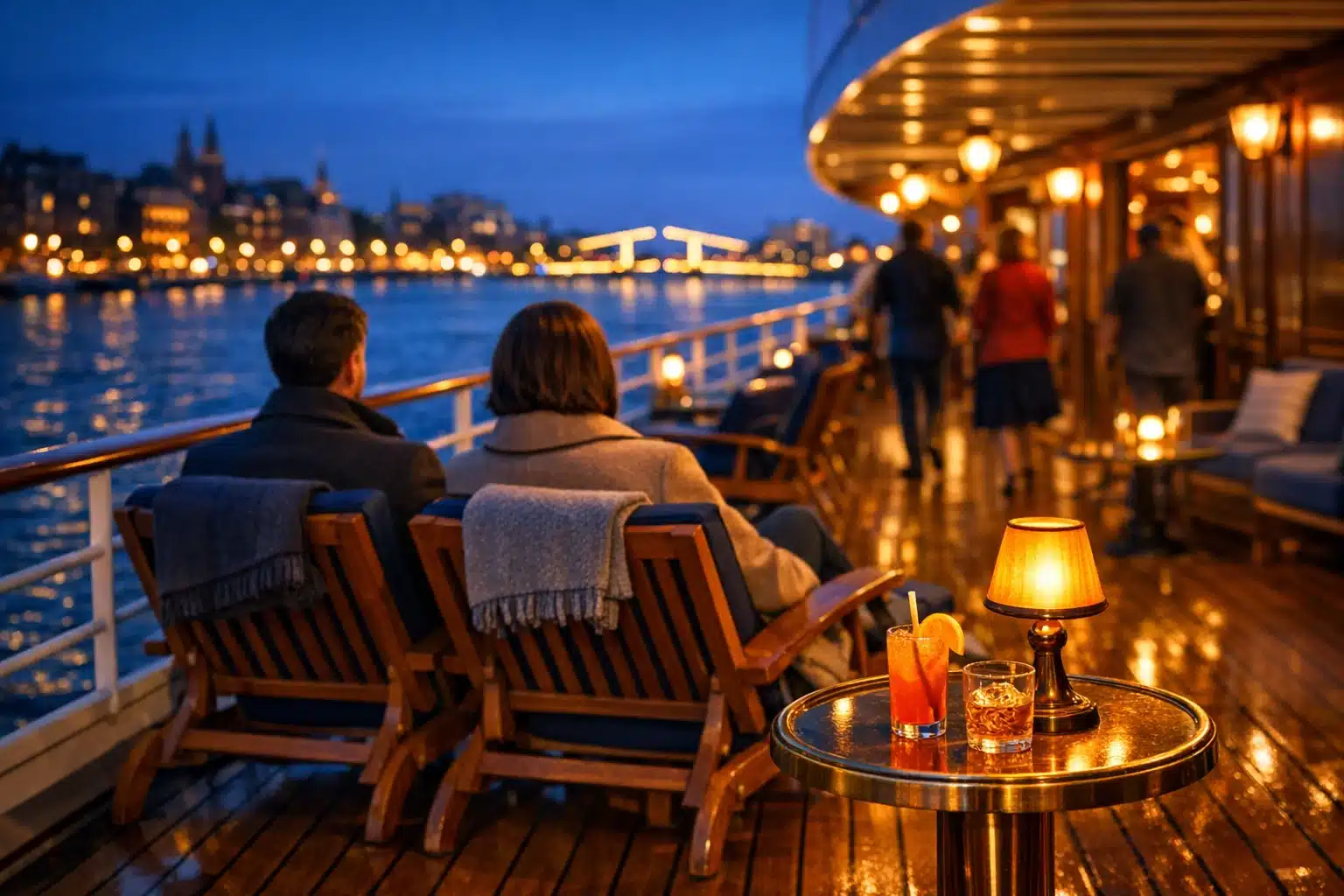
Sea conditions in the English Channel and North Sea are worth mentioning honestly. These waters can be calm, but they can also feel lively, especially outside the summer season. Travelers prone to motion sickness should pack remedies and choose a midship cabin on a lower deck if possible. That said, many people are pleasantly surprised by how manageable the crossing feels. The onboard mood usually settles quickly once departure excitement fades. By evening, the ship often feels like a small floating neighborhood: people dressed for dinner, couples looking out over dark water, friends comparing plans for Amsterdam, and first-time cruisers quietly realizing they may have discovered a format they want to repeat.
Costs, Inclusions, and How to Judge the Real Value of the Trip
A 3-night cruise from Dover to Amsterdam can represent strong value, but only if travelers look beyond the headline fare. The advertised price may appear very attractive at first glance, particularly during sales periods or shoulder-season departures. However, the real cost depends on cabin type, dining options, beverage choices, gratuities if applicable, parking or rail fares to Dover, shore excursions, travel insurance, and onboard spending habits. In other words, the trip can be budget-friendly, but it is not automatically cheap.
When comparing this type of cruise with other short-break options, it helps to think in bundles. A cruise fare usually combines transport, accommodation, some entertainment, and a large share of meals. If you compare that with a flight to Amsterdam, airport transfers, one or two hotel nights, restaurant spending, and baggage fees, the cruise can look quite competitive. The comparison becomes even more favorable for travelers who value simplicity and prefer paying for most of the trip upfront. On the other hand, people who travel very light, find low airfares, and stay in modest accommodation may sometimes beat the cruise on pure price.
The key is understanding what is usually included and what is not. Common inclusions may cover:
• Cabin accommodation for the full sailing
• Main dining room or buffet meals
• Standard onboard entertainment
• Port taxes and basic cruise services
Common extras may include:
• Alcoholic drinks, specialty coffee, and bottled water
• Specialty dining venues
• Shore excursions or transfer packages
• Wi-Fi on some ships
• Parking, rail tickets, and hotel stays before embarkation
Season also plays a major role. Summer sailings and school holiday periods often bring higher fares, while off-peak dates may offer better prices but also cooler weather and a greater chance of rougher seas. Booking early can help if you want a specific cabin category, while late deals can suit flexible travelers who care more about price than cabin location.
Value is not only about money. It is also about time, comfort, and effort. For many travelers, being able to board in Dover, settle into one room, eat onboard, and wake up en route to Amsterdam is worth paying a little more for than a pieced-together trip. The best approach is to build a realistic total cost before booking. Once that is done, the decision becomes clearer: you are not simply buying a crossing, but a short holiday with a built-in rhythm and fewer logistical moving parts.
Who This Cruise Suits Best and Final Thoughts for Smart Short-Break Travelers
A 3-night cruise from Dover to Amsterdam is not trying to be everything, and that is exactly why it works so well for the right traveler. It suits people who want a clear beginning, middle, and end to a short holiday. Couples often like the route because it feels easy and atmospheric without demanding intense planning. First-time cruisers appreciate it because the commitment is low and the learning curve is gentle. Groups of friends can enjoy the social side of dining, drinks, and live entertainment, while older travelers may value the convenience of avoiding airports and constant hotel changes.
It can also work well for solo travelers, especially those who enjoy structured travel and the built-in company of a ship environment, though solo supplements should always be checked carefully. Families may find it appealing if the ship offers enough entertainment and the children are comfortable with a travel style that includes overnight sailing rather than a resort-style destination schedule. Travelers who are deeply focused on Amsterdam itself, however, should pause and compare options. If your main goal is to spend long uninterrupted days in museums, neighborhoods, and cafés, a direct city stay may offer more depth. The cruise is better seen as a balanced split between destination and journey.
To make the most of the experience, a few practical choices matter:
• Arrive in Dover with time to spare rather than rushing check-in
• Pre-book any must-see Amsterdam attraction with timed entry
• Pack layers, as North Sea weather can shift quickly
• Carry comfortable walking shoes for canals, cobbles, and port transfers
• Decide in advance whether your priority is ship time, city time, or a blend of both
The strongest argument for this itinerary is not that it replaces a longer cruise or a deeper Amsterdam holiday. It is that it creates a distinct travel experience of its own. There is something refreshingly old-fashioned and satisfying about leaving one shore behind, sleeping while the ship moves through dark water, and arriving with a whole city waiting at the other end. Even in a fast-travel era, that still has charm.
For short-break travelers, busy professionals, curious first-time cruisers, and anyone who wants a manageable escape from routine, this route can be a smart choice. Keep your expectations aligned with the format, check the exact port arrangements, budget for the extras that matter to you, and treat the sailing as part of the holiday rather than downtime between two points. Do that, and a three-night cruise from Dover to Amsterdam can feel far bigger than its calendar footprint suggests.