3-Night Cruises from Southampton to Amsterdam: What to Expect
Outline and Introduction: Why This Short Cruise Has Lasting Appeal
A 3-night cruise from Southampton to Amsterdam sits in that sweet spot between a proper getaway and a trip that barely disrupts the week. It gives travelers a taste of sea days, live entertainment, and Dutch city streets without asking for a long block of annual leave. For first-time cruisers, it works as a low-commitment trial run; for seasoned passengers, it can feel like a compact reset with a fresh destination. That mix of convenience, atmosphere, and easy access makes these sailings especially relevant for UK-based travelers planning short breaks.
Outline: this article explores five practical areas that matter most when choosing a 3-night Southampton to Amsterdam cruise. First, it explains why these mini cruises have become such a popular format for modern travelers. Next, it looks at the itinerary itself, from embarkation in Southampton to the rhythm of a short sailing and the usual amount of time in Amsterdam. It then compares typical costs, cabin choices, and onboard inclusions before moving on to shore planning, seasonal considerations, and smart packing advice. Finally, it sums up who these trips suit best, and who may be happier with a longer cruise or a traditional city break.
The importance of this topic is easy to understand. Travel habits have shifted toward shorter, more manageable escapes, especially for people balancing work, family commitments, and budget awareness. A three-night sailing answers a simple question many people ask: can a holiday still feel satisfying when it is brief? In many cases, yes. A ship leaving from Southampton removes the need for flights, reduces the stress of airport security, and turns the journey itself into part of the experience. Amsterdam adds another layer of appeal because it is compact, scenic, culturally rich, and relatively easy to enjoy in a single day.
Part of the charm is psychological as much as practical. You unpack once, settle into your cabin, and let the trip unfold around you. Instead of racing between trains, taxis, and hotel check-in desks, you wake up with a destination waiting outside. Typical reasons travelers choose this format include:
• no airport queues
• a manageable trip length
• a chance to try cruising without committing to a week or more
• easy access to a major European city
• onboard dining and entertainment already close at hand
That does not mean the trip is perfect for everyone. The limited duration can feel too short for travelers who like slow exploration, and the port call is often more of a snapshot than a deep dive. Still, for the right audience, this route delivers a surprisingly complete travel experience in just a few days. It is a weekend break with a nautical soundtrack, and that is exactly why it keeps attracting attention.
The Usual Itinerary: Embarkation, Time at Sea, and a Day in Amsterdam
Most 3-night cruises from Southampton to Amsterdam follow a clear, efficient pattern. You usually board in Southampton in the afternoon, settle into your cabin, complete the mandatory safety drill, and watch the ship ease away from port by early evening. There is often a distinct “holiday starts now” feeling as the Solent falls behind, drinks appear on open decks, and passengers begin testing out the ship’s layout. Many short sailings are scheduled around a weekend, such as Friday to Monday or Saturday to Tuesday, although exact departure days depend on the operator and season.
Because the cruise is short, the schedule is tightly designed. The first night is about departure, dinner, and getting into the onboard rhythm. The next morning may begin either with arrival in Amsterdam or with an approach into the wider port area followed by onward access arrangements. On many itineraries, passengers get a substantial block of time ashore, often enough for sightseeing, lunch, shopping, and a canal-side stroll, though the exact number of hours can vary. After the port call, the ship sails back toward England, giving you another evening onboard before returning to Southampton on the final morning.
That structure creates an experience that feels fuller than the number of nights suggests. A typical flow looks something like this:
• Day 1: embark in Southampton, sail away, dinner, live music, theatre, bars
• Day 2: arrive for Amsterdam visit, explore independently or on an excursion, depart in the evening
• Day 3: a relaxed sea day or sea evening depending on schedule, dining and entertainment
• Day 4: morning arrival back in Southampton and disembarkation
Southampton is a major advantage in itself. It is one of the UK’s best-known cruise ports and is relatively easy to reach by car or train from London and many parts of southern England. That simplicity matters. A short trip loses some of its appeal if getting to the departure point feels like a project. Here, many travelers can arrive the same day without much difficulty, though staying overnight near the port can still be a sensible choice if you want a calmer start.
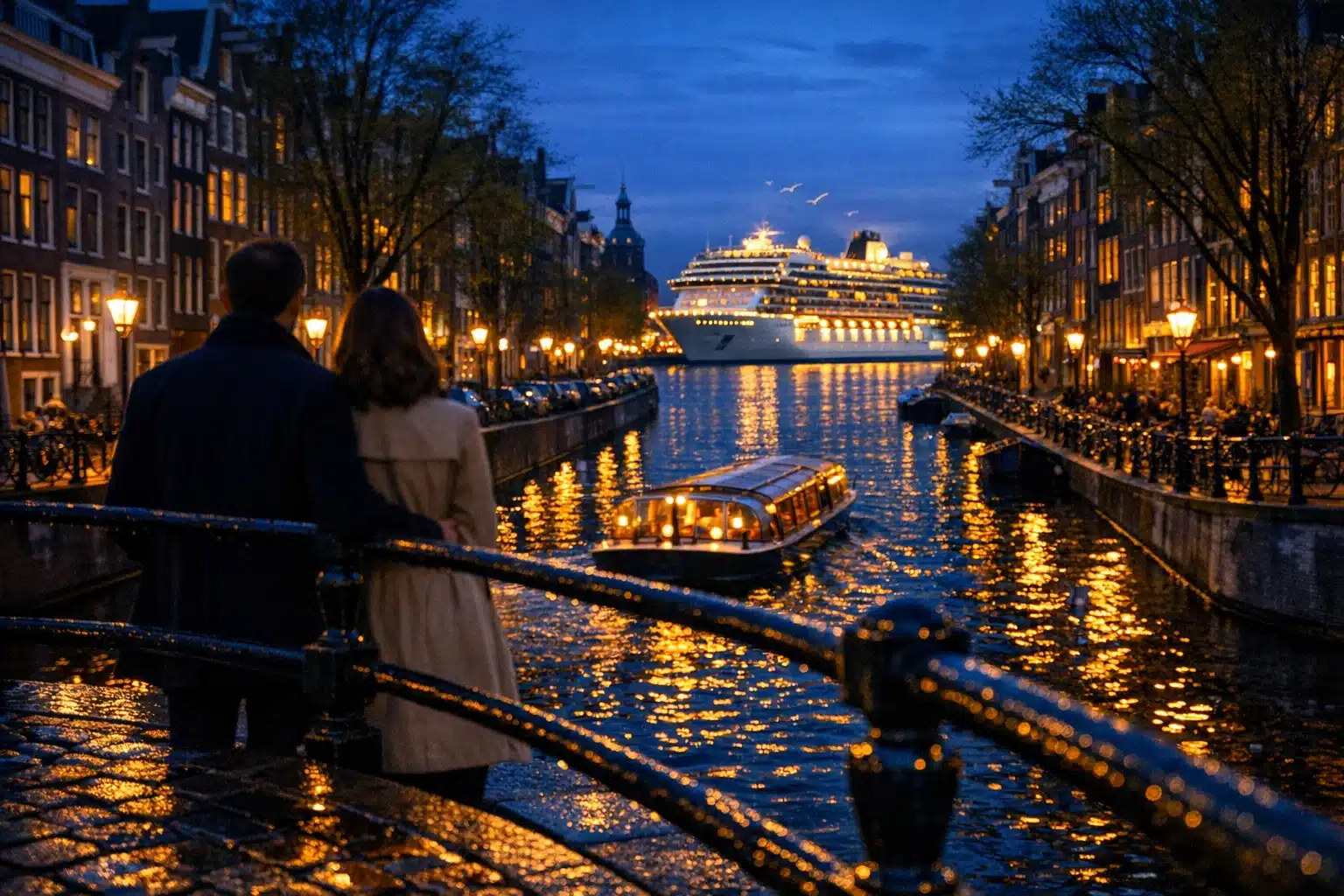
Amsterdam works well as a mini-cruise destination because much of its appeal is immediately visible. The canals, narrow gabled houses, bridges, trams, museums, and café culture all create an instant sense of place. Even with limited hours, you can walk away feeling that you genuinely visited somewhere distinct rather than merely passing through. That said, timing matters. If your ship docks early and departs late, the day feels generous. If the call is shorter, careful planning becomes more important. In a city with so many distractions, losing an hour to indecision is easier than you might think.
Cost, Cabins, and Value: What You Are Really Paying For
One reason 3-night cruises from Southampton to Amsterdam remain attractive is that they can offer strong value when compared with a traditional city break. That does not automatically mean they are cheap, but the pricing structure often feels easier to understand once you break it down. The base fare usually includes your cabin, standard meals in main dining areas or buffet venues, onboard entertainment, and transport between Southampton and the Netherlands by sea. In other words, accommodation, travel, and a large share of your food budget are wrapped together from the start.
Prices vary widely by ship, sailing date, cabin category, and promotional offers. An inside cabin on an off-peak departure may sometimes appear at a relatively accessible lead-in price, while a balcony cabin on a popular summer or holiday-weekend sailing can cost much more. Suites, premium dining, and drinks packages push the total higher again. That variation is worth remembering when comparing the cruise to flights and a hotel. A headline fare may look appealing, but your actual spend depends on how you like to travel once onboard.
As a rule, the following items are commonly included:
• your cabin for three nights
• standard breakfast, lunch, and dinner in included venues
• tea, coffee, and some basic drinks at selected stations
• shows, lounges, pools, and many onboard activities
• transport to and from the destination as part of the itinerary
Common extras may include:
• alcoholic drinks and specialty coffees
• specialty restaurants
• Wi-Fi packages
• gratuities, depending on fare type and operator
• shore excursions
• parking or rail travel to Southampton
• travel insurance and personal spending in Amsterdam
The comparison with a short flight-based break is interesting. A budget airline fare can look low until luggage, seat selection, airport transfers, and a central hotel are added. With a cruise, you avoid several of those moving parts. You also avoid the wasted time that can make a short break feel even shorter. On the other hand, a cruise gives you less flexibility than staying in the city overnight, because your return time is fixed and your day ashore is limited.
Cabin choice shapes the experience more than some new cruisers expect. On a 3-night sailing, an inside cabin can be perfectly reasonable if you plan to spend most of your time in lounges, restaurants, and on deck. A sea-view cabin adds natural light, while a balcony creates a private space for sailaway moments and early-morning coffee. For first-timers testing the waters, a lower-priced cabin may make the most sense. For couples treating the trip as a special break, spending more for a balcony can feel worthwhile. The smartest approach is not to ask which cabin is best in general, but which cabin best matches how you intend to use the ship.
Making the Most of Amsterdam: Shore Time, Sightseeing, and Smart Planning
A short cruise can only deliver real value if you use the day ashore well, and Amsterdam rewards a bit of advance thinking. This is not a sprawling city that demands hours of transit between districts, which is one reason it suits mini-cruise itineraries so well. Yet it is also packed with museums, neighborhoods, markets, canal views, and small temptations that can easily pull you in five directions at once. The best approach is to choose a rhythm for the day rather than trying to conquer a long checklist.
If this is your first visit, a simple route often works best: start with the historic center, admire the canals, cross a few of the city’s elegant bridges, and then decide whether you want culture, shopping, food, or a more relaxed wander. The canal belt and central districts offer a strong sense of place very quickly. If museums matter to you, book ahead where possible. Major attractions can be busy, and timed-entry systems are common. Travelers hoping to visit places such as the Rijksmuseum or the Anne Frank House should check current booking arrangements well in advance rather than assuming same-day availability.
With one day, you may want to pick one of these styles:
• The classic first-timer day: canals, Dam area, a museum, lunch by the water, and a short canal cruise
• The slower cultural day: one major museum, a neighborhood walk in Jordaan, and time in cafés or bookshops
• The scenic easygoing day: tram ride, waterside strolls, local snacks, and minimal queueing
• The family-friendly day: open spaces, a boat trip, hands-on attractions, and shorter walking stretches
Independent exploration is often ideal because Amsterdam is walkable and well served by public transport. Still, a ship-organized excursion can remove uncertainty, especially if you prefer a structured day or are concerned about getting back on time. That trade-off is familiar in cruise travel: independence offers flexibility, while excursions offer convenience and a built-in schedule. Neither choice is universally better. It depends on whether you want efficiency or freedom.
Practical planning matters too. Weather in the Netherlands can shift quickly, so layers, a light waterproof jacket, and comfortable shoes are more useful than fashionable optimism. Bring your passport, payment method, phone battery support, and any pre-booked attraction confirmations. Check the latest entry and travel requirements before sailing, especially if you are traveling from the UK and have not recently visited the Schengen area. It is also sensible to keep an eye on all-aboard times. A city as photogenic as Amsterdam has a way of making people lose track of the clock, and a cruise ship does not wait for late wanderers who misread the schedule.
Who Should Book This Trip and Final Thoughts for Short-Break Travelers
For the right traveler, a 3-night cruise from Southampton to Amsterdam is one of the most efficient ways to turn a long weekend into something that feels bigger than it is. It suits people who like the idea of travel without wanting the friction that often comes with airports, multiple hotel nights, and tightly connected transport plans. It is especially appealing for first-time cruisers, couples after an easy escape, groups of friends looking for a social break, and busy professionals who want to be away for a few days rather than a full week. If your goal is variety in a compact format, this itinerary makes a strong case for itself.
It is also a smart option for travelers who enjoy the experience of the ship as much as the destination. On a trip this short, the vessel is not merely transport; it is part hotel, part restaurant district, part entertainment venue, and part viewing platform. You might spend one evening at a show, another in a quiet lounge, and much of the voyage simply watching the sea. That layered experience is exactly what differentiates this kind of break from a standard city trip. You are not just going somewhere. You are traveling in a way that deliberately slows the route between departure and arrival.
Still, there are travelers for whom this format may feel too compressed. If you prefer deep cultural immersion, want two or three full days in Amsterdam, or dislike fixed schedules, a train or flight plus hotel stay may fit better. Families with very young children may also find that the short duration limits flexibility, especially if naps, routines, and embarkation logistics matter more than novelty. Likewise, travelers who are uncertain about seasickness may want to research ship size, weather patterns, and motion remedies before booking, even though many people find North Sea mini cruises perfectly manageable.
In practical terms, this trip is best for people who value:
• a convenient departure from the UK
• a taste of cruising without a major commitment
• a lively weekend atmosphere onboard
• one well-planned day in a memorable European city
• the comfort of unpacking once and letting the itinerary come to you
The final takeaway is simple. A 3-night Southampton to Amsterdam cruise is not designed to replace a week in the Netherlands or a longer voyage across Europe. It is designed to offer a neat, enjoyable blend of movement, comfort, and discovery within a short window. For travelers who understand that and book with the right expectations, it can feel remarkably rewarding. If you want a break that is easy to arrange, satisfying without being exhausting, and just different enough from the usual weekend formula, this route deserves serious consideration.