3-Night Cruises From Portsmouth: Routes, Onboard Experience, and Planning Tips
A 3-night cruise from Portsmouth sits in a sweet spot between a weekend break and a full holiday, giving travellers enough time to unwind without the cost or planning burden of a longer sailing. For UK passengers, the no-fly convenience matters just as much as the destination, especially when annual leave is tight. These short itineraries also suit first-time cruisers who want to sample life at sea before booking a week or more. The guide below maps the usual route types, the onboard mood, and the practical choices that make a short voyage feel smooth rather than rushed.
Article Outline
1. Why Portsmouth works so well for short cruises and what “3-night cruise” can actually mean. 2. The routes travellers are most likely to find, from northern France to Channel Island-style escapes and sea-focused mini breaks. 3. What to expect onboard, including cabins, dining, entertainment, and the differences between a mini-cruise and a full cruise ship experience. 4. How fares are built, where the extra costs appear, and when a short cruise represents strong value. 5. Planning advice, packing tips, and a practical conclusion for readers deciding whether a Portsmouth departure fits their travel style.
Why 3-Night Cruises From Portsmouth Appeal to So Many Travellers
Portsmouth is one of those departure ports that makes a short trip feel possible even before you step on board. It is well connected by road and rail, familiar to many travellers in southern England, and easier to approach than an airport with long queues, strict baggage rules, and early check-in alarms. That matters because the core promise of a 3-night cruise is convenience. You are not trying to reconstruct your whole calendar around a major holiday. You are simply carving out a compact break that still feels distinct from everyday life.
Part of the appeal is psychological as much as practical. The moment the ship pulls away, routines fall quiet. The skyline fades, gulls wheel over the harbour, and the journey itself becomes part of the reward. For people who usually book city breaks or country hotels, a short cruise offers something different: movement, changing views, and a built-in sense of occasion. That is especially useful for travellers who want a trip to feel memorable without becoming complicated.
It is also important to understand that the phrase “3-night cruise” can cover more than one product type. In Portsmouth, many short sailings are technically mini-cruises or cruise-ferry trips rather than classic ocean cruises. That distinction shapes expectations. A traditional cruise ship often offers a broader entertainment programme, multiple dining venues, and more deck space. A cruise-ferry style itinerary may be simpler, with comfortable cabins, restaurants, lounges, a bar, and sometimes shopping or cinema-style entertainment, but with a stronger transport function built into the voyage.
For many travellers, that is not a drawback at all. In fact, it can be the whole point. A short break from Portsmouth tends to work especially well for:
• first-time cruisers testing whether they enjoy sleeping at sea
• couples looking for a low-fuss celebratory trip
• friends seeking a long weekend that feels more atmospheric than a standard hotel stay
• older travellers who prefer avoiding airports
• families wanting a compact adventure during school breaks, where schedules permit
The limited duration is another advantage. Three nights usually means lower overall spend than a week away, less annual leave used, and less pressure to “make the most of it” every hour. You can enjoy dinner on board, wake up somewhere new, step ashore for a day, and return with the pleasant feeling that you have actually gone somewhere, not just paused at home with a change of scenery. For busy people, that balance is hard to beat.
Typical Routes and Itinerary Styles From Portsmouth
The most common 3-night options from Portsmouth are shaped by geography. The port sits on England’s south coast with strong links to northern France and the Channel region, so many short itineraries focus on manageable crossings rather than distant destinations. That means travellers should not expect the long list of Mediterranean-style ports seen on a week-long cruise from larger cruise hubs. Instead, the strength of Portsmouth is the quality of the short escape: board easily, sleep on the ship, visit one appealing destination, enjoy the return crossing, and be back home before the week properly gathers speed.
Northern France often dominates the conversation. Depending on operator and season, short sailings may connect with destinations such as Cherbourg, Caen via Ouistreham, or other French ports used for mini-cruise packages. These work well because they combine a sea journey with a practical day ashore. Cherbourg offers maritime character, market-town charm, and access to Normandy scenery. Caen and its surrounding area add history, food culture, and the possibility of guided tours. Some itineraries are designed less as deep-dive destination holidays and more as tasters, giving passengers enough time for a waterfront walk, a museum visit, a good lunch, and a change of pace.
The Channel Islands can also feature in the short-cruise imagination, although schedules vary and not every season offers the same patterns. Ports such as Guernsey have obvious appeal for a brief trip: pretty harbours, a slower rhythm, and enough local identity to make a single day feel worthwhile. Short sailings may also occasionally be themed around the ship experience itself, with limited port time or even sea-focused travel where the pleasure lies in being on board rather than racing through sightseeing lists.
Broadly, travellers can think of Portsmouth short cruises in a few useful categories:
• overnight out, day ashore, overnight back
• mini-cruise packages with a hotel element or excursion option
• cruise-ferry sailings where transport and leisure are deliberately blended
• occasional special departures tied to seasonal demand, events, or promotional offers
The right route depends on what you value most. If you care about shore time, look closely at arrival and departure hours rather than just the destination name. A port call that sounds glamorous on paper may give only a few practical hours on land. If your priority is the sea experience, however, later arrivals and longer onboard stretches can actually feel luxurious. For food lovers, France offers obvious rewards. For first-time sailors, the shortest and simplest route may be the wisest pick. In every case, the real art is matching your expectations to the timetable. A short cruise succeeds not by covering huge ground, but by making limited time feel well spent.
What the Onboard Experience Is Usually Like
Life onboard a 3-night cruise from Portsmouth tends to be compact, comfortable, and pleasantly self-contained. The first thing to know is that the experience may lean more toward a refined ferry crossing than a floating resort, depending on the operator. That is not a criticism; it simply means travellers should book with clear eyes. You may find fewer headline attractions than on a large ocean liner, but you can still expect the essentials that make a short voyage enjoyable: private cabins, lounges, food and drink venues, open decks, and enough entertainment to give the evening shape.
Embarkation often sets the tone. Once check-in is done and bags are sorted, there is a simple thrill in walking aboard while the harbour buzzes behind you. As the ship leaves Portsmouth, even seasoned travellers can feel that small lift in mood that comes with departure. The historic waterfront, the changing light over the Solent, and the salt in the air do some of the work that a much longer holiday usually needs days to achieve. It is one of the reasons short sea breaks can feel bigger than they are.
Cabins are central to the experience because, on a 3-night sailing, sleep quality shapes everything else. Inside cabins are usually the budget choice and can work perfectly well for travellers who mainly want a clean, quiet place to rest. Outside cabins add natural light and a sense of orientation that some passengers value highly. On certain ships, upgraded cabins offer more space, better amenities, or priority perks, though the jump in price is not always essential for a short trip. For many people, the smartest choice is a comfortable mid-range cabin and a good dinner booking.
Dining varies by operator, yet most short cruises give passengers a reasonable mix of options. You may find:
• a main self-service restaurant for practical meals
• an à la carte or brasserie-style venue for a slower evening
• bars or cafés for coffee, pastries, and late drinks
• breakfast packages or pre-booked meal deals that simplify budgeting
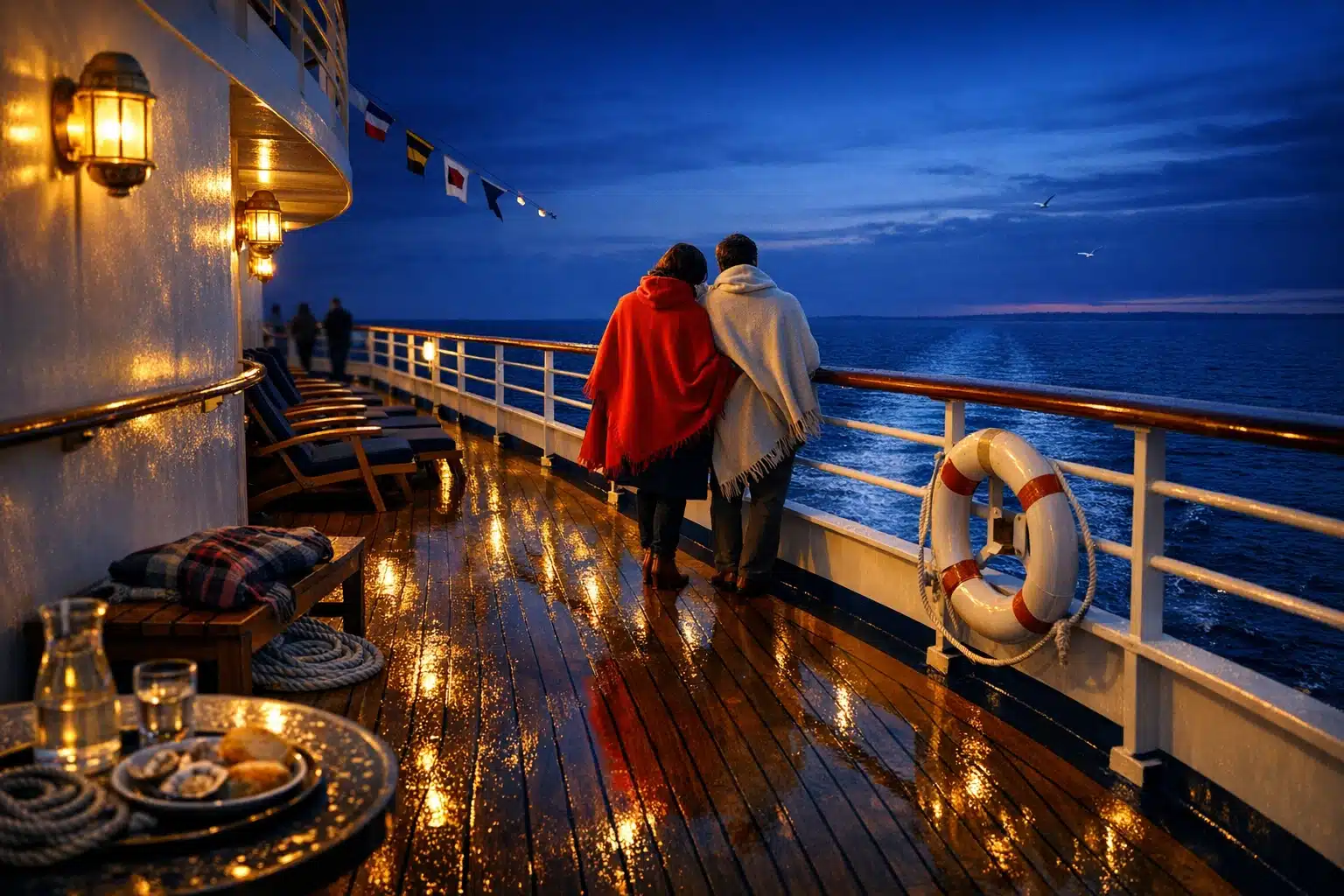
Entertainment on short sailings is usually lighter than on large cruise ships. Think live music, quiz-style events, cinema screenings, children’s play areas on family-friendly vessels, or simply the timeless ritual of standing on deck with a drink while the wind insists on stealing your hairstyle. That lighter programme often suits the length of the trip. After all, three nights rarely need a packed schedule. Many passengers are happy with a meal, a walk around the ship, and time to read, talk, or watch the horizon darken.
One final point matters: weather can play a larger role on short crossings than many land-based travellers expect. Sea conditions affect mood, deck access, and comfort. If you are prone to motion sickness, preparation helps enormously. Choose a mid-ship cabin if possible, bring remedies you trust, and treat the ship as a sea journey first and a hotel second. Do that, and the onboard experience is far more likely to feel atmospheric rather than unsettling.
Costs, Value, and How to Compare a Short Cruise With Other Breaks
A 3-night cruise from Portsmouth can represent good value, but only if you understand how the price is assembled. The headline fare is rarely the whole story. Short cruises are often marketed attractively because the base cost looks manageable, especially when compared with flights, several hotel nights, and separate transport. Yet the real value becomes clear only after you add the extras that matter to your style of travel. For some travellers, the total remains very competitive. For others, a land break may still work out cheaper.
The core fare usually covers passage and cabin accommodation. From there, costs can branch out quickly. Meals may be partly included or sold as pre-booked packages. Drinks, upgraded dining, parking at the port, travel insurance, pet arrangements, and shore excursions can all add to the bill. If you are sailing as a couple, the per-person value often improves because cabin costs are shared. Solo travellers may find the price less forgiving unless a special offer reduces the single supplement effect built into the cabin structure.
When budgeting, look at the trip as a bundle rather than a ticket. A useful checklist includes:
• cabin grade and whether a window is worth the premium to you
• meal packages compared with paying onboard
• port parking versus train travel to Portsmouth
• transfers or taxis at the destination port
• optional excursions, museum entry, or local transport ashore
• travel insurance and any passport-related admin costs
• spending money for drinks, snacks, and shopping
There is also a value question that goes beyond pounds and pence. A short cruise includes transport, accommodation, and entertainment in one moving package. That built-in simplicity has real worth, especially for people who do not want to coordinate train times, hotel check-in, restaurant reservations, and airport procedures for a break lasting only a few days. In that sense, a 3-night cruise competes not just with another holiday, but with the mental effort required to organise one.
Compared with a city break, a Portsmouth mini-cruise may offer fewer sightseeing hours but more atmosphere per booking step. Compared with a cottage weekend, it may provide less privacy but far more novelty. Compared with a flight-based European escape, it often wins on convenience and loses on sheer time at the destination. That trade-off is important. You are paying partly for the transition, the sea, and the onboard pause between places.
To get the best value, travellers should watch for shoulder-season deals, early-booking promotions, and packaged offers that include meals or excursions. Flexibility helps. Midweek departures, when available, can be better priced than the most popular weekend slots. The smartest buyers are not always the ones who choose the cheapest fare; they are the ones who choose the package that matches how they actually travel. A low cabin price loses its charm fast if you then pay premium rates for every meal, taxi, and add-on. Clarity beats impulse almost every time.
Planning Tips, Packing Advice, and a Final Takeaway for Short-Cruise Travellers
The best 3-night cruises from Portsmouth are usually the ones planned with realistic expectations. Because the trip is short, small mistakes can loom larger than they would on a week-long holiday. Forgetting a document, booking a badly timed train, or assuming there will be endless time ashore can flatten the mood quickly. The good news is that short cruises are easy to get right once you focus on a handful of essentials rather than overplanning every hour.
Start with the basics: verify passport validity, check the operator’s boarding rules, and arrive with more time than you think you need. Even a smooth port departure involves security, check-in, and the usual pre-travel waiting. If you are driving, pre-book parking where possible. If you are arriving by rail, build in a buffer for delays. It is far better to spend half an hour with a coffee near the terminal than to begin the trip in a sprint.
Packing for a 3-night sailing is simpler than many people imagine. The trick is to pack for comfort, weather changes, and one slightly smarter evening, rather than for every possible scenario. A practical list might include:
• layers for wind and cooler deck temperatures
• comfortable shoes for embarkation and walking ashore
• a lightweight waterproof jacket
• any medication you may need, especially for motion sickness
• chargers, travel documents, and a small day bag
• one outfit suited to a relaxed dinner or lounge setting
Digital expectations also matter. Depending on the ship and route, mobile signal may fade at sea and onboard Wi-Fi may be limited, paid, or slower than travellers are used to on land. For some people, that is a drawback. For others, it is an unexpected gift. Three nights without constant notifications can make the trip feel surprisingly restorative. If staying connected is essential, check the operator’s services before departure instead of assuming normal coverage will follow you offshore.
Another smart move is to decide in advance what kind of trip you want. Are you using the cruise as a floating hotel with a destination attached, or do you want the ship to be part of the entertainment? That answer affects everything from cabin choice to dining spend to how much shore time you try to squeeze in. Families may prioritise easy meals and flexible sleeping arrangements. Couples may care more about a window cabin, a slower dinner, and time on deck. First-time cruisers often do best by keeping plans light and letting the novelty of the journey do the heavy lifting.
For the target audience most likely to book this kind of break, the conclusion is straightforward. A 3-night cruise from Portsmouth is ideal for travellers who want a manageable escape, dislike airport hassle, and are happy to treat the voyage itself as part of the holiday. It works best when booked with a clear understanding of the route, the ship style, and the real cost beyond the headline fare. If that sounds like your travel personality, Portsmouth offers a practical starting point for a short break that feels fresh, maritime, and satisfyingly different from an ordinary weekend away.