10 Adult-Only Nudist Beaches in the UK
Outline, Context, and What “Adult-Only” Really Means
The idea of an adult-only nudist beach in the UK sounds almost contradictory at first: rugged weather, pebbled coves, and a culture better known for windbreaks than bare skin. Yet Britain has a long, quietly confident naturist tradition, with stretches of coast where privacy, respect, and sea air matter more than spectacle. For curious first-timers and seasoned naturists alike, knowing which beaches feel welcoming can make all the difference. This guide maps ten standout spots and explains what each one does especially well.
Before naming beaches, one point matters. In the UK, many naturist beaches are not legally “adults only” in the strict resort sense. A more accurate description is that they tend to attract adults because they are secluded, require effort to reach, or are used by an established naturist community that values calm behaviour and discretion. That difference is important for anyone researching the subject seriously. If you are looking for a beach with a mature atmosphere rather than a party scene, the UK has several good options. If you are expecting heavy facilities, security gates, and formal age checks, that is much less common.
This article follows a practical outline so the list is more useful than a simple ranking. It covers:
• the difference between officially designated naturist beaches and unofficial but well-known naturist spots
• how access, tides, terrain, and visibility affect comfort
• ten beaches across England, Wales, and Scotland, grouped by region
• simple comparisons so you can match the beach to your experience level
The relevance of this topic has grown for a simple reason: travellers increasingly want low-pressure outdoor experiences that feel personal rather than packaged. Naturist beaches appeal to some visitors because they remove social fuss, not because they seek attention. A good beach in this category is usually defined by space, quiet, and etiquette. In the UK, that can mean a long sandy bay beyond the families and dog walkers, a shingle strip below a cliff path, or a cove where the Atlantic seems to wash the week out of your head. The beaches below are therefore judged less by glamour and more by atmosphere, practicality, and how comfortable they are likely to feel for adults who want respectful naturist bathing.
South Coast Favourites: Studland Bay, Brighton Naturist Beach, and Fairlight Glen
If you want a strong introduction to naturist beaches in southern England, these three locations show how different the experience can be. Studland Bay in Dorset is the classic name in British naturism. Brighton Naturist Beach offers the most urban and accessible option on this list. Fairlight Glen in East Sussex is quieter, more secluded, and more rewarding for people who prefer effort over convenience. Put simply, Studland is traditional, Brighton is practical, and Fairlight is discreet.
Studland Bay is often the first beach mentioned in any UK naturist conversation, and for good reason. The bay is long, sandy, and scenic, with dunes, heathland, and wide views that make it feel open rather than exposed. Its naturist section has a long history and is widely known, which helps newcomers feel they are not accidentally stepping into the wrong place. The main draw here is balance: the beach feels natural and spacious, yet it is famous enough that you do not feel entirely alone. That matters for first-time visitors. The trade-off is that Studland is popular, especially in warm weather, and access may involve parking considerations and a walk through a more general beach environment before you reach the quieter naturist area.
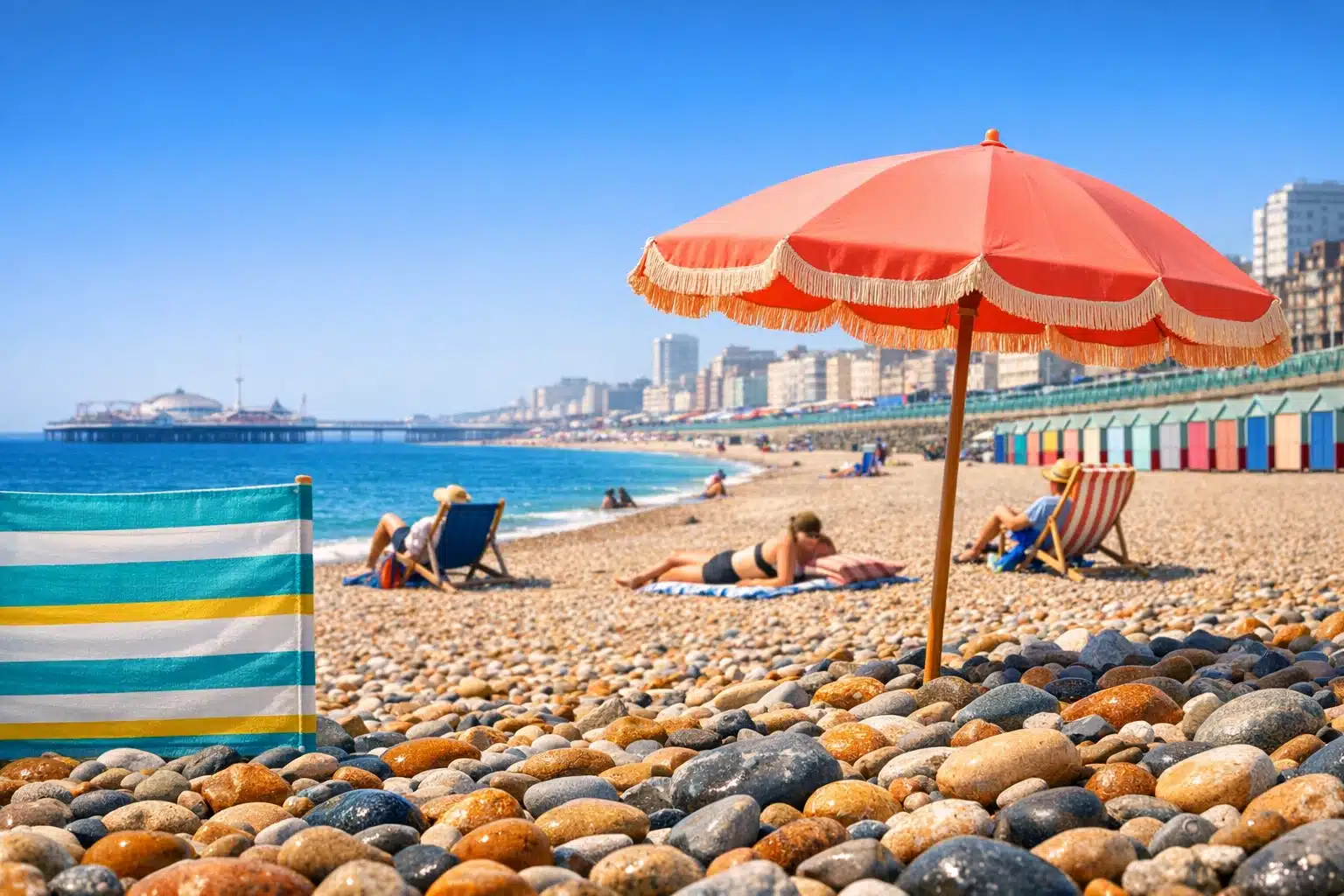
Brighton Naturist Beach is a complete contrast. Located on the eastern side of Brighton seafront, it is one of the most accessible naturist beaches in the country and is part of a city better known for openness, festivals, and independent spirit. This is the easiest place on the list for someone travelling by train or planning a day trip without a car. There are nearby amenities, a clear urban frame of reference, and less uncertainty about where you are supposed to be. The downside is obvious: if you want wild beauty and silence, Brighton is not trying to be that. The appeal is confidence and convenience, not isolation. It suits visitors who want a straightforward experience without navigating remote paths, dunes, or cliff descents.
Fairlight Glen, near Hastings, sits at the other end of the spectrum. Reaching it usually involves a walk and a willingness to accept a more natural, less managed setting. The beach is largely shingle, the scenery is dramatic, and the relative privacy gives it a more tucked-away feel than Brighton or Studland. It tends to appeal to regular naturists and people who value a low-profile setting. In comparison:
• Studland Bay is best for tradition, sand, and a well-known naturist culture
• Brighton is best for access, transport links, and first-timer simplicity
• Fairlight Glen is best for privacy, seclusion, and a quieter atmosphere
Taken together, these beaches show the south coast’s strength: you can choose between recognition, convenience, and retreat without leaving England’s southern shoreline.
Quiet Eastern Escapes: Shellness, Holkham, and Druridge Bay
Some naturist beaches are memorable because of facilities or reputation; others stay with you because of space. Shellness in Kent, Holkham in Norfolk, and Druridge Bay in Northumberland all fall into that second category. They are the kind of places where the horizon seems to widen as you walk, and where distance itself becomes part of the experience. These beaches are especially appealing to adults who want calm, fresh air, and room to keep to themselves.
Shellness Beach, on the Isle of Sheppey, has long been known in naturist circles as a remote and relatively discreet option in the southeast. It is not polished or heavily developed, and that is part of its charm. The setting can feel raw, windswept, and far from the usual postcard idea of an English seaside day. Because it is less mainstream than Brighton or Studland, Shellness often suits people who are already comfortable with naturist etiquette or who actively want a lower-profile environment. Conditions can be affected by tides, mud, and changing weather, so this is not the place for a casual unplanned stop. It is better approached as a deliberate outing.
Holkham Beach, in Norfolk, is one of the most visually striking coastal areas in England. The wider landscape is famous for its huge skies, broad sands, and dune-backed openness. Naturist use is generally associated with the more remote stretches rather than the busiest sections near the main access points. That distinction matters. Holkham rewards visitors who are willing to walk beyond the obvious entrance areas and settle into the quieter reaches. Compared with Shellness, it feels more cinematic and less rugged. Compared with Brighton, it is almost the opposite experience: few urban cues, very little sense of enclosure, and an atmosphere shaped more by wind and distance than by amenities.
Druridge Bay, in Northumberland, adds a northern dimension to the list. This is a long, impressive stretch of coast where the scale of the landscape does much of the work. The beach is not famous in the same way as Studland or Brighton, but that can be an advantage. For naturists who want a setting that feels understated and uncrowded, Druridge Bay has appeal. The experience here is often less about a defined naturist “scene” and more about finding a suitable quiet section and enjoying the freedom of a broad coastal strip. In practical terms:
• Shellness is best for remoteness and discretion in the southeast
• Holkham is best for scenery, sand, and long contemplative walks
• Druridge Bay is best for scale, quiet, and a northern escape
For many adults, these beaches are not about being seen at all. They are about disappearing, briefly and peacefully, into weather, water, and space.
Western and Celtic-Edge Highlights: Morfa Dyffryn, Sker Beach, Pedn Vounder, and Cleat’s Shore
The western side of the UK offers some of the most memorable naturist-friendly coastal settings, especially for travellers who care as much about landscape as they do about beach culture. Morfa Dyffryn in Gwynedd, Sker Beach in South Wales, Pedn Vounder in Cornwall, and Cleat’s Shore on the Isle of Arran each bring a different mood. One feels established and easy to understand, another wild and remote, another almost theatrical in its beauty, and the last one quietly hidden from mainstream travel lists.
Morfa Dyffryn is among the best-known naturist beaches in Wales and is often praised for its generous sands and dune system. It has a stronger identity than many unofficial spots, which helps visitors who like clarity. The beach is broad, attractive, and often spacious enough that people can find their own comfort zone without feeling crowded. For many naturists, Morfa Dyffryn represents a sweet spot: more formal than an obscure cove, less urban than Brighton, and more openly accepted than beaches where naturist use is simply understood rather than marked. That sense of legitimacy can be reassuring for newcomers.
Sker Beach, by contrast, feels more rugged and more remote. Reaching it can involve a good walk, and that alone filters the crowd. Its appeal lies in the combination of dunes, open shoreline, and relative privacy. It is not the easiest option, but for many that is the point. The beach suits adults who want a natural environment and do not mind trading convenience for peace. If Morfa Dyffryn is the confident all-rounder, Sker is the quieter, less obvious choice for those who enjoy coastal solitude.
Pedn Vounder in Cornwall is perhaps the most visually dramatic beach on this list. Tucked below cliffs and known for clear water and striking scenery, it often feels almost Mediterranean for a brief hour before the British weather reminds you where you are. Naturist use here has long been part of the beach’s reputation, especially in quieter sections, but access can be steep and the tides require attention. This is not a careless flip-flop beach. It is for people who are prepared, steady on their feet, and willing to check conditions before going.
Cleat’s Shore on Arran is less famous outside naturist circles, which is precisely why some travellers like it. Scotland has fewer widely discussed naturist beaches, so a quieter location such as this can feel like a private discovery. The setting is scenic, low-key, and removed from the busier beach culture found farther south. In comparison:
• Morfa Dyffryn is best for recognition and comfort
• Sker Beach is best for remoteness and a wilder feel
• Pedn Vounder is best for dramatic scenery and adventurous visitors
• Cleat’s Shore is best for low-profile escape and Scottish island atmosphere
These four beaches show that the western side of the UK is not one thing. It is a spectrum, running from wide Welsh sands to cliff-ringed Cornish beauty and onward to the calm understatement of an island shore.
How to Choose the Right Beach and Final Thoughts for First-Time and Regular Naturists
By this point, the list of ten beaches is less a ranking than a menu of atmospheres. That is the most useful way to read it. The “best” nudist beach in the UK depends heavily on what kind of day you want. Some adults want reassurance, easy access, and a setting where naturism is clearly established. Others want quiet, a long walk, and the feeling that the modern world has been left in the car park several dunes behind them. Matching the beach to your temperament is more important than chasing the most famous name.
For beginners, Brighton Naturist Beach and Studland Bay are usually the easiest starting points. Brighton works well if you want transport links, visible structure, and a straightforward day trip. Studland is stronger if you want a more natural setting without feeling cut off. Morfa Dyffryn also deserves a place on a beginner shortlist because of its reputation and spaciousness. For visitors who already know they prefer privacy, Fairlight Glen, Shellness, Sker Beach, and Druridge Bay are more appealing. For scenery-led travellers, Holkham, Pedn Vounder, and Cleat’s Shore stand out because the landscape itself is part of the reward.
Whichever beach you choose, etiquette matters more than confidence. Naturist beaches work best when everyone behaves with ordinary courtesy and a little extra awareness. A few basics go a long way:
• check tide times, weather, and access before setting out
• bring something to sit on, plus layers for the walk back
• avoid intrusive photography and respect personal space
• understand that some beaches are officially designated while others rely on mutual discretion
• if a place feels busy, family-oriented, or unsuitable on the day, move on rather than force the situation
There is also a practical British reality worth keeping in mind: the weather is a participant in your day, not a background detail. Wind can transform a lovely bay into a very short visit. Pebbles, dunes, mudflats, long paths, and sudden cloud cover all shape whether a beach feels relaxing or hard work. Planning well is not unromantic here; it is the difference between a confident trip and an awkward one.
For the target audience of this guide, namely adults curious about naturist beaches in the UK or looking to try a new one, the takeaway is simple. Start with the atmosphere you want, not the headline you have heard before. Choose Brighton or Studland for ease, Morfa Dyffryn for a strong all-round option, Fairlight or Shellness for discretion, Holkham or Druridge for space, and Pedn Vounder or Cleat’s Shore for scenery with character. The UK may not advertise its naturist coastline loudly, but it offers more variety than many people expect. In that quiet, unshowy way so typical of British coasts, the right beach can feel less like a spectacle and more like a deep breath.